MAKASSAR, Indonesia April 1 2019/MARGO/ What if the secret to better, more valuable seaweed wasn’t in the water, but in the company it keeps?
In the coastal waters of Indonesia, a red seaweed called Kappaphycus alvarezii is a cash crop for thousands of small-scale farmers. It produces carrageenan—a jelly-like substance used in everything from ice cream to cosmetics. But farmers face constant challenges: herbivorous fish nibble away at their crops, disease outbreaks destroy entire harvests, and intense sunlight damages delicate tissues. The result? Lower yields and poor-quality carrageenan that fails to meet export standards.
A study published on 1 April 2019 in the IOP Conference Series: Earth and Environmental Science (Publisher: IOP Publishing) titled “Weight gain and carrageenan content of Kappaphycus alvarezii (Rhodophyta, Solierisceae) polycultured with Sargassum polycystum (Paeophyta, Sargassaceae)” may have found a simple, natural solution: grow seaweed together.
Researchers from Hasanuddin University in Indonesia conducted a 7-week experiment in the coastal waters of Takalar Regency, South Sulawesi. They grew red seaweed alone (the control) and in combination with a brown seaweed called Sargassum polycystum—a common, fast-growing seaweed that many fishermen consider a nuisance. They tested three combinations: 25 grams of red seaweed with 25, 30, or 35 grams of brown seaweed. The results were remarkable.
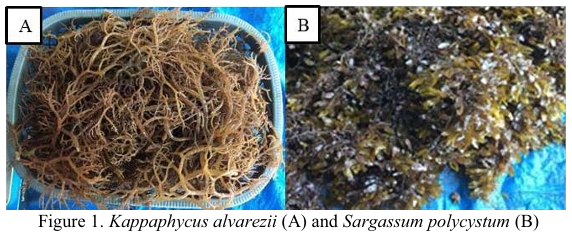
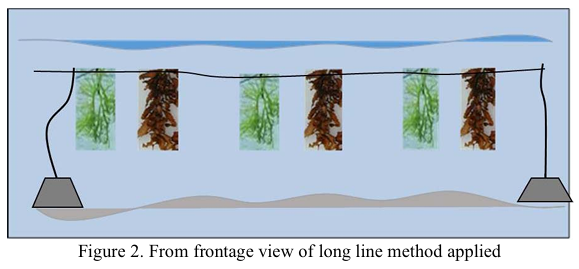
When grown alone, the red seaweed gained an impressive 1,387 grams on average. But here is the twist: when polycultured with the highest amount of brown seaweed (35 grams), the red seaweed’s carrageenan content jumped to nearly 44%—well above the 40% FAO standard for export. This was significantly higher than the 34% carrageenan content found in the red seaweed grown alone or with less brown seaweed.
Why did this happen? The researchers have a fascinating theory. The brown seaweed acts like a natural bodyguard. Its leafy fronds create shade, protecting the red seaweed from harsh UV radiation. Even more importantly, Sargassum produces chemical compounds called phlorotannins—natural antibiotics that repel herbivorous fish, fight disease-causing bacteria, and even act as sunscreen. When these compounds diffuse into the water, the red seaweed absorbs them, gaining protection and thriving.
This research directly supports the United Nations’ Sustainable Development Goal 14: Life Below Water. By promoting a polyculture system that works with natural ecological processes, it reduces the need for chemical interventions and helps preserve marine biodiversity. It also empowers coastal communities—farmers can diversify their income by harvesting two seaweed species instead of one, reducing economic risk and improving livelihoods (SDG 1). With better carrageenan quality, farmers can access premium export markets, lifting families out of poverty while protecting the ocean. The message is clear: sometimes, working together is better than going it alone—even for seaweed.
Reference
DOI:
https://iopscience.iop.org/article/10.1088/1755-1315/253/1/012005/pdf
Contact:
Prof. Dr. Ir. Ambo Tuwo DEA
+628124206391
ambotuwo62@gmail.com