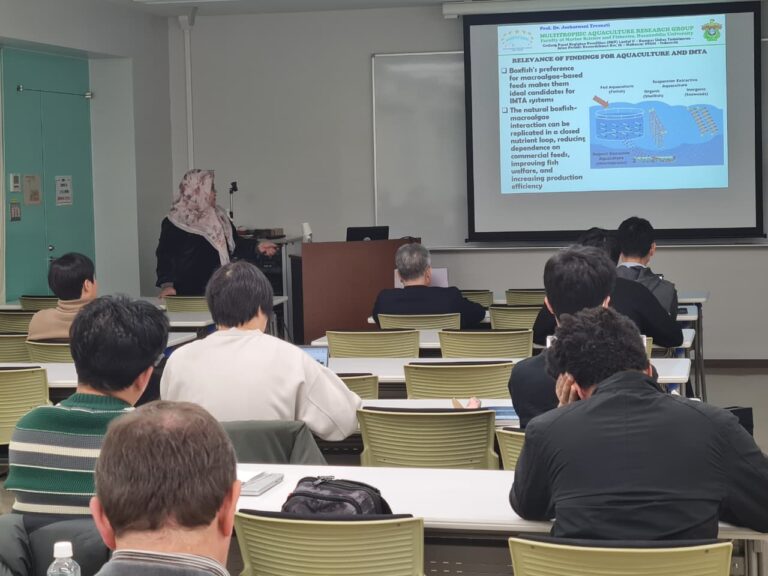
MAKASSAR, Indonesia Juni 1 2026/MARGO/ Imagine being a seaweed farmer. You plant your crop in the ocean, wait for weeks, and hope for a good harvest. But sometimes, the seaweed thrives. Other times, it suddenly sickens, turns white, and breaks apart. For farmers on the southern coast of South Sulawesi, Indonesia, this is a daily reality. But why does this happen?
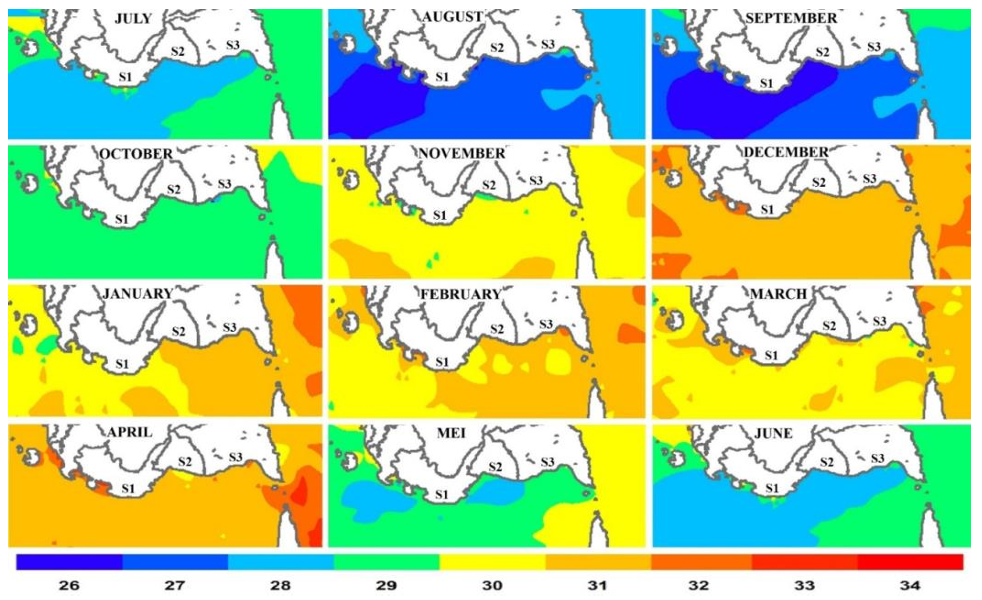
Figure 2. Distribution of sea surface temperatures in Jeneponto Regency (S1), Bantaeng Regency (S2), and Bulukumba Regency (S3) from July 2023 to June 2024.
A recent study published on 1 June 2025 in the journal Aquaculture, Aquarium, Conservation & Legislation (Publisher: Bioflux SRL) titled “Influence of physical, chemical, and biological parameters on the productivity of seaweed cultivation on the South Coast of South Sulawesi, Indonesia” offers crucial answers. Researchers Dedy M. Iqbal and his team investigated two commercially vital seaweed species—Eucheuma denticulatum and Eucheuma cottonii—to understand exactly what makes them grow or fail.
The scientists compared seaweed farms located close to the shore (nearshore) versus those further out at sea (farshore) in the Jeneponto, Bantaeng, and Bulukumba regencies. Their most striking finding? While the total yearly production volumes were similar between the two areas, the timing of peak production was completely different.
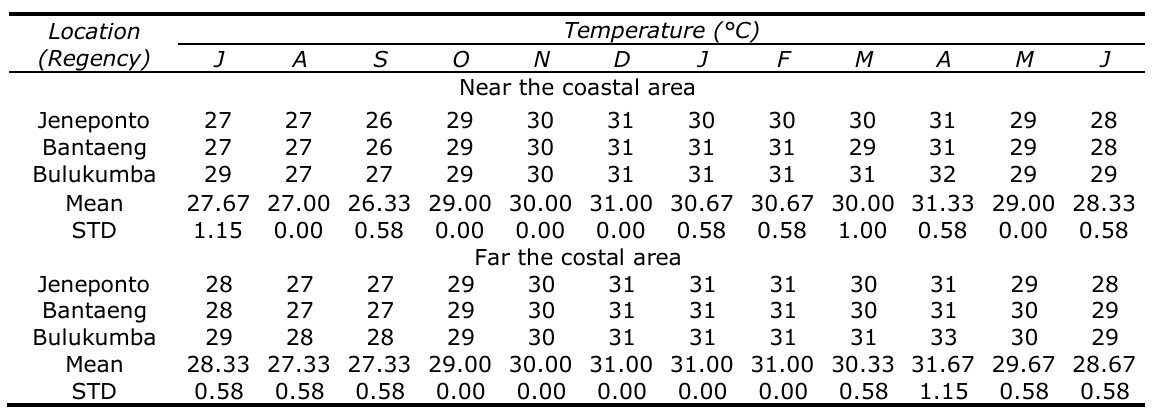
Table 1. Monthly water surface temperatures in Jeneponto Regency, Bantaeng Regency, and Bulukumba Regency from July 2023 to June 2024
So, what controls this rhythm? The team identified several “culprits.” Near the coast, high productivity was linked to relatively warm water and lower salt levels (salinity). However, farmers near the coast face a hidden threat: an outbreak of the dreaded “ice-ice” disease. This disease, which causes the seaweed to turn pale and brittle, was strongly associated with spikes in high salinity in these nearshore areas.
Out in the deeper, farshore areas, the story flipped. Ice-ice attacks were more common when salinity dropped too low. Additionally, the growth of unwanted microscopic plants called “epiphytes,” which latch onto the seaweed, and attacks from pathogenic bacteria further complicated the farmers’ efforts. It is a delicate balancing act; moving the farms just a few hundred meters away from the coast completely changes the environmental rules of the game.
This research is vital for supporting the “moving house” program—a government initiative to move seaweed cultivation from the open sea to more controlled pond environments. Understanding these environmental triggers is the first step toward creating safer, more predictable farming conditions.
This research directly supports the United Nations’ Sustainable Development Goal 14: Life Below Water. By providing scientific data on how to manage and sustain seaweed cultivation, it promotes the sustainable use of marine resources, protects coastal ecosystems from over-exploitation, and helps build a resilient “Blue Economy.” Furthermore, by securing the livelihoods of coastal farmers, this work indirectly tackles poverty (SDG 1) and ensures food security for the future. Ultimately, understanding the language of the ocean helps farmers work with nature, rather than fighting against it—ensuring that the bounty of the sea remains available for generations to come.
Reference
DOI:
https://bioflux.com.ro/aacl
Contact:
Prof. Dr. Ir. Ambo Tuwo DEA
+628124206391
ambotuwo62@gmail.com