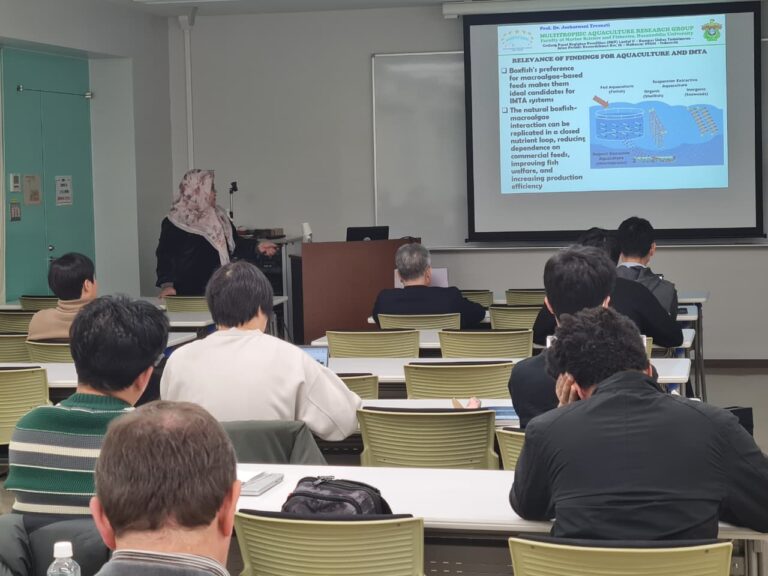
MAKASSAR, Indonesia April 21 2021/MARGO/ Global warming has rapidly transformed into an urgent humanitarian crisis, demanding creative, science-backed solutions from every corner of our planet. While ruminant livestock farming is widely recognized as a major contributor to atmospheric methane emissions—a potent greenhouse gas accelerating global climate change—a surprising natural ally has emerged from the ocean floor. The red sea plume, known scientifically as Asparagopsis taxiformis, holds extraordinary potential to slash methane emissions from cattle and sheep by up to 80 percent when added to feed. However, despite its promising eco-friendly qualities, expanding its production through large-scale commercial cultivation remains a significant challenge because scientists still know very little about its precise environmental and bioecological requirements.
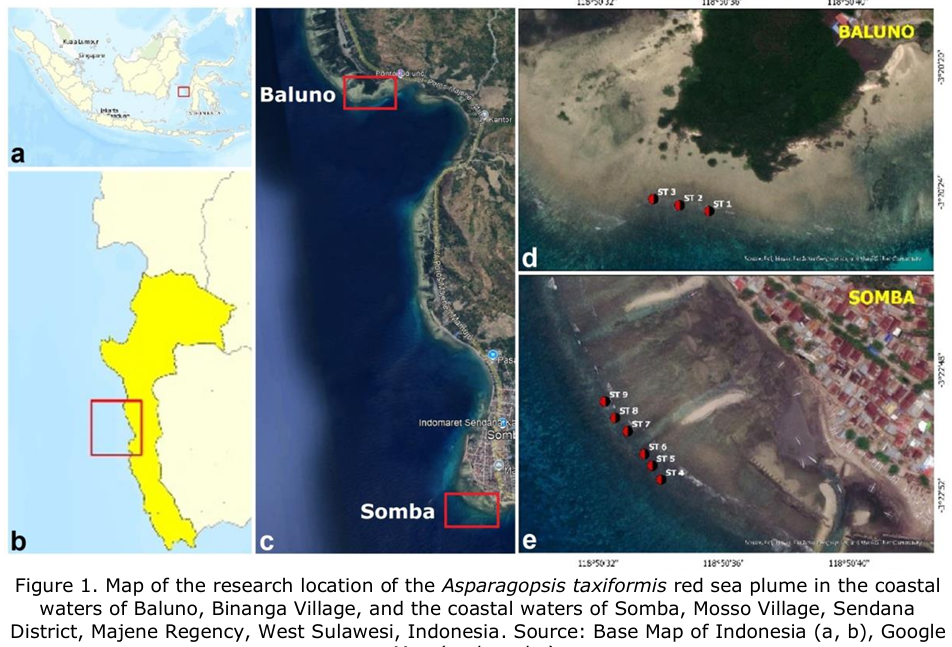
To unlock the full potential of this rare red seaweed, researchers Septri L. L. Jayanti, Ambo Tuwo, Inayah Yasir, Joeharnani Tresnati, Hakiki Melanie, and Asri Yanti conducted an in-depth field study in West Sulawesi, Indonesia. Their scientific paper, titled “Bioecological analysis of Asparagopsis taxiformis (Delile) Trevisan de Saint-Léon, 1845: relationship between morphology, habitat characteristics, and water quality,” was published in the academic journal Bioflux (AACL Bioflux, Volume 19, Issue 2) on 2026/4/21. The research team rigorously analyzed how water quality, current speed, depth, and nutrient levels directly influence the physical growth and structural shape of this unique marine macroalgae in its natural habitat.
Their findings reveal that Asparagopsis taxiformis possesses remarkable morphological flexibility in response to its surroundings. The seaweed grows significantly longer, wider, and structurally more complex in coastal areas characterized by stronger water movement and higher concentrations of essential dissolved nutrients, particularly nitrate and phosphate. Robust water flow acts as a natural booster, delivering nutrients directly to the seaweed while thinning boundary layers around its tissue. Meanwhile, secondary factors such as surface temperature, salinity, ammonia levels, and ocean depth dictate how densely individual seaweed stands cluster together. Understanding these precise environmental interactions provides a crucial blueprint for establishing sustainable commercial farming of this rare macroalgae without risking over-harvesting wild populations.
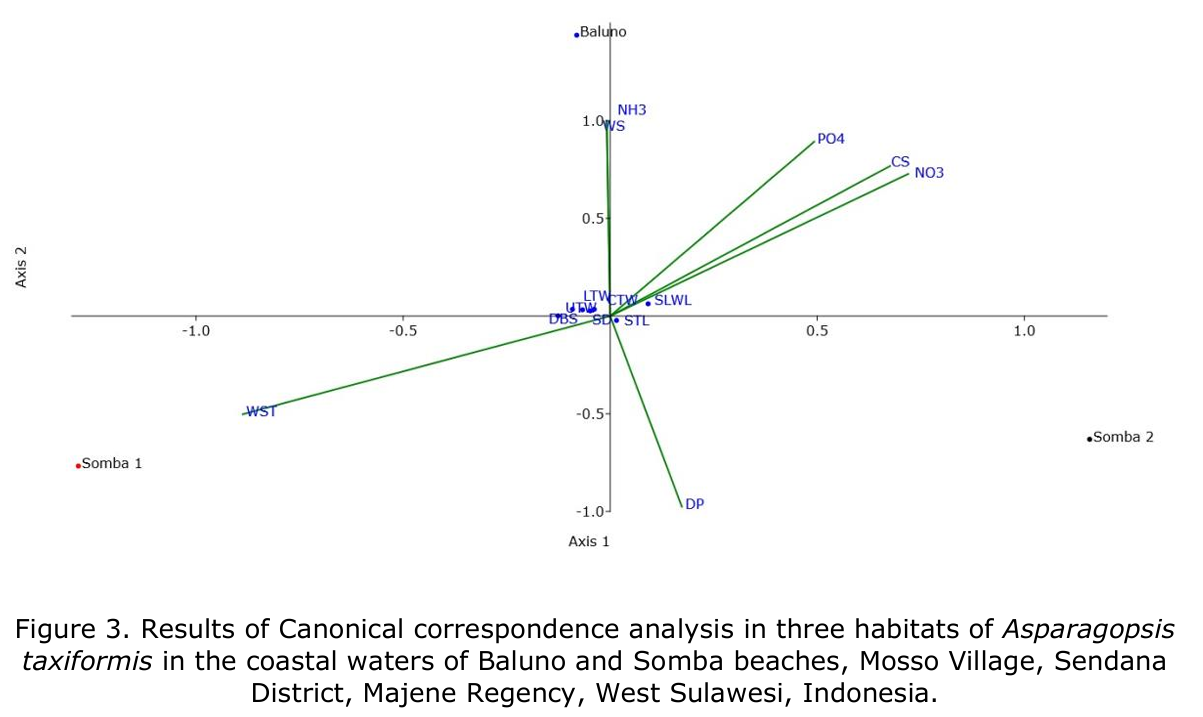
This breakthrough research directly supports Sustainable Development Goal 14: Life Below Water (SDG 14). By mapping the bioecological requirements of vital marine organisms, scientists and ocean resource managers can protect coastal biodiversity, mitigate the damaging impacts of coastal nutrient pollution, and establish responsible, eco-friendly aquaculture systems. Harnessing the power of sustainable seaweed farming allows us to effectively reduce agricultural greenhouse gases on land while simultaneously preserving pristine marine ecosystems underwater.
In conclusion, turning wild marine discoveries into actionable climate solutions requires bridging complex ecological research with clear public understanding. As humanity continues searching for innovative ways to heal our blue planet, understanding how organisms like Asparagopsis taxiformis thrive in their natural habitats brings us one step closer to achieving global climate resilience and ensuring sustainable oceans for future generations.
Reference
DOI:
https://bioflux.com.ro/docs/2026.568-577.pdf
Contact:
Prof. Dr. Ir. Ambo Tuwo DEA
+628124206391
ambotuwo62@gmail.com