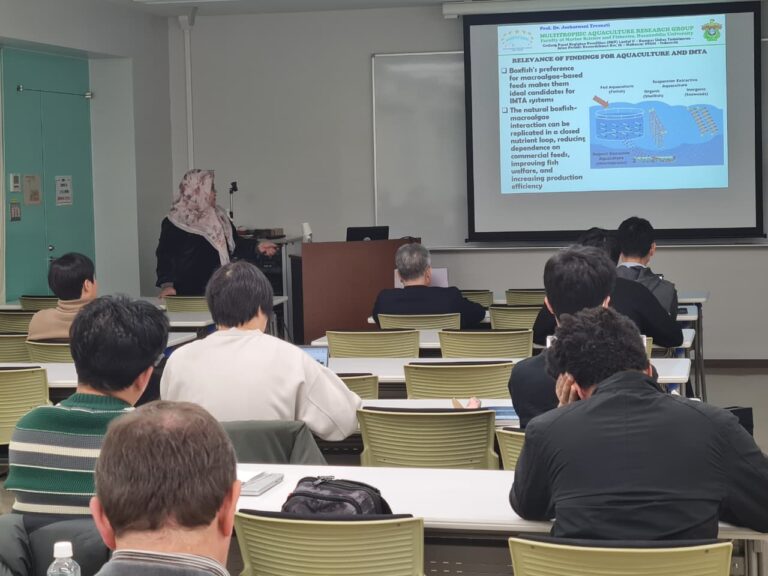
MAKASSAR, Indonesia Maret 1 2026/MARGO/ Picture this: a seaweed farmer in Indonesia has just harvested a bountiful crop of Gracilaria changii—a red seaweed prized for its agar content. Now comes the critical step: drying. But the farmer spreads the seaweed under the scorching sun, exposed to dust, insects, and unpredictable weather. If it rains, the drying process stalls. If the sun is too weak, the seaweed takes days to dry, risking mold and quality loss. This traditional method is slow, inefficient, and risky.
A study published on 1 March 2026 in the Egyptian Journal of Aquatic Biology and Fisheries (Publisher: The Egyptian Society for the Development of Fisheries and Human Health) titled “Advancing Sustainable Drying of the Seaweed Gracilaria changii: Insights into Process Efficiency and Environmental Variability” offers a game-changing alternative.
Researchers from Hasanuddin University in Indonesia tested two drying methods: traditional solar drying (SD) and a flat solar collector (FSC)—a simple, low-cost device that captures sunlight and converts it into heat, circulating warm air through a closed drying chamber. They dried 16 kilograms of Gracilaria changii over 8-hour periods, monitoring temperature, humidity, sunlight intensity, moisture content, and drying rate.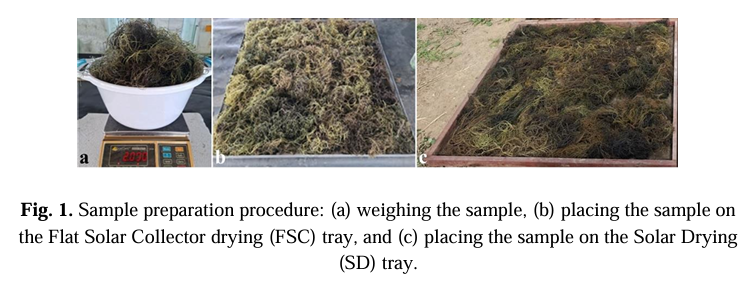
The results were striking. The FSC system achieved higher, more stable temperatures—peaking at 46°C compared to just 37°C in traditional drying. This meant faster moisture removal. In the critical early phase (9:00 to 11:00 AM), the FSC accelerated drying significantly, reducing moisture content more quickly and efficiently. By the end of the day, both methods achieved similar final moisture levels (around 35%), but the FSC did it with greater energy efficiency—nearly double that of traditional drying.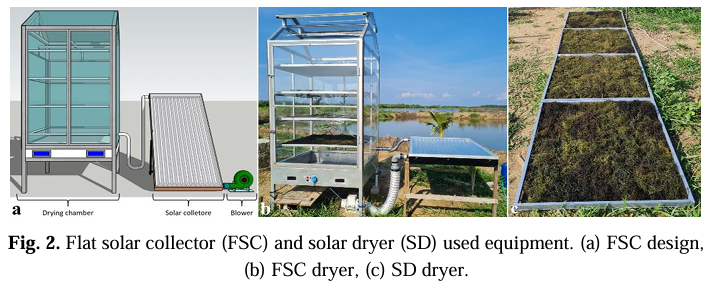
The study also used a sophisticated statistical technique called Canonical Correspondence Analysis (CCA) to understand what drives the drying process. The findings revealed a clear pattern: drying progresses through distinct phases—initial high moisture, constant-rate drying, and falling-rate drying. Time and thermal energy, not environmental conditions, are the primary drivers. The FSC system consistently performed better because it maximized energy use and maintained more stable conditions.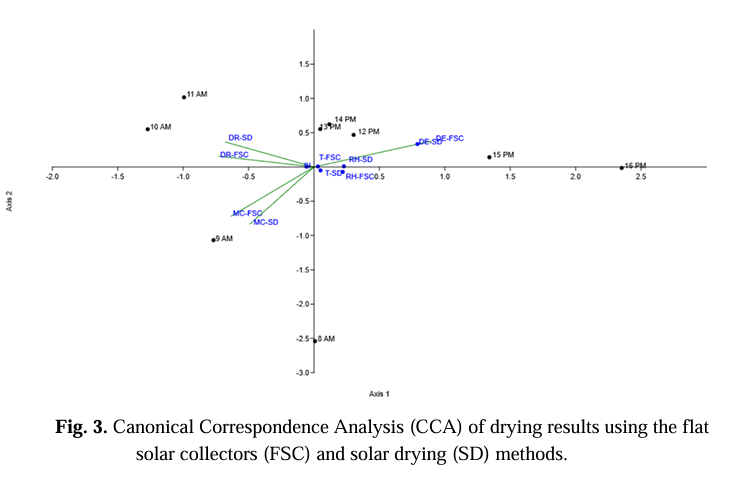
Why does this matter? Because drying determines the final quality of seaweed products. Poor drying leads to discoloration, loss of bioactive compounds, and contamination risks—all of which reduce market value. The FSC system offers a sustainable, affordable solution for small-scale farmers, producing higher-quality dried seaweed with less reliance on unpredictable weather.
This research directly supports the United Nations’ Sustainable Development Goal 14: Life Below Water. By promoting efficient, sustainable post-harvest technology, it helps reduce waste, improve product quality, and support the livelihoods of coastal communities (SDG 1). With climate change making weather more unpredictable, innovations like the FSC are not just convenient—they are essential for a sustainable future.
Reference
DOI:
10.21608/ejabf.2026.506016
Contact:
Prof. Dr. Ir. Ambo Tuwo DEA
+628124206391
ambotuwo62@gmail.com