MAKASSAR, Indonesia Agustus 10 2020/MARGO/ Every morning, a seaweed farmer in Indonesia rows out to his floating rafts, checking on the red seaweed Kappaphycus alvarezii that will become carrageenan for ice cream and cosmetics. Nearby, a coral reef teems with life—colorful fish, hiding lobsters, and the silent, stony architects of the ocean: scleractinian corals. These two worlds—seaweed farming and coral reefs—often overlap in tropical Indonesia. And that overlap has sparked a critical question: can seaweed farming and coral reefs coexist?
A study published on 10 August 2020 in the journal AACL Bioflux (Publisher: Bioflux) titled “Effect of Kappaphycus alvarezii mariculture on the recruitment of scleractinian corals” set out to answer exactly that. Researchers from Hasanuddin and Bosowa Universities in Indonesia conducted a clever experiment in Laikang Bay, Jeneponto Regency, South Sulawesi. They placed bamboo rafts with seaweed over coral reef areas at two depths (2 meters and 5 meters) and used three different planting spacings: 10, 20, and 30 centimeters between seaweed clumps. Then, they put down collector plates—small stone tiles—to count how many baby corals settled on the reef below.
The results tell a nuanced story. When seaweed was planted very close together (10 cm and 20 cm spacing), it significantly reduced the number of coral recruits settling on the reef compared to areas without seaweed. But here is the crucial finding: at 30 centimeters spacing, coral recruitment was not significantly different from the control areas with no seaweed. In other words, there is a “sweet spot” where seaweed farming can continue without harming the next generation of corals.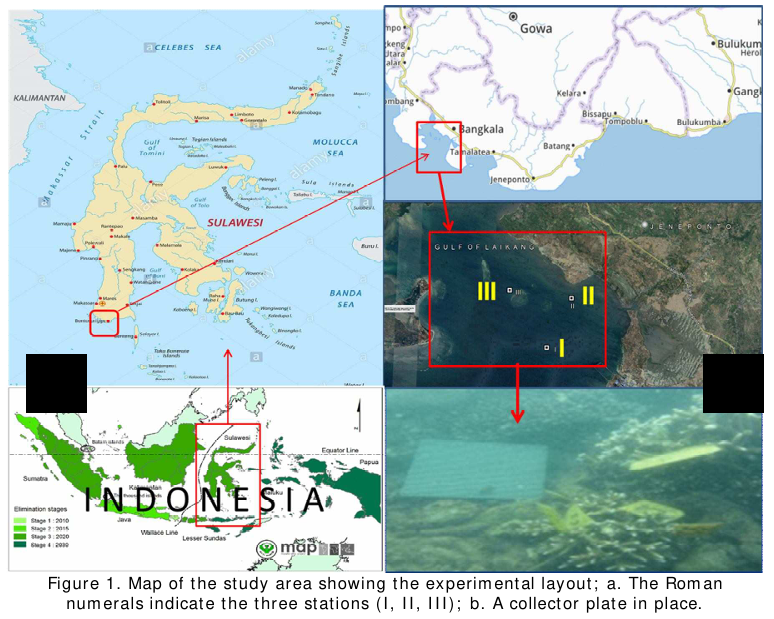
The study also found that depth matters. At the 5-meter depth, coral recruitment was generally higher than at 2 meters, likely because deeper waters receive less shading and sedimentation from the seaweed rafts above. And the effect varied by season—during the January to March period, the negative impact of close-spaced seaweed was more pronounced than during the October to December period.
Why does this matter? Because coral recruitment—the process by which baby corals settle and grow—is the foundation of reef health. Without successful recruitment, reefs cannot recover from damage. And reefs provide food, coastal protection, and livelihoods for millions of people. This research offers a practical, science-based solution: plant seaweed at 30 cm spacing and avoid very shallow waters. Simple changes that protect both livelihoods and ecosystems.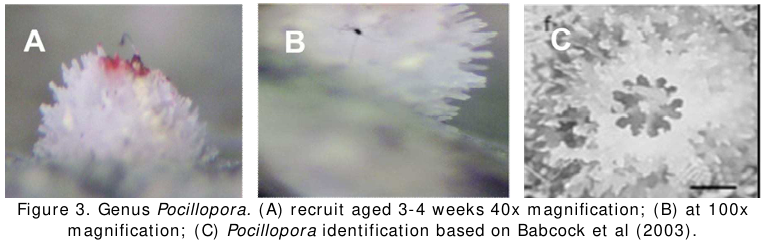
This research directly supports the United Nations’ Sustainable Development Goal 14: Life Below Water. By identifying practices that minimize harm to coral reefs while sustaining seaweed farming, it helps conserve marine biodiversity and promote sustainable use of ocean resources. It also protects the livelihoods of coastal communities who depend on both seaweed farming and healthy reefs for their survival (SDG 1). With mindful management, seaweed farming and coral reefs can thrive side by side—a win for farmers, a win for the ocean, and a win for the future.
Reference
DOI:
http: / / www.bioflux.com.ro/aacl
Contact:
Prof. Dr. Ir. Ambo Tuwo DEA
+628124206391
ambotuwo62@gmail.com