MAKASSAR, Indonesia July 10, 2019/MARGO/ What if something growing in the sea could help make everyday food products more stable? A study by Hakiki Melanie and colleagues explores that possibility by transforming polysaccharides from seaweed into potential natural emulsifiers—ingredients that help oil and water stay mixed.
At first, oil and water naturally separate. Food manufacturers therefore need emulsifiers to keep products such as sauces, dressings, creams, and other mixtures stable. Seaweed already provides useful polysaccharides such as alginate, obtained mainly from brown seaweed, and carrageenan, extracted from red seaweed. However, in their natural forms, these materials are very water-loving, so they are not particularly effective at attaching themselves to oil droplets. Their main stabilising action is to thicken the water phase and slow the movement of droplets.
The researchers addressed this limitation by modifying alginate and carrageenan with dodecenylsuccinic anhydride, or DSA. In simple terms, they attached a more oil-friendly molecular group to the seaweed-based polymers. The modification was carried out in water at relatively mild conditions, without adding a catalyst or an organic solvent. The researchers then tested the modified materials in oil-in-water emulsions containing soybean oil.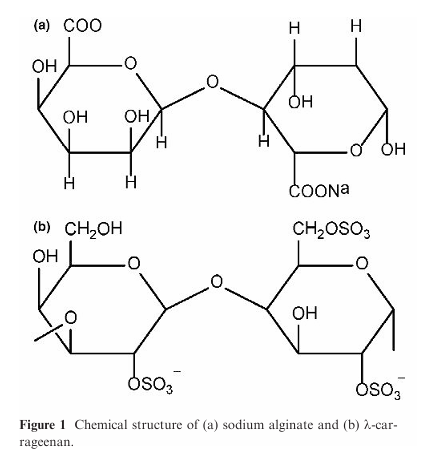
The results were promising. Both modified materials produced smaller oil droplets as their concentration increased. At concentrations above 0.5%, the emulsions showed average droplet diameters of about 124–144 nanometres. The modified polysaccharides also reduced the tension at the oil-water boundary, making it easier to form and maintain small droplets. In addition, the modified emulsions remained relatively stable across pH 4–9 and during heating from 40 to 80 °C. During 30 days of storage at 5 and 25 °C, their droplet sizes remained more stable than those of emulsions prepared with the original, unmodified polysaccharides.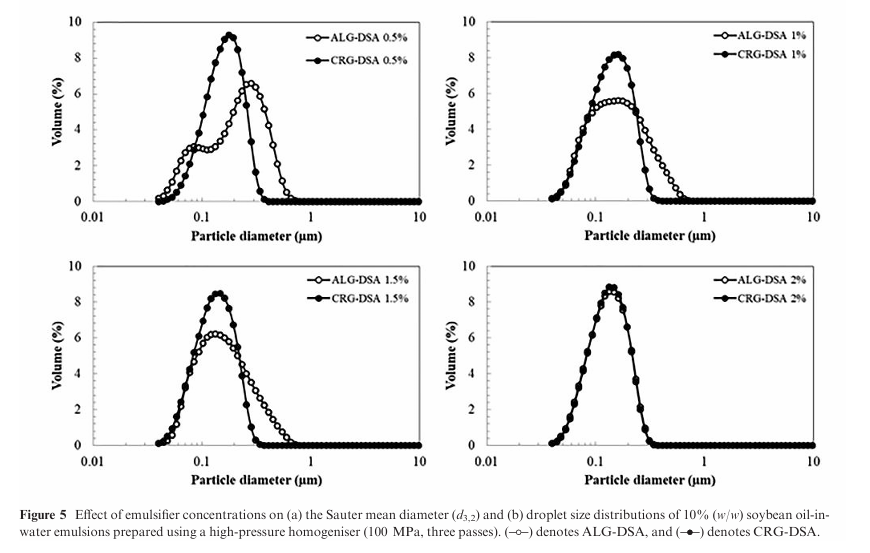
Why does this matter beyond the laboratory? Seaweeds are renewable marine resources with established uses in food and other industries. Developing higher-value applications from seaweed polysaccharides could support more efficient use of marine biological resources. This connects directly with SDG 14: Life Below Water, which encourages the sustainable use and conservation of oceans and marine resources. The study suggests that seaweed-derived ingredients can contribute to innovation while potentially creating new value from marine biomass.
However, the researchers also note an important limitation: further development is needed before commercial application, because the use of DSA in food and pharmaceutical products has not yet been regulated. In other words, the science is promising, but safety, regulation, and practical production must come before widespread use.
This research shows that a familiar marine resource can be more than food or raw material. With careful scientific modification, seaweed polysaccharides may become useful tools for creating more stable products while opening new possibilities for sustainable marine-resource utilization.
Reference
DOI:
https://doi.org/10.1111/ijfs.14264Digital Object Identifier (DOI)
Contact:
Prof. Dr. Ir. Ambo Tuwo DEA
+628124206391
ambotuwo62@gmail.com