MAKASSAR, Indonesia Mei 1 2026/MARGO/ Imagine being a mud crab fisherman in Bone Regency, South Sulawesi. Each morning, you set your traps in the mangrove-lined waters, hoping for a good catch. Mud crabs are valuable—they fetch high prices in local and international markets. But lately, you’ve noticed something worrying: the crabs are getting harder to find, and your catches are becoming unpredictable.
This is not just a fisherman’s intuition. A study published on 1 May 2026 in the Egyptian Journal of Aquatic Biology and Fisheries (Publisher: The Egyptian Society for the Development of Fisheries and Human Health) titled “Bioeconomic Analysis of the Mud Crab (Scylla sp.) in Bone Regency, South Sulawesi” provides the hard data behind this growing concern—and offers a path forward.
Researchers from Hasanuddin University analyzed catch and fishing effort data from 2015 to 2023, using a bioeconomic model to understand the balance between biology and economics. The results paint a clear picture of both risk and opportunity.
The mud crab population in Bone Regency has an intrinsic growth rate of 2.8% per year and a carrying capacity of about 624 tons. Under Maximum Sustainable Yield (MSY) conditions—where the population can be harvested without long-term decline—the optimal catch would be about 436 tons per year, with a fishing effort of 427 units. This is the biological limit.
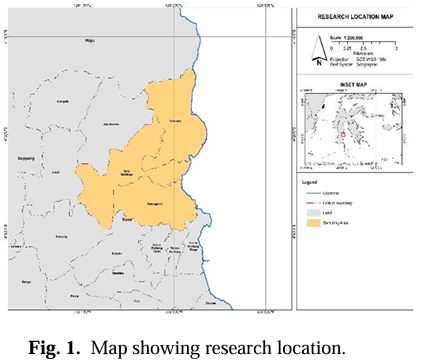
But the study also considered economics. Under Maximum Economic Yield (MEY)—where profits are maximized—the same catch can be achieved with far less effort (just 0.0046 units!), generating a maximum profit of over IDR 8.2 billion. The key insight: fewer boats, better efficiency, higher profits.
The warning comes from the “open access” scenario, where anyone can fish without restrictions. In this model, fishing effort skyrockets to 851 units, biomass crashes to just 0.5 tons, and economic profit disappears entirely. This is the tragedy of the commons—when individual self-interest destroys the resource everyone depends on.
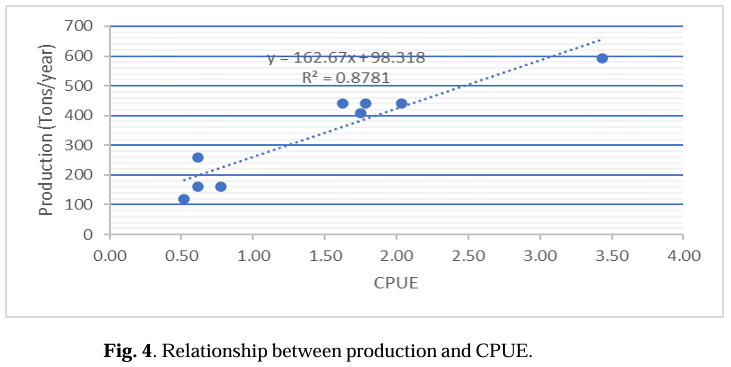
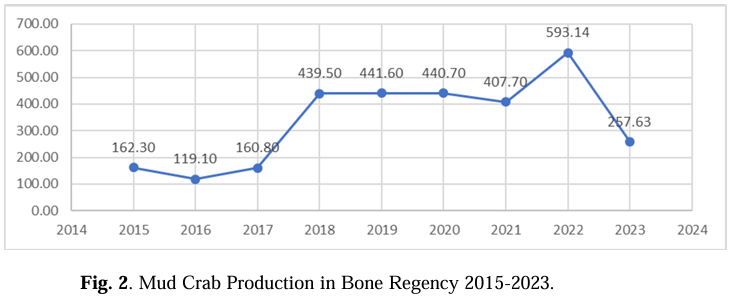
The fluctuation in real-world catches reflects this danger. Production peaked at 593 tons in 2022, then crashed by over 50% to 258 tons in 2023. This volatility signals that the fishery is under serious
So what’s the solution? The study recommends MEY-based management: controlling fishing effort, strengthening regulations, and protecting the mangrove ecosystems that serve as crab nurseries. With the right approach, fishermen can earn more while catching less—a win for both people and the planet.
This research directly supports the United Nations’ Sustainable Development Goal 14: Life Below Water. By promoting sustainable fisheries management, it helps conserve marine resources, protect coastal ecosystems, and secure the livelihoods of fishing communities (SDG 1). In a world where overfishing threatens both biodiversity and food security, this study offers a blueprint for fishing smarter, not harder.
Reference
DOI:
https://journals.ekb.eg/article_502749_3a6820346a25de235f366eeeb0f1f990.pdf
Contact:
Prof. Dr. Ir. Ambo Tuwo DEA
+628124206391
ambotuwo62@gmail.com