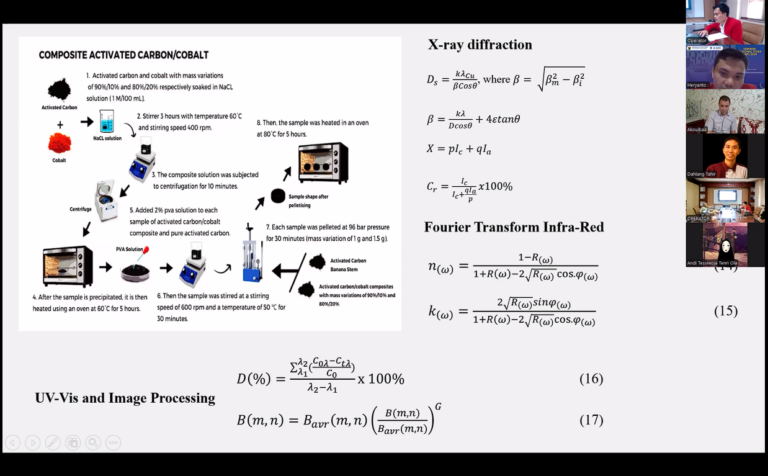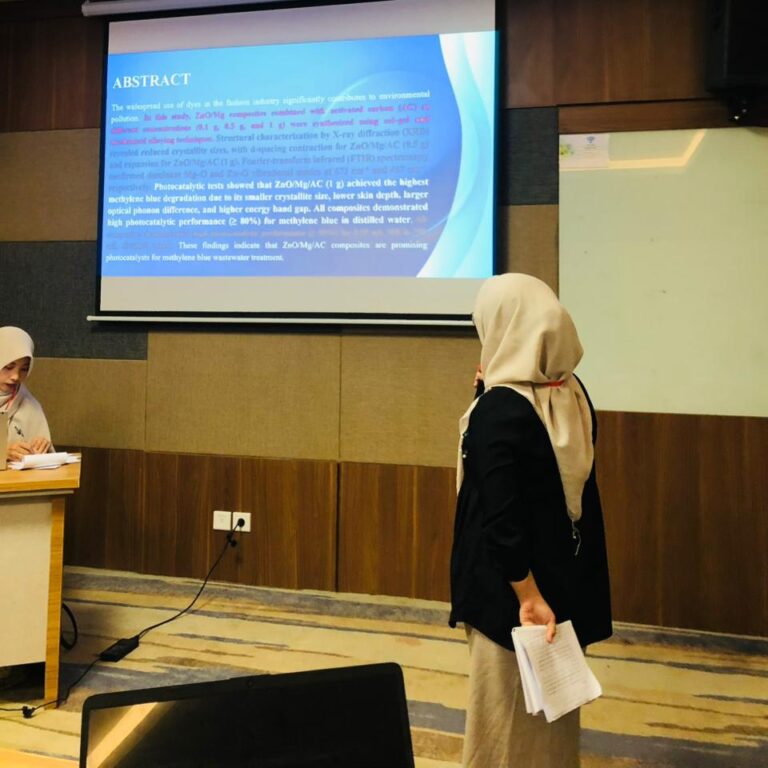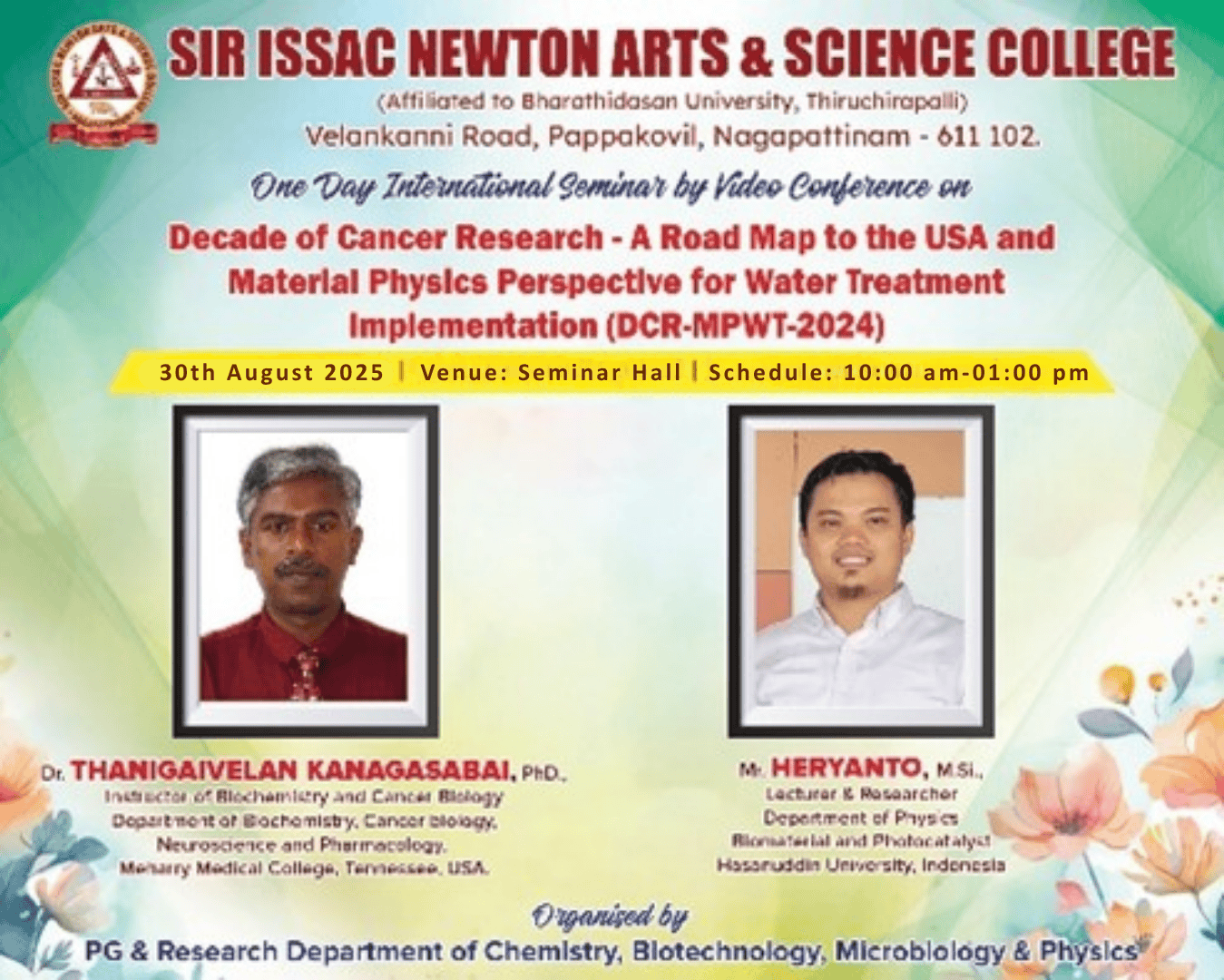

In an increasingly interconnected world, scientific collaboration has become a cornerstone for addressing global challenges that transcend national boundaries. The international academic activity titled “Decade of Cancer Research: A Road Map to the USA and Material Physics Perspective for Water Treatment Implementation” represents a strategic initiative aimed at fostering interdisciplinary dialogue and strengthening global research partnerships. Conducted on 20 August 2025, this event brought together 250 participants through a hybrid platform, combining a Zoom Meeting with an on-site seminar at Seminar Hall Sir Isaac Newton Arts & Science College, India.
This activity was designed as an international collaborative academic forum, integrating perspectives from cancer research and material physics, particularly focusing on innovative approaches to water treatment technologies. By bridging these two fields, the program highlighted how advanced material science can contribute not only to medical research but also to environmental sustainability and public health improvement.
A central highlight of the event was the contribution of Dr. Heryanto, S.Si., M.Si., a distinguished researcher whose expertise in material physics provided valuable insights into the development of functional materials for efficient water purification systems. Complementing this was the participation of Thanigaivelan Kanagasabai, Ph.D, an international partner whose academic experience in global research collaboration enriched discussions on research mobility pathways, particularly toward academic advancement in the United States.
The event aligns strongly with several Sustainable Development Goals (SDGs), explicitly contributing to SDG 1 (No Poverty), SDG 4 (Quality Education), and SDG 17 (Partnerships for the Goals). Through knowledge exchange and capacity building, the activity supports SDG 4 by enhancing access to quality scientific education and promoting lifelong learning opportunities. Furthermore, by addressing water treatment innovations, it indirectly contributes to improving living conditions and reducing poverty (SDG 1), particularly in regions where access to clean water remains limited. Most importantly, the collaborative nature of this event embodies SDG 17 by strengthening international partnerships, fostering knowledge transfer, and encouraging joint research initiatives.
Beyond academic discourse, this activity also served as a platform for inspiring early-career researchers and students to engage in global scientific communities. The discussions emphasized the importance of interdisciplinary approaches in solving complex problems, encouraging participants to think beyond conventional boundaries and pursue innovative research directions.
In conclusion, this international academic activity successfully demonstrated how collaborative efforts in science and technology can drive meaningful impact. By integrating cancer research with material physics applications in water treatment, the event not only broadened scientific perspectives but also reinforced the critical role of global partnerships in achieving sustainable development goals. Such initiatives are essential in shaping a future where science serves as a unifying force for global progress and societal well-being.