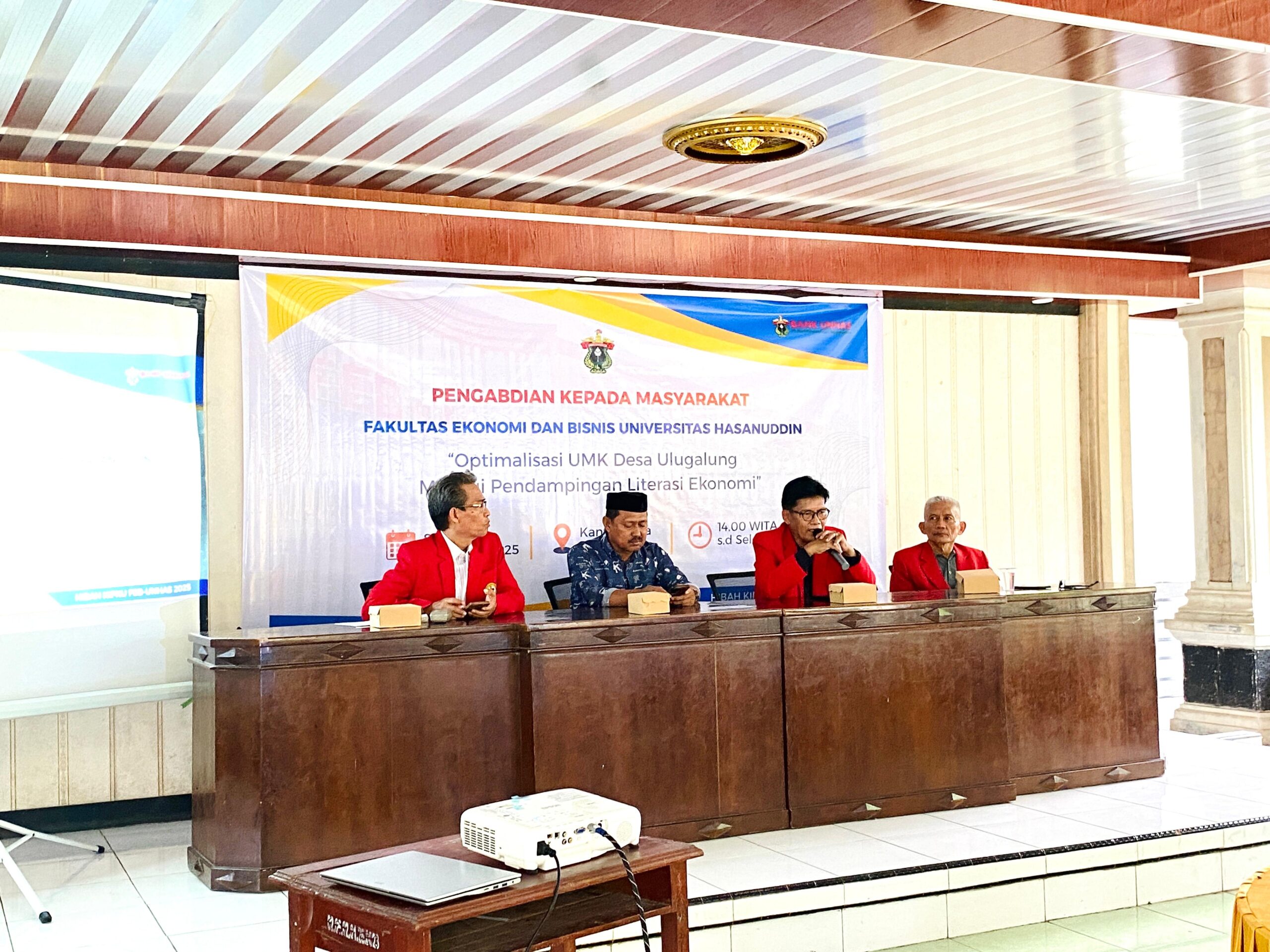

The community service activity titled “Optimizing Ulugalung Village’s MSMEs Through Economic Literacy Assistance” represents a meaningful initiative aimed at empowering local economic actors through knowledge-based interventions. Conducted in Ulugalung Village, Bantaeng, South Sulawesi, on November 8, 2025, this program involved 25 participants consisting of local micro, small, and medium enterprise (MSME) actors, community members, and facilitators. The activity highlights the strategic role of education and mentoring in enhancing the capacity of grassroots economies.
This initiative emphasized that community service is an integral part of the Tri Dharma of Higher Education, which encompasses education, research, and community engagement. Through this framework, academic knowledge is not confined within classrooms but is directly applied to address real societal challenges. In this context, the program aimed to strengthen economic literacy among MSME actors, enabling them to better understand financial management, market dynamics, and business sustainability.
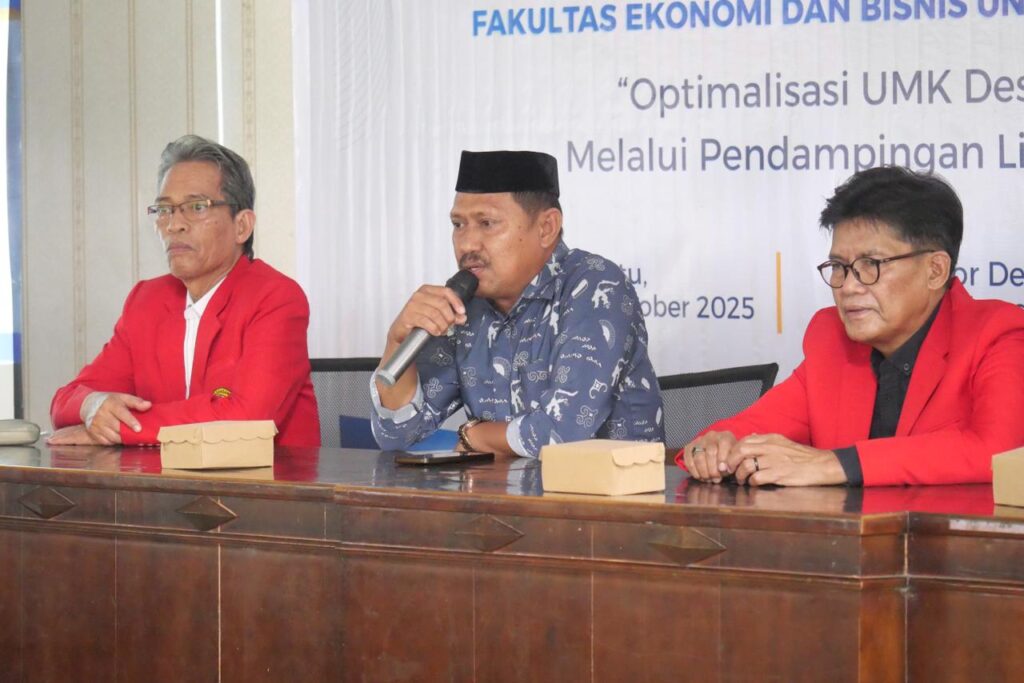
The mentoring process was designed in a participatory and practical manner, allowing participants to actively engage in discussions, case studies, and problem-solving sessions. By improving their understanding of basic economic principles, MSME actors are expected to make more informed decisions, manage resources efficiently, and adapt to changing market conditions. This approach is crucial in rural areas where access to formal economic education is often limited.The objectives of this activity align closely with several Sustainable Development Goals (SDGs), particularly SDG 1: No Poverty, SDG 4: Quality Education, and SDG 17: Partnerships for the Goals. By enhancing the capacity of MSMEs, this program contributes to poverty reduction (SDG 1) through increased income opportunities and economic resilience. Strengthening local businesses is widely recognized as a key driver in improving household welfare and reducing economic vulnerability.
In addition, the focus on economic literacy directly supports SDG 4: Quality Education, as it promotes inclusive and practical learning opportunities outside formal institutions. The program serves as a platform for lifelong learning, where participants gain relevant skills that can be immediately applied in their daily economic activities. This reflects the importance of education not only as a theoretical pursuit but as a tool for real-world empowerment.
Furthermore, the collaborative nature of this initiative reflects the spirit of SDG 17: Partnerships for the Goals. The success of the program relies on the synergy between academic institutions, local governments, and the community. Such partnerships are essential in ensuring that development programs are contextually relevant, sustainable, and impactful.
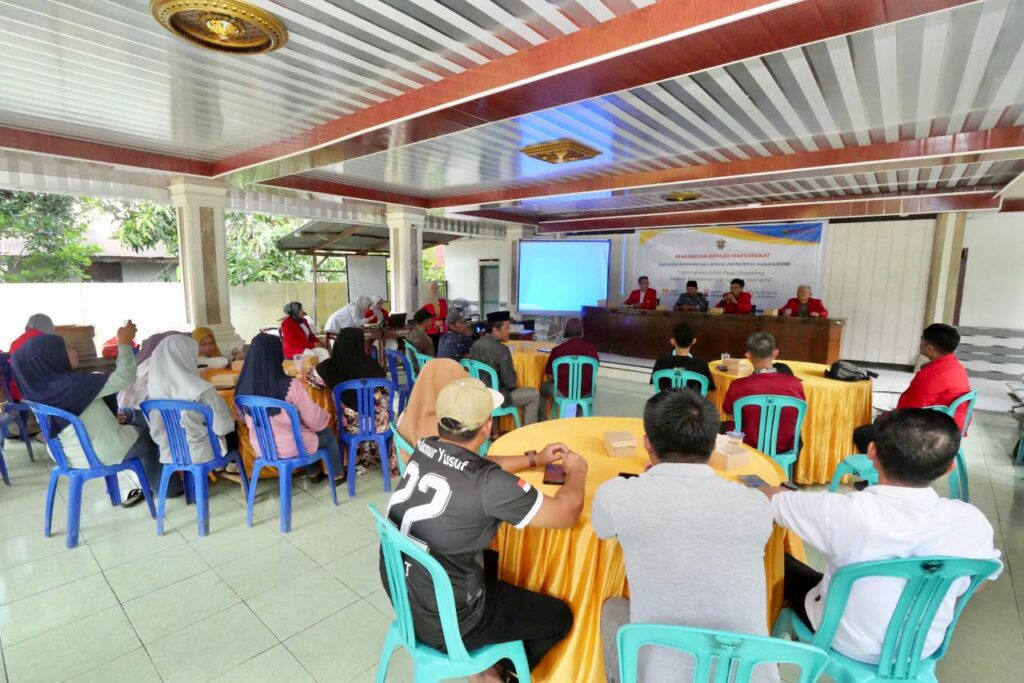
Overall, this community service activity demonstrates that strengthening economic literacy is a powerful strategy to support MSME development and community welfare. By integrating knowledge, collaboration, and practical engagement, the program contributes to building a more inclusive and sustainable local economy. It also reinforces the role of higher education institutions as agents of change that actively participate in addressing societal challenges and advancing sustainable development at the grassroots level.
contact:
Anas Iswanto Anwar