


When Papaya Leaves Meet a Green Laser: A Bright New Weapon Against a Stubborn Fungus
Candida albicans sounds harmless. It is not. This tiny fungus lives quietly inside many of us, and most of the time our bodies keep it under control. Trouble begins when it builds a biofilm, a slimy fortress of cells glued to a surface and wrapped in a protective shield. Inside that shield ordinary antifungal drugs often lose their punch. Medical devices, our gut, our skin, all of them can become its home. For people with weak immune systems the danger climbs fast.
So researchers went hunting for something different. Their idea pairs two unlikely partners, the humble papaya leaf and a beam of green laser light.
Here comes the clever part. Papaya leaves are loaded with chlorophyll, the same green pigment that lets plants drink in sunlight. In this study the chlorophyll takes on a fresh job as a photosensitizer, a molecule that wakes up when the right color of light strikes it. Aim a green laser at it and something striking happens. The excited chlorophyll begins pumping out reactive oxygen species, restless molecules that rip into the fungus from within. Its membrane, its proteins, its DNA, every part takes a beating. The cell cannot bounce back. Scientists call this whole process photodynamic inactivation.
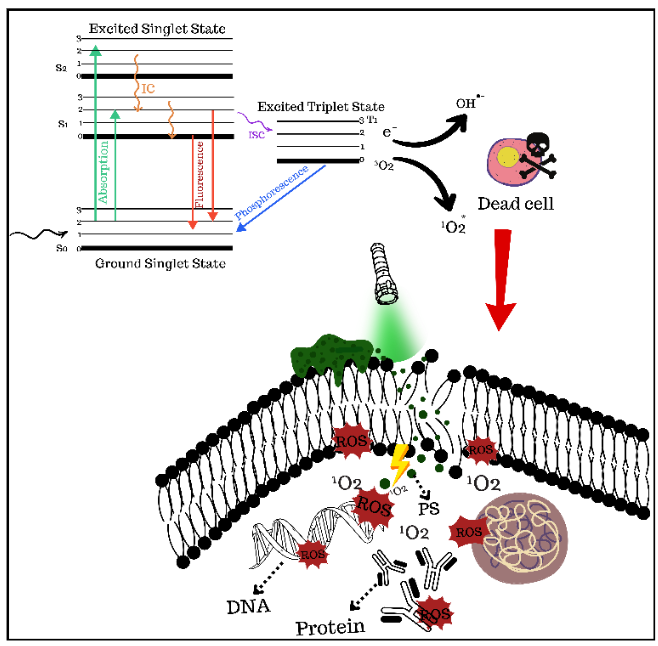
The team, based at the Department of Physics of Universitas Hasanuddin in Makassar, ran the test with care. They pulled chlorophyll from papaya leaves, then fired a 530 nanometer green laser at Candida biofilms for up to five minutes, using two chlorophyll strengths of 10 percent and 15 percent. The numbers talk. At the longest exposure the stronger dose erased 87 percent of the biofilm cells, and the milder 10 percent dose still took down 83 percent. Both outcomes cleared the bar for statistical significance.
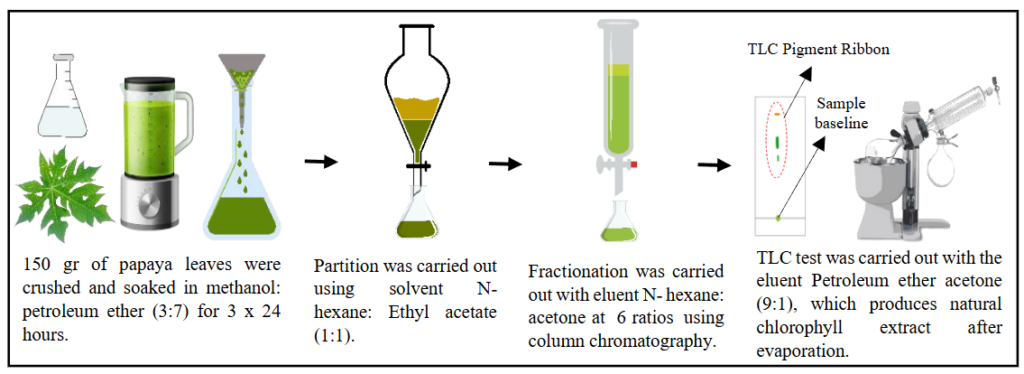
The reason this matters reaches well past the lab bench. Drug-resistant infections rank among the loudest alarms in modern medicine, and fungi like Candida are quietly joining that battle on the wrong side. A therapy built from a cheap, widely grown plant and a small portable laser could crack open a door for clinics that cannot afford pricey imported drugs. It hands nature a real part in solving a very human problem.
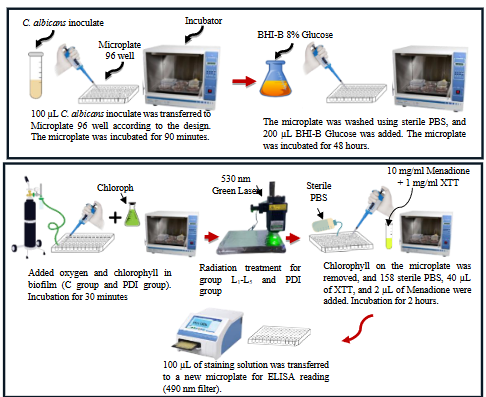
This is exactly the spirit of Sustainable Development Goal 3, Good Health and Well-being, which pushes the world toward affordable, effective care and a firmer stand against resistant microbes. A fungus fighter you could grow in the backyard fits that dream nicely.
The full study, titled “Photoinactivation of Candida albicans Biofilm with Green Laser Mediated by the Papaya Leaf Extract Chlorophyll,” appears in the Indonesian Physical Review, published by the Faculty of Mathematics and Natural Sciences, Universitas Mataram, released on October 21, 2024. This is early work, no doubt. Even so it carries a hopeful note. Sometimes the answer to a modern medical puzzle has been growing in the garden the whole time.
