
The 2nd Core to Core International Biosymposium 2025 was held in Denpasar, Bali, on October 16–17, 2025, bringing together researchers, academics, and students from various countries to exchange knowledge and share recent developments in biosciences, biotechnology, pharmaceutical sciences, and health sciences. The symposium provided an important international platform for disseminating research findings, discussing emerging scientific challenges, and strengthening academic and research networks across institutions and countries.
The event featured approximately 30 researchers and scientists who actively participated in presenting and discussing their research findings. Their participation reflected the importance of international scientific collaboration in advancing knowledge and developing innovative solutions to complex health and biological challenges. The symposium also encouraged interaction between established researchers and students, creating opportunities for knowledge transfer, scientific discussion, and the development of future research collaborations.
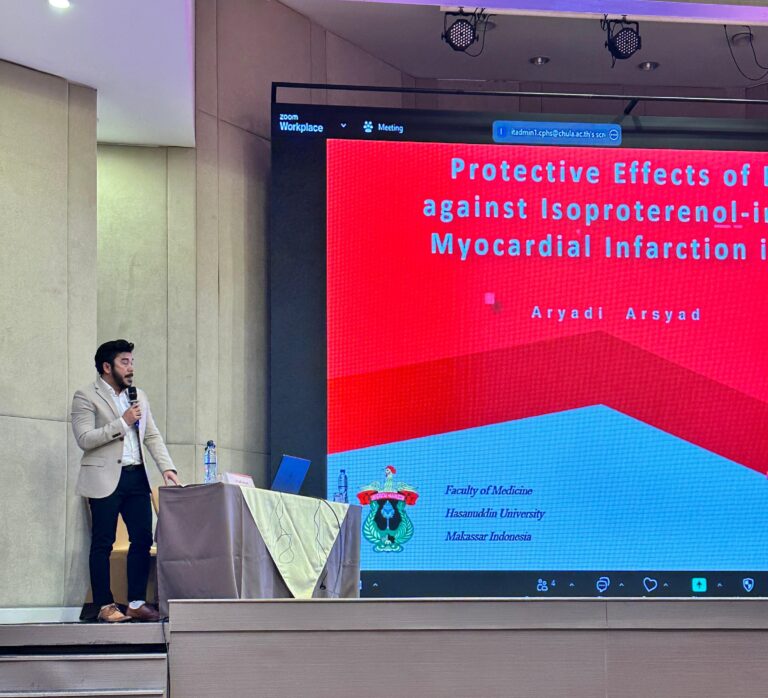
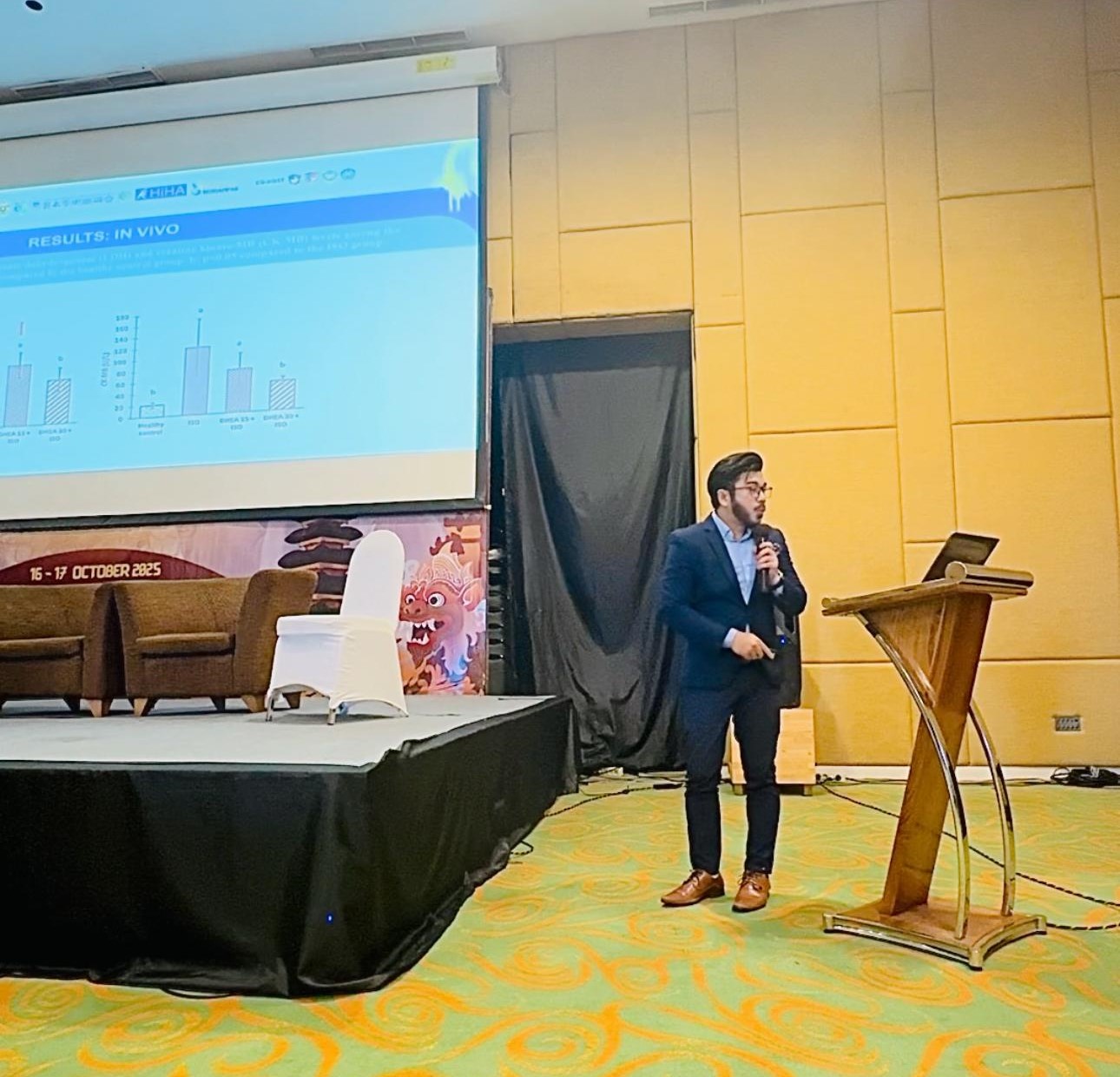
As one of the presenters, I had the opportunity to deliver a presentation entitled “Cardioprotective Role of Dehydroepiandrosterone (DHEA) in Isoproterenol-Induced Myocardial Infarction: An In Vivo and In Silico Investigation.” The presentation explored the potential protective role of dehydroepiandrosterone (DHEA) against myocardial injury using complementary in vivo and in silico approaches. The research combined experimental investigation in an animal model with computational analysis to provide a broader understanding of the potential biological mechanisms underlying the cardioprotective effects of DHEA.
The presentation contributed to discussions on cardiovascular health and the development of evidence-based approaches for understanding and potentially preventing cardiovascular injury. While findings from experimental models require further investigation before they can be applied clinically, research of this kind provides an important scientific foundation for future studies and the development of innovative health strategies.
The symposium also highlighted the potential of tropical bioresources as valuable sources for future scientific innovation. Indonesia and other tropical regions possess rich biological resources that can support research in medicine, biotechnology, pharmaceuticals, and health sciences. Responsible exploration and scientific development of these resources can contribute to the discovery of new knowledge and potential solutions for future health challenges.
This activity directly supports several Sustainable Development Goals (SDGs), particularly SDG 3: Good Health and Well-being, SDG 4: Quality Education, and SDG 17: Partnerships for the Goals. The presentation and scientific discussions contributed to SDG 3 by advancing research related to cardiovascular health. The exchange of scientific knowledge and interaction between researchers and students supported SDG 4 through the strengthening of education, research capacity, and lifelong learning. Meanwhile, the international participation and collaborative nature of the symposium reflected SDG 17, emphasizing the importance of partnerships and knowledge sharing in addressing global challenges.
Overall, the 2nd Core to Core International Biosymposium 2025 served as a valuable forum for scientific dissemination, academic exchange, and international collaboration. Participation in the symposium provided an opportunity to share research findings, expand scientific networks, and contribute to the advancement of bioscience and health research toward sustainable development.
Aryadi Asryad
Email: aryadi.arsyad@med.unhas.ac.id