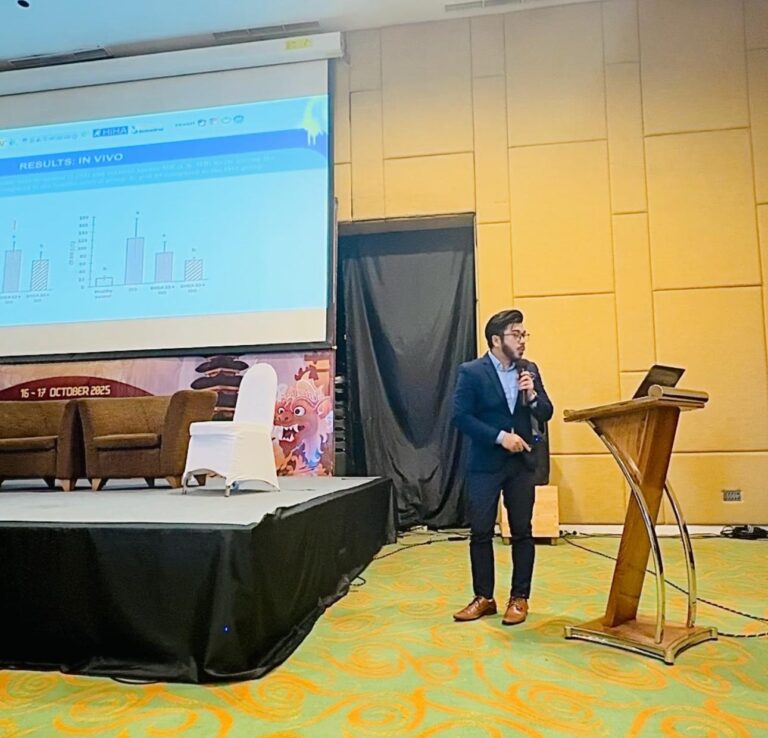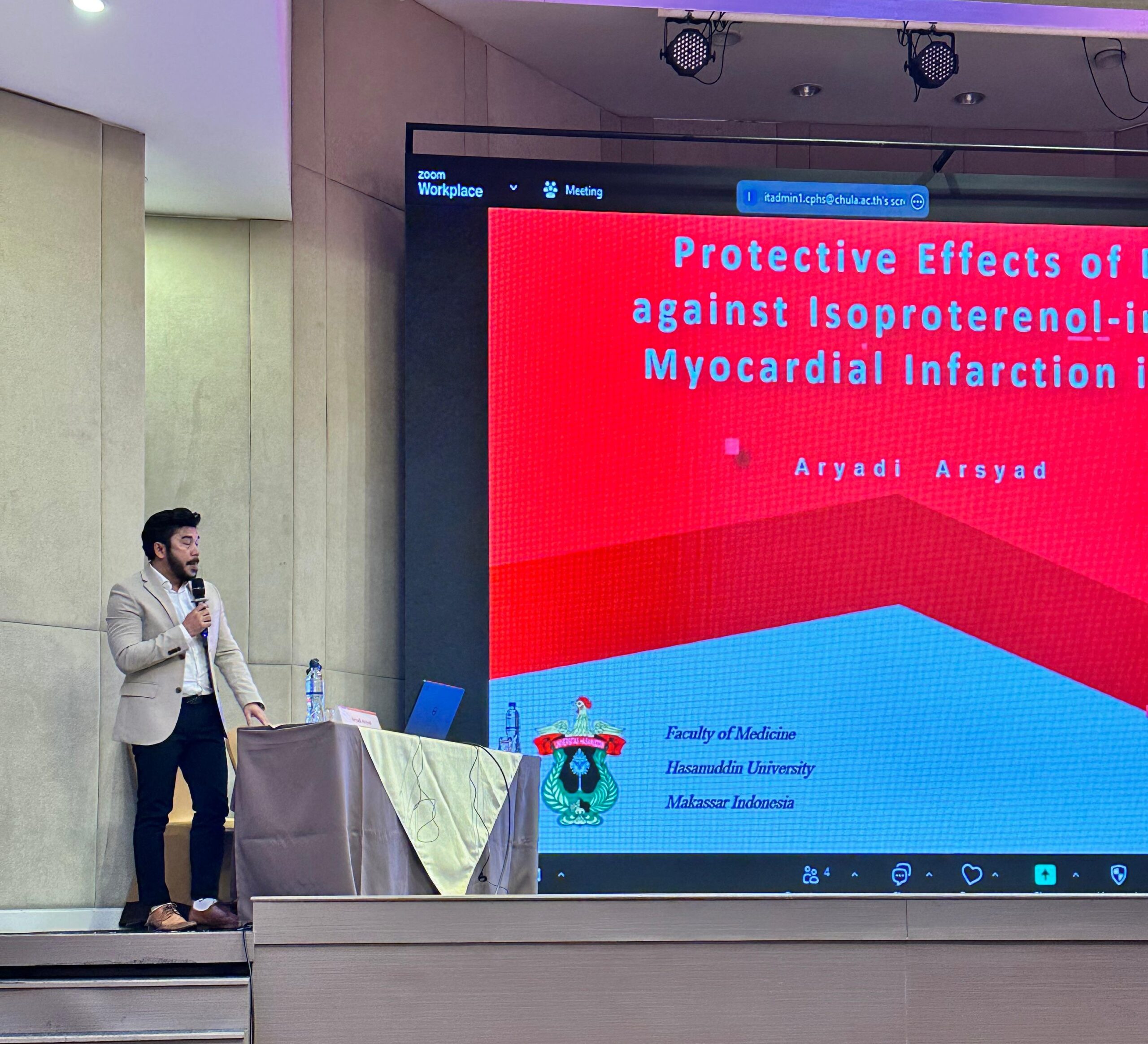

Bangkok 8 October 2024. The 24th International Conference of Public Health Sciences was held on October 8, 2024, as an international forum for researchers, academics, policymakers, healthcare professionals, and public health experts to exchange knowledge, share research findings, and strengthen collaboration in addressing global health challenges. The conference brought together more than 200 participants from various countries, creating an important platform for scientific discussion and the development of innovative approaches to improve public health.
As part of the scientific program, I had the opportunity to serve as one of the speakers and present a research topic entitled “Protective Effects of Dehydroepiandrosterone (DHEA) against Isoproterenol-Induced Myocardial Infarction in Rats.” The presentation discussed experimental findings concerning the potential protective role of dehydroepiandrosterone (DHEA), a naturally occurring steroid hormone, in reducing cardiac injury associated with myocardial infarction induced by isoproterenol in an animal model.
The research is relevant to the broader public health challenge of cardiovascular disease, which remains an important cause of illness and death worldwide. By investigating potential protective mechanisms against cardiac injury, this study contributes to the development of scientific knowledge that may support future research on cardiovascular disease prevention and treatment. Although experimental findings in animal models cannot be directly translated into human treatment, such research provides an important foundation for understanding biological mechanisms and developing further evidence-based studies.
Beyond the scientific presentation, participation in the conference provided an opportunity to exchange perspectives with researchers and professionals from different countries and disciplines. These interactions encouraged the sharing of ideas, strengthened academic networks, and opened opportunities for future research collaboration. The conference also demonstrated the importance of connecting scientific evidence with policy and practice so that advances in health research can contribute to meaningful improvements in community health.
The activity supports the achievement of the Sustainable Development Goals (SDGs), particularly SDG 1: No Poverty, SDG 4: Quality Education, and SDG 17: Partnerships for the Goals. Through the dissemination of health research and the exchange of scientific knowledge, the conference contributes to SDG 4 by promoting lifelong learning, academic development, and the strengthening of research capacity. Improving knowledge and capacity in health sciences can also contribute indirectly to SDG 1, as better health outcomes can reduce the social and economic burden of disease, particularly among vulnerable communities. Furthermore, the participation of researchers and health professionals from different countries directly reflects SDG 17, emphasizing international cooperation, knowledge sharing, and partnerships to address complex global challenges.
Overall, the 24th International Conference of Public Health Sciences served not only as a venue for presenting scientific research but also as a platform for strengthening international academic networks and promoting the translation of knowledge into future health innovations. Participation in this event represents a meaningful contribution to the advancement of health science, education, and global partnerships toward sustainable development.
Aryadi Asryad
Email: aryadi.arsyad@med.unhas.ac.id