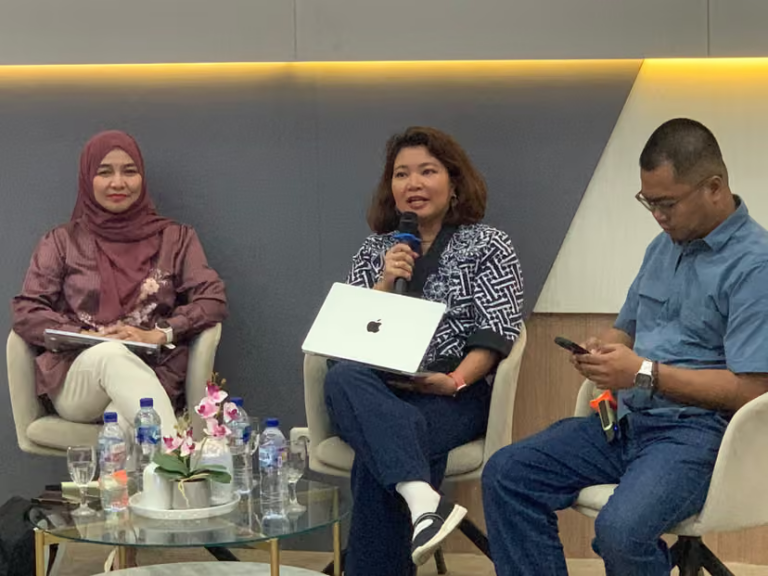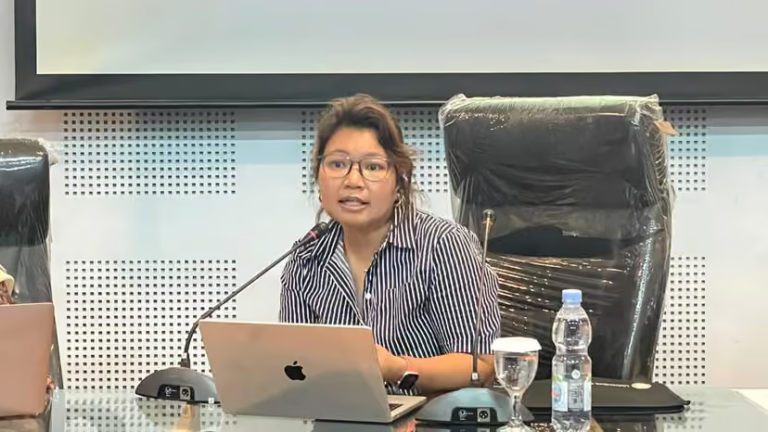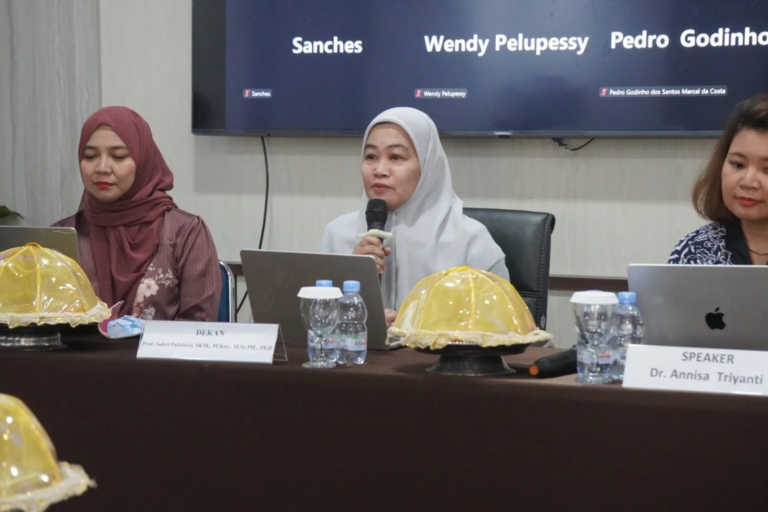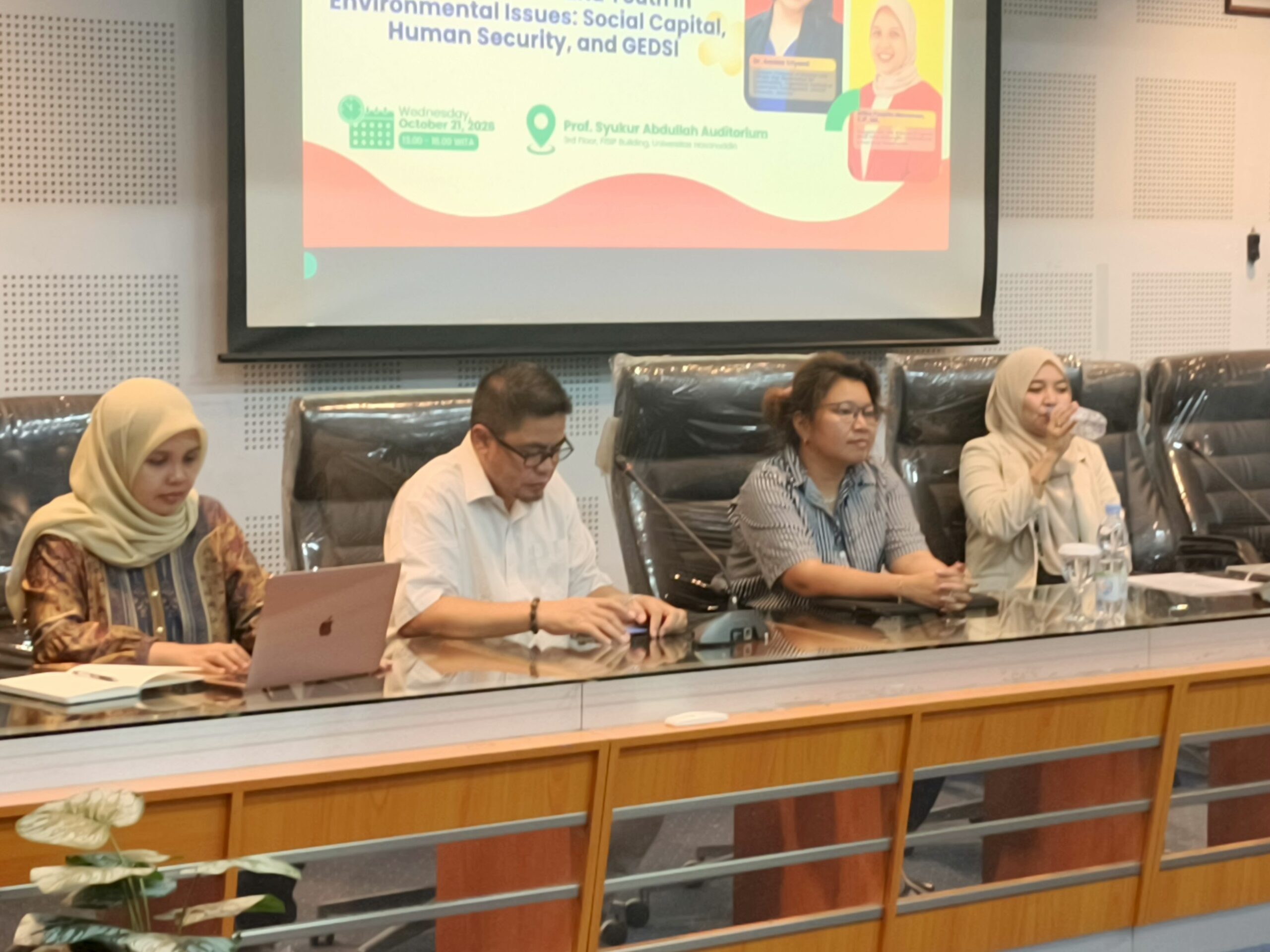

Makassar, 21 October 2026, As climate risks intensify along Indonesia’s coastlines, a pressing question is gaining attention: how can communities, and especially young people, strengthen their ability to withstand environmental shocks? Seeking answers, the Thematic Research Group (TRG) Migration and Human Security, Universitas Hasanuddin, organized Kuliah Umum Diaspora Berdampak #2: “Social Resilience and Youth in Environmental Issues: Social Capital, Human Security, and GEDSI” at Aula Prof. Syukur Abdullah, Universitas Hasanuddin, Makassar, South Sulawesi, Indonesia.
The public lecture welcomed 81 participants from various study programs, most of them from International Relations and Sociology. The diversity of backgrounds reflected a shared understanding that environmental challenges cannot be addressed by a single discipline alone.
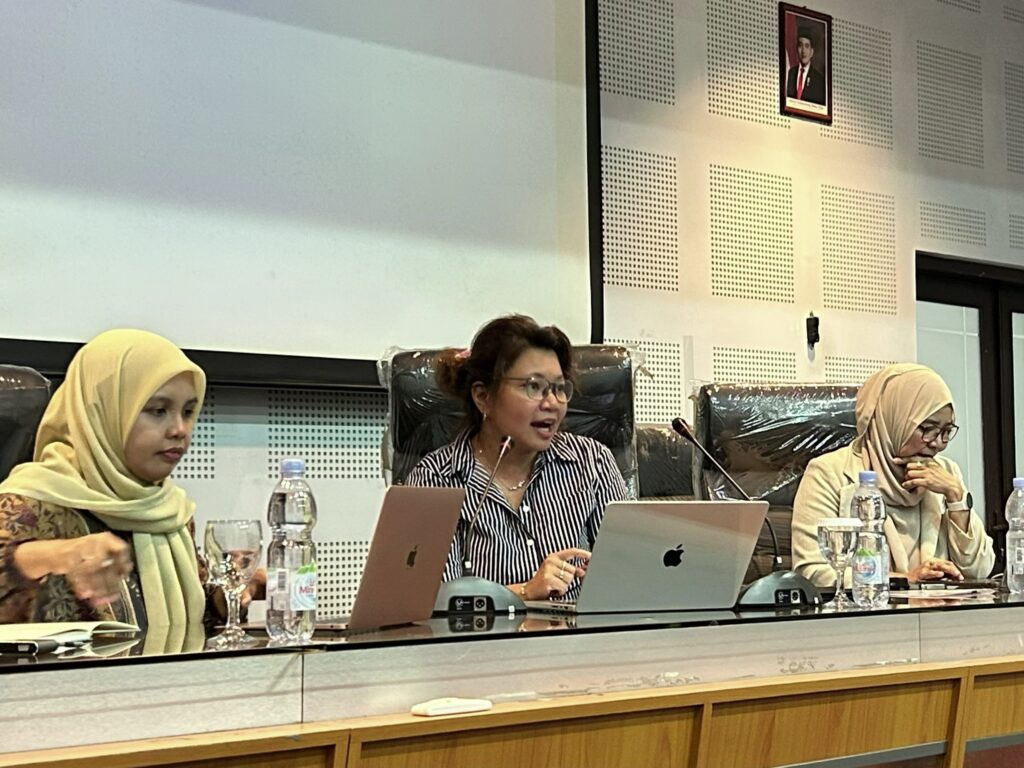
The keynote speaker was Dr. Annisa Triyanti, Assistant Professor of Disaster and Climate Risk Governance for Sustainability at the Copernicus Institute of Sustainable Development, Utrecht University, the Netherlands. Drawing on her expertise, she introduced social resilience as the capacity of communities to cope with, adapt to, and transform in the face of climate, environmental, and disaster risks. She emphasized that social capital, meaning trust, networks, and cooperation among people, often determines how well a community recovers when hazards strike.
Dr. Triyanti presented human security and GEDSI (Gender Equality, Disability, and Social Inclusion) through the 2018 Palu disaster, where earthquake, tsunami, liquefaction, and flash floods struck a community already weakened by conflict in Poso, creating a “multilayer” disaster. Women, children, and persons with disabilities were hit hardest. Marginalized groups’ message was clear: see us as potential, not victims.
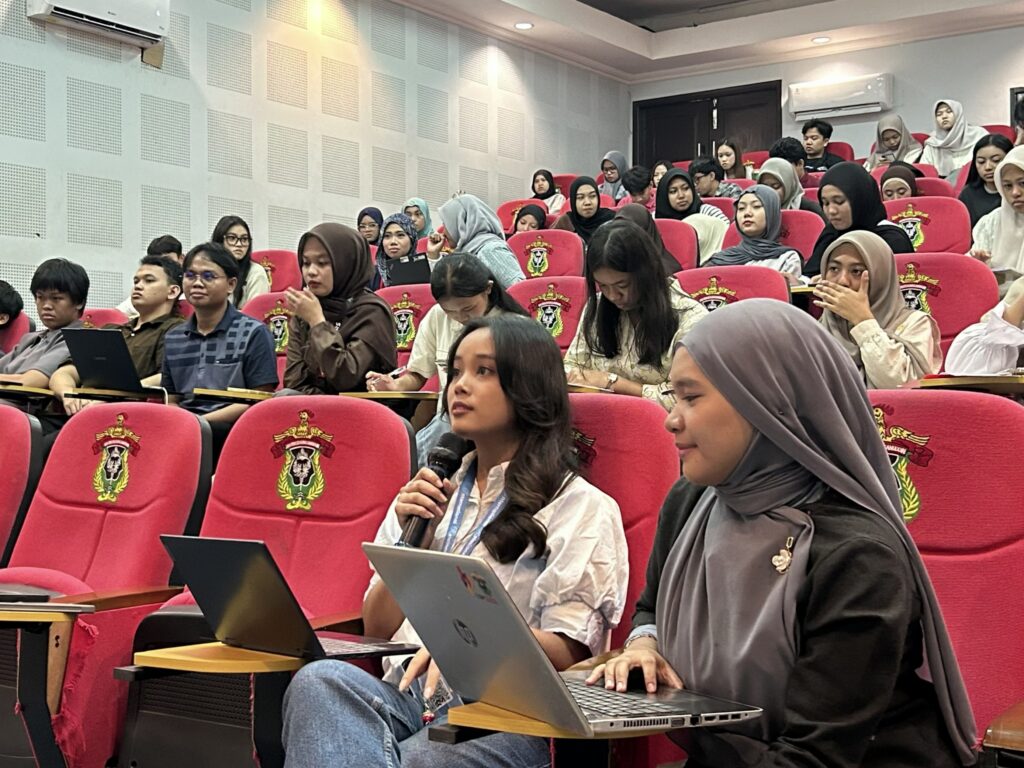
Participants learned that seven of nine planetary boundaries have been crossed, while social dimensions remain hard to measure. Bonding, bridging, and linking social capital strengthens preparedness. Young people were urged to join inclusive environmental governance, and a discussion on human-centered decision-making showed how modern life distances us from nature.
The lecture resonates strongly with the Sustainable Development Goals. By strengthening community resilience and protecting vulnerable groups, it supports SDG 1 (No Poverty), since climate shocks often push households deeper into poverty. As an academic forum that expands knowledge and nurtures young thinkers, it advances SDG 4 (Quality Education). Attention to wellbeing and disaster preparedness contributes to SDG 3 (Good Health and Well-Being), while the focus on coastal communities connects to SDG 14 (Life Below Water) and SDG 15 (Life on Land). Finally, the collaboration between Universitas Hasanuddin and Utrecht University embodies SDG 17 (Partnerships for the Goals).
Beyond knowledge sharing, the lecture marked an initial step toward collaboration, including joint research, scientific articles, and joint proposals between the two universities.
The event was made possible by dedicated student committee members and volunteers: Andi Muh. Guttu Patalo Zulkarnain, Gabriella Nadine Felicia, Ahmad Fadhil Ruhiyat, Rasyiqa Fairuz R. Laitupa, Muhammad Syafiq Ramadhan, Muhammad Rifqy Al-Ikhwan, and Rizky Maharani Hidayat Yamin.
Stressing that climate action must be fair and context-sensitive for the Global South, the lecture closed as Universitas Hasanuddin reaffirmed its commitment to nurturing inclusive, resilient, and action-oriented young leaders.