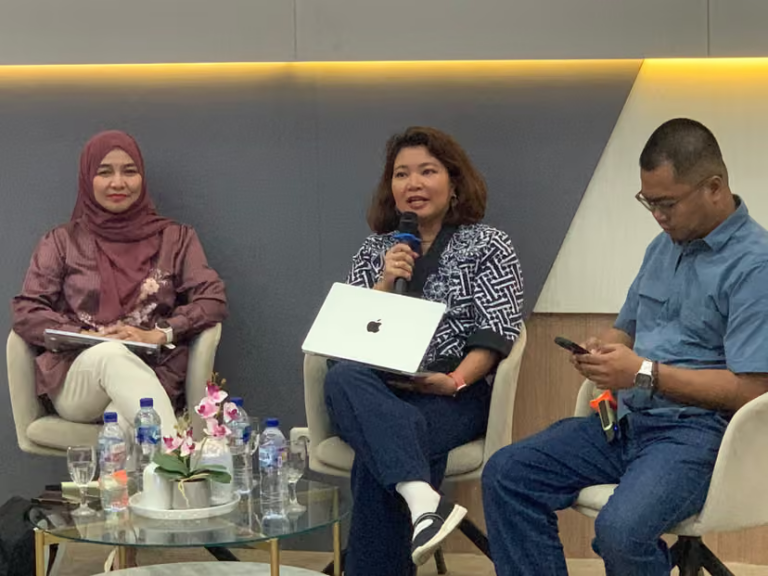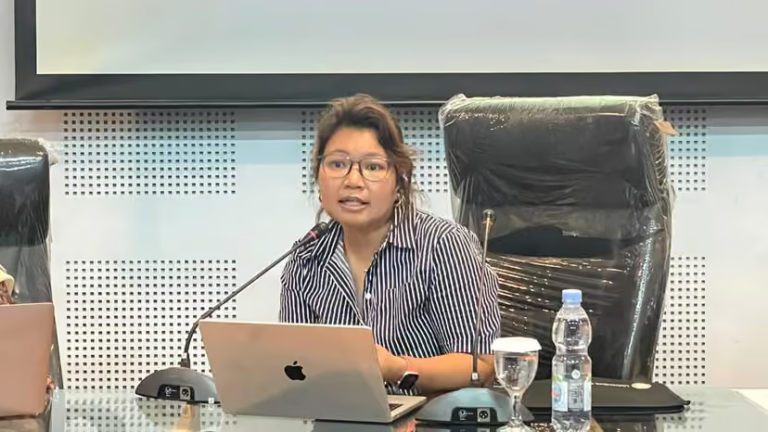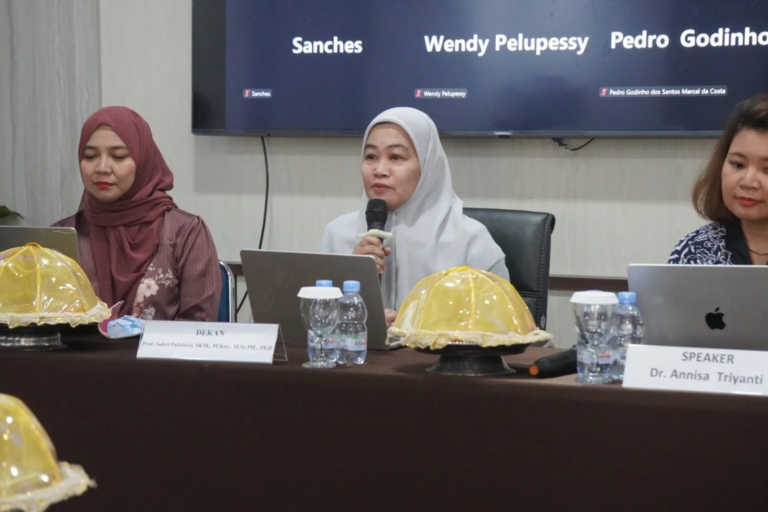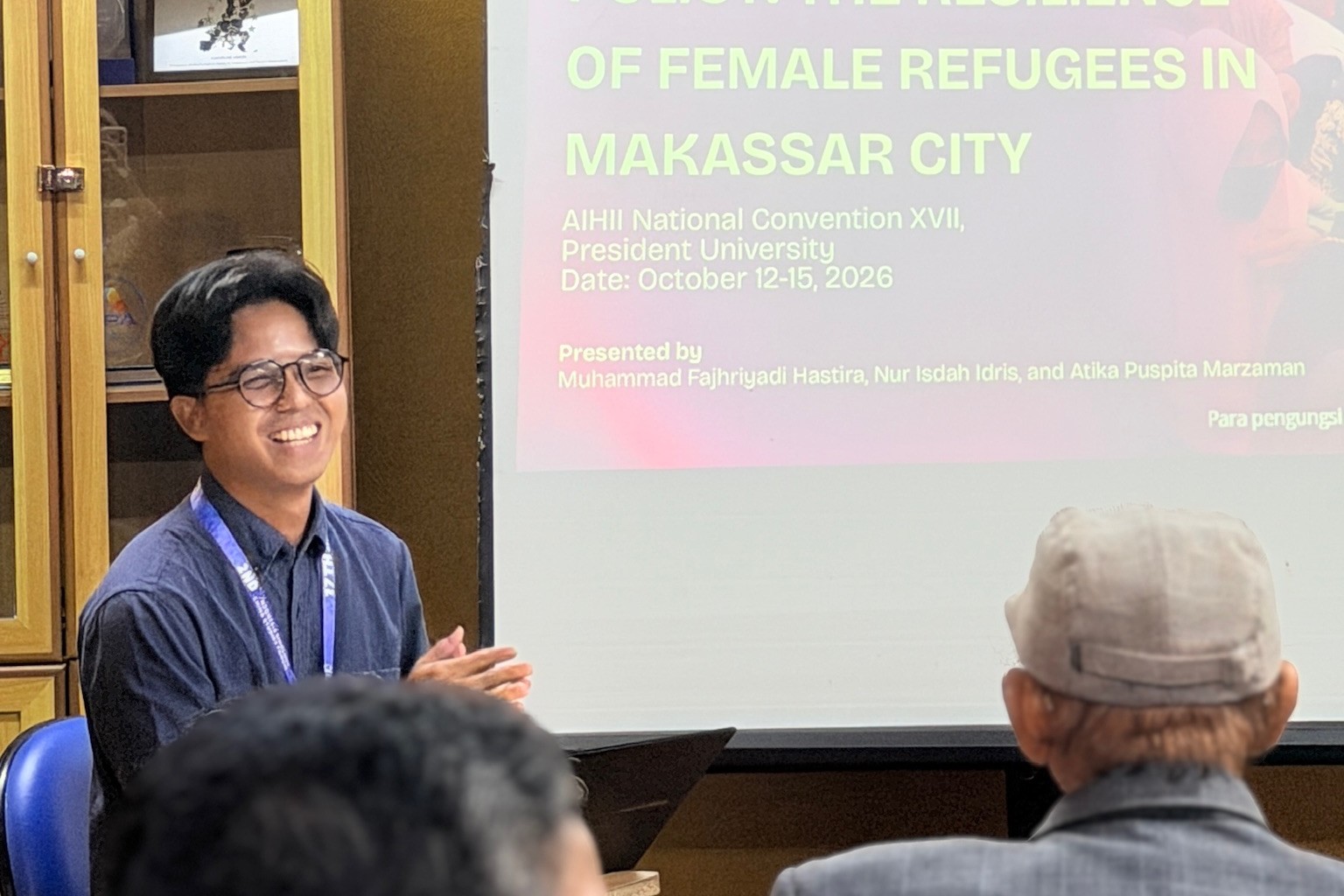

On 13 October 2026, an academic presentation titled “Rights, Gender, and Policy: The Resilience of Female Refugees in Makassar City” was delivered at Universitas Presiden, Kota Jababeka, Cikarang, as part of the XVII National Convention of the Indonesian International Relations Association (VENNAS XVII AIHII). The paper was presented by Muhammad Fajhriyadi Hastira, before 200 participants from 70 universities across Indonesia.
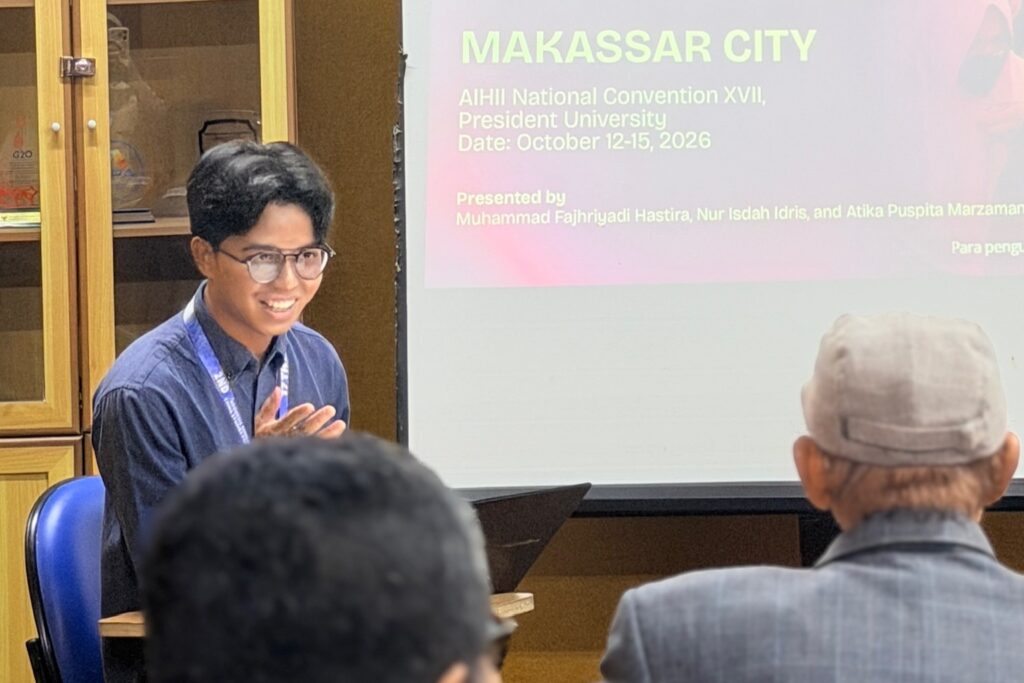
The presentation explored how female refugees in Makassar City face layered vulnerabilities. Uncertain legal status, the absence of the right to work, gender-based violence, and limited access to education and health services often overlap, deepening hardship in daily life. Yet the study also told a story of strength. Female refugees are not simply recipients of aid. Supported by UNHCR and IOM, and sustained by solidarity within their own communities, they continue to build resilience and look after one another.
The study is literature-based and draws on secondary data, including UNHCR and IOM reports, policy documents, and academic literature, rather than field research. Using the frameworks of Human Rights, Gender and Development, and intersectionality, the presenter analysed local policy under Presidential Regulation No. 125 of 2016. The analysis argued that the regulation places greater emphasis on managing refugees than on fulfilling their rights, leaving gaps that disproportionately affect women.
The session closed with practical recommendations: gender-responsive local policies, wider access to informal education, health services and skills training, sustainable funding, stronger coordination among stakeholders, and participatory research that involves refugee women themselves.
This activity is closely connected to several Sustainable Development Goals (SDGs). It supports SDG 1: No Poverty, as legal barriers to work and livelihoods keep refugee women in economic insecurity, and addressing them is a step toward greater resilience. It advances SDG 3: Good Health and Well-Being, by highlighting the need for accessible health services and protection from gender-based violence. It contributes to SDG 4: Quality Education, through its call for expanded informal education and skills training, and by sharing research-based knowledge with students, lecturers, and scholars. Finally, it embodies SDG 17: Partnerships for the Goals, as the recommendations depend on collaboration among government, international organizations, civil society, and academia, while the convention itself brought 70 universities together to exchange ideas.
Ultimately, this presentation reminds us that policy is not only about regulating who stays and who goes, but also about recognizing the dignity and rights of the people affected. By bringing the experiences of female refugees in Makassar into a national academic forum, Muhammad Fajhriyadi Hastira and his co-authors invite scholars and policymakers to move from managing displacement toward protecting rights, so that resilience is supported by policy rather than left to individuals and communities alone.