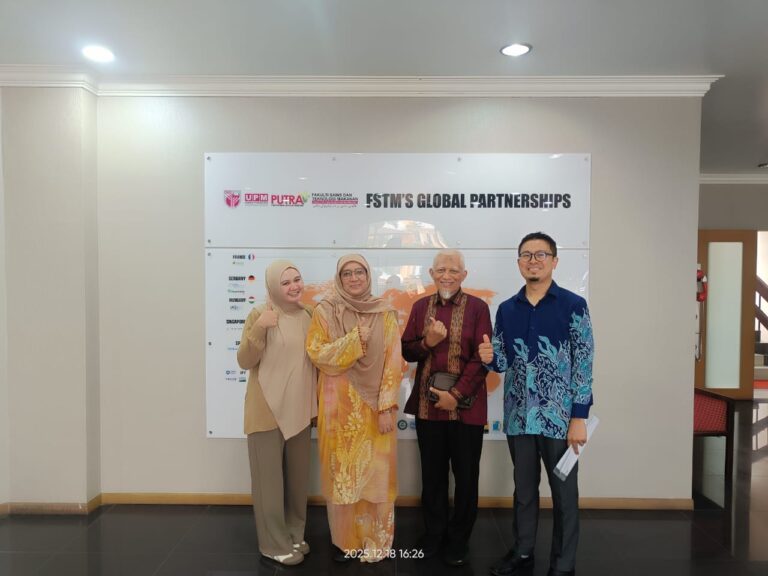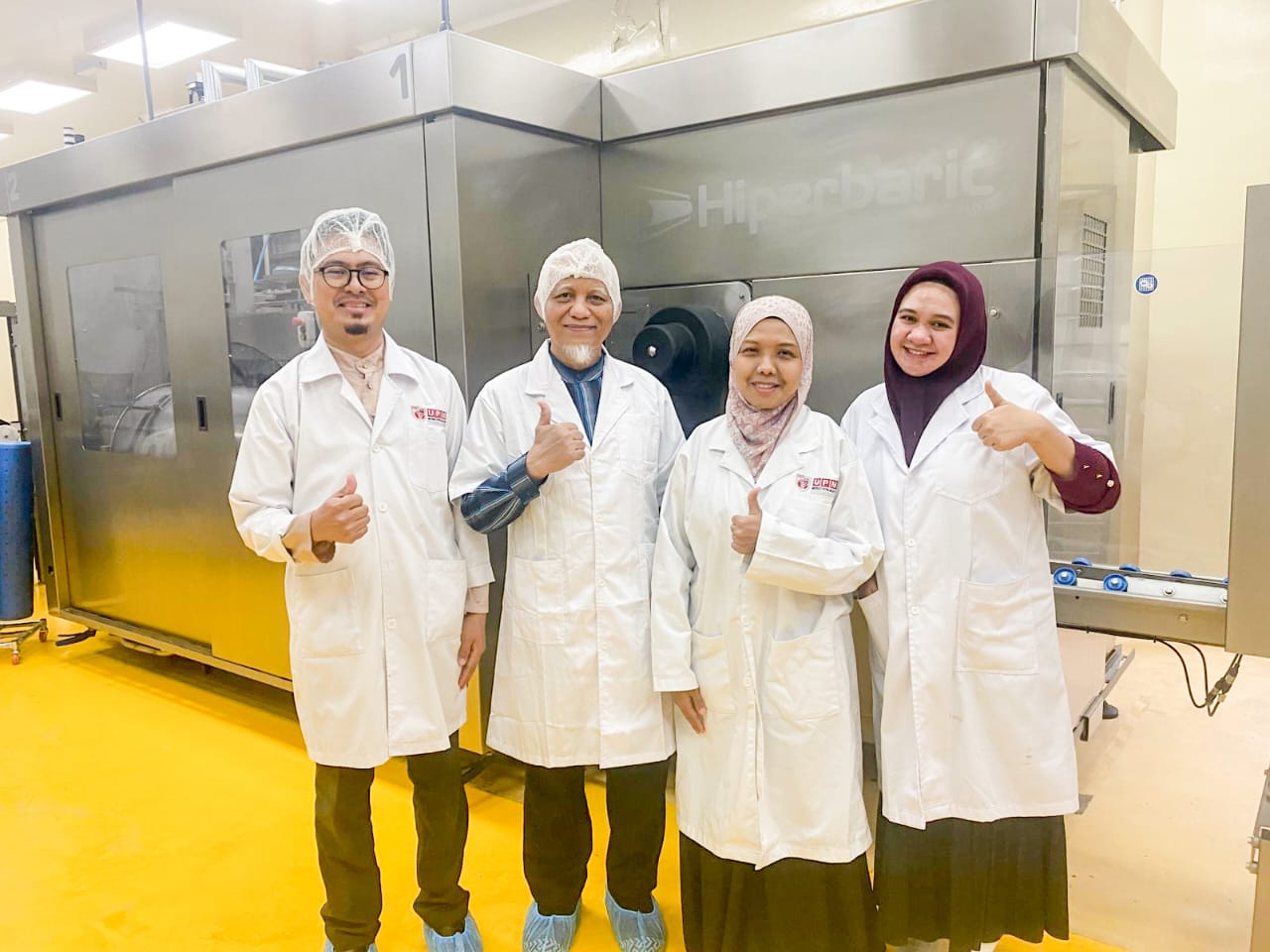

Hasanuddin University, Indonesia — 2025 — A laboratory-based research activity focusing on the development and scientific evaluation of natural nutraceutical products was conducted through collaboration between researchers at Hasanuddin University, Indonesia, and Universiti Putra Malaysia (UPM), Malaysia. The activity was led by Prof. dr. Veni Hadju, M.Sc., Ph.D., with the involvement of Musfira, a Master’s student in Nutrition Science at Hasanuddin University, and Ahmad Faizal Abdull Razis from Universiti Putra Malaysia (UPM), Malaysia, together with researchers from Hasanuddin University and Muhammadiyah University of Jakarta.
The research focused on comparing the laboratory characteristics of Moringa oleifera (MO) and Moringa oleifera enriched with Royal Jelly (MRJ). The study addressed the need for scientific validation of nutraceutical formulations, particularly their antioxidant activity, microbiological quality, and cellular safety. The activity is relevant to the development of functional food and nutraceutical products based on natural resources while providing laboratory evidence that can support future research and product development.
Session Focus: Antioxidant Activity, Microbial Quality, and Cytotoxicity
The laboratory evaluation used three complementary antioxidant assays: DPPH radical scavenging, Ferric Reducing Antioxidant Power (FRAP), and ABTS radical scavenging assays. Microbiological quality was assessed using the Total Plate Count (TPC) method, while cellular safety was evaluated using the MTT assay on 3T3 fibroblast cells. These complementary assessments were designed to examine the functional performance and biological safety of the developed formulations.
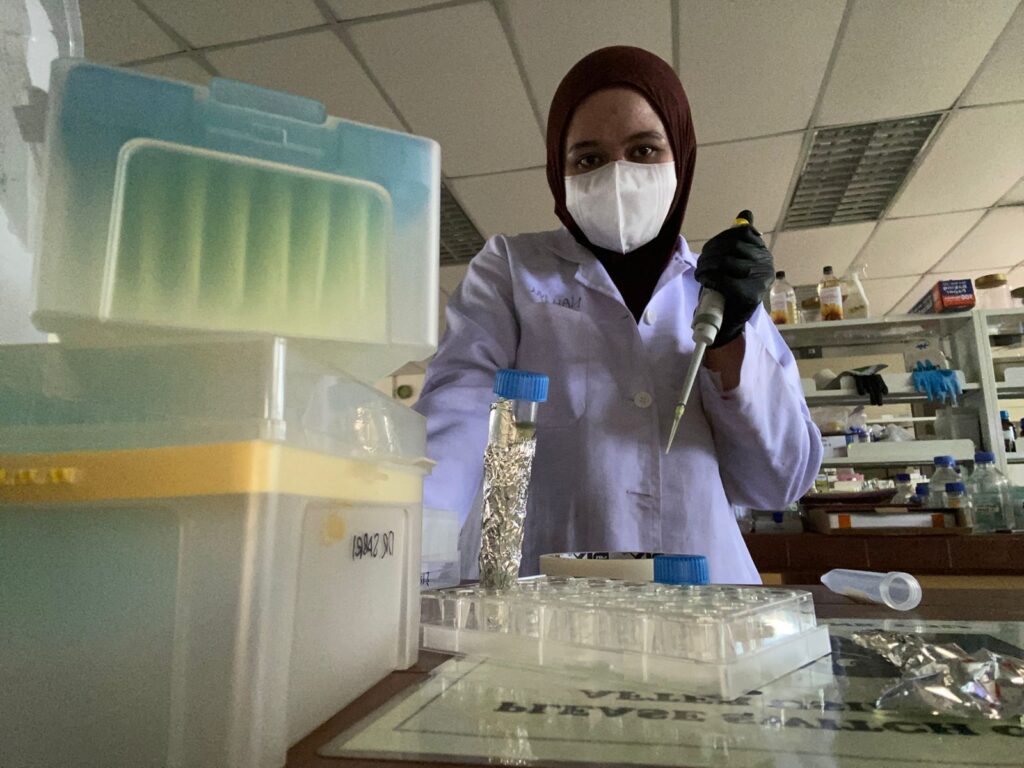
The findings demonstrated that MRJ showed stronger antioxidant activity than MO. In the DPPH assay, MRJ showed 73–76% inhibition with an IC₅₀ of approximately 68 ppm, compared with 56–59% inhibition and an IC₅₀ of approximately 88 ppm for MO. The FRAP assay also showed slightly higher reducing activity for MRJ, with an absorbance of 1.036 at 1000 ppm, compared with 0.999 for MO. In the ABTS assay, MRJ achieved 24.84% inhibition at 1000 ppm, compared with 9.77% for MO.
The microbiological analysis recorded a Total Plate Count of 2.09 × 10⁸ CFU/mL for MO and 2.30 × 10⁸ CFU/mL for MRJ. Meanwhile, cytotoxicity testing indicated that both formulations showed no cytotoxic effects on 3T3 fibroblast cells at concentrations up to 100 µg/mL.
The international collaboration between Hasanuddin University and Universiti Putra Malaysia (UPM) strengthened the research through cross-institutional scientific expertise, while the participation of Musfira demonstrates student involvement in laboratory-based research. The activity contributes to SDG 3: Good Health and Well-being through research supporting the safety and functional potential of nutraceutical products, and SDG 17: Partnerships for the Goals through international academic collaboration between Indonesia and Malaysia.
The research provides laboratory-based evidence that the addition of Royal Jelly can enhance the antioxidant activity of Moringa oleifera while maintaining cellular safety, although further research is needed to evaluate product stability and quality consistency during production and storage.