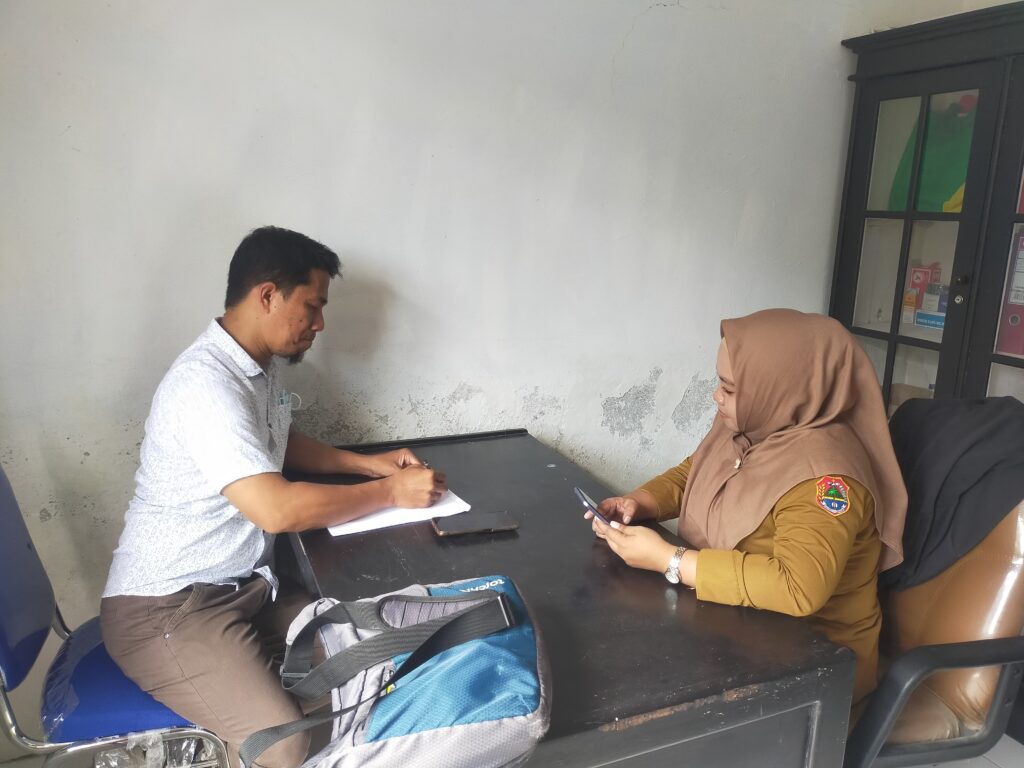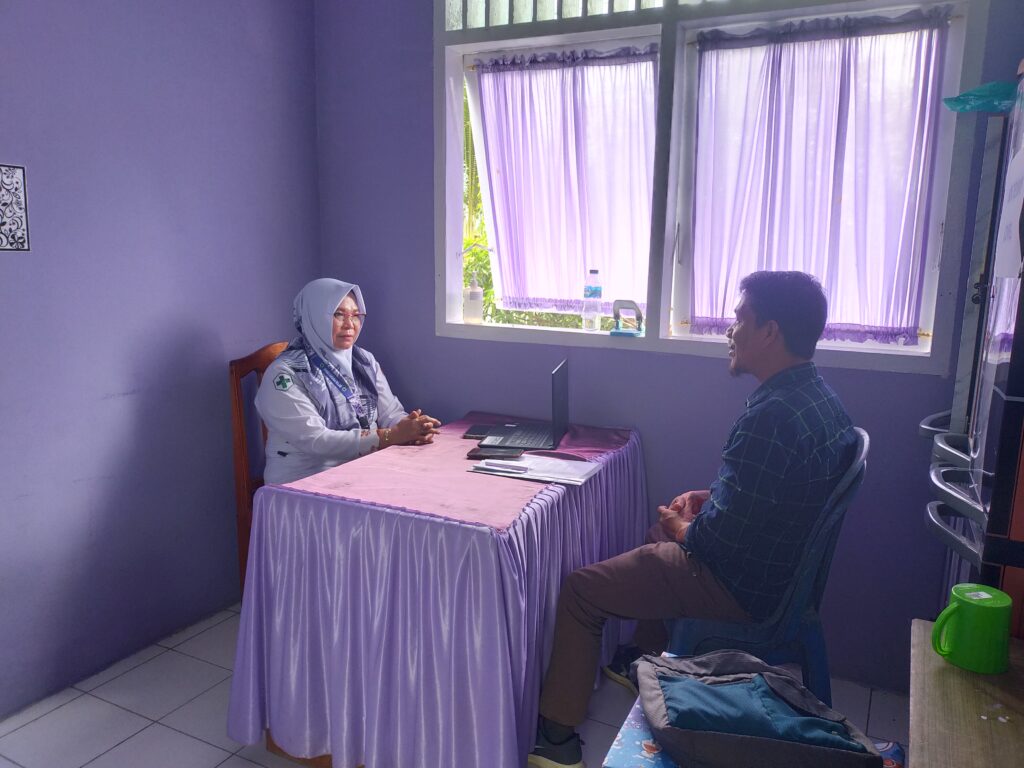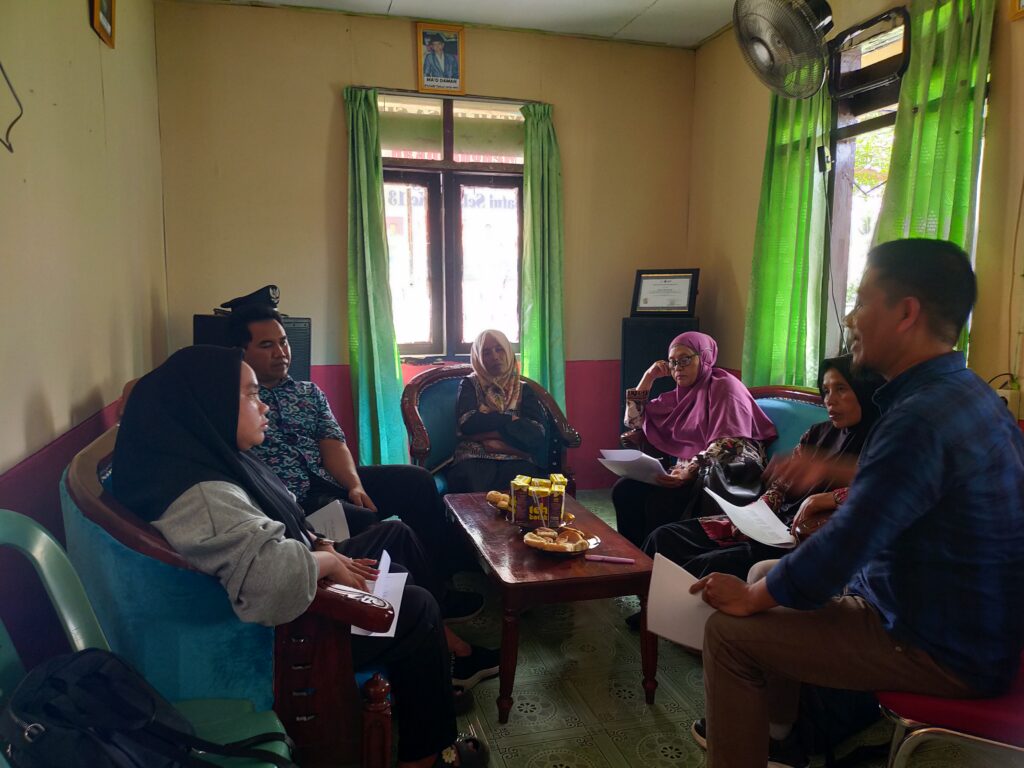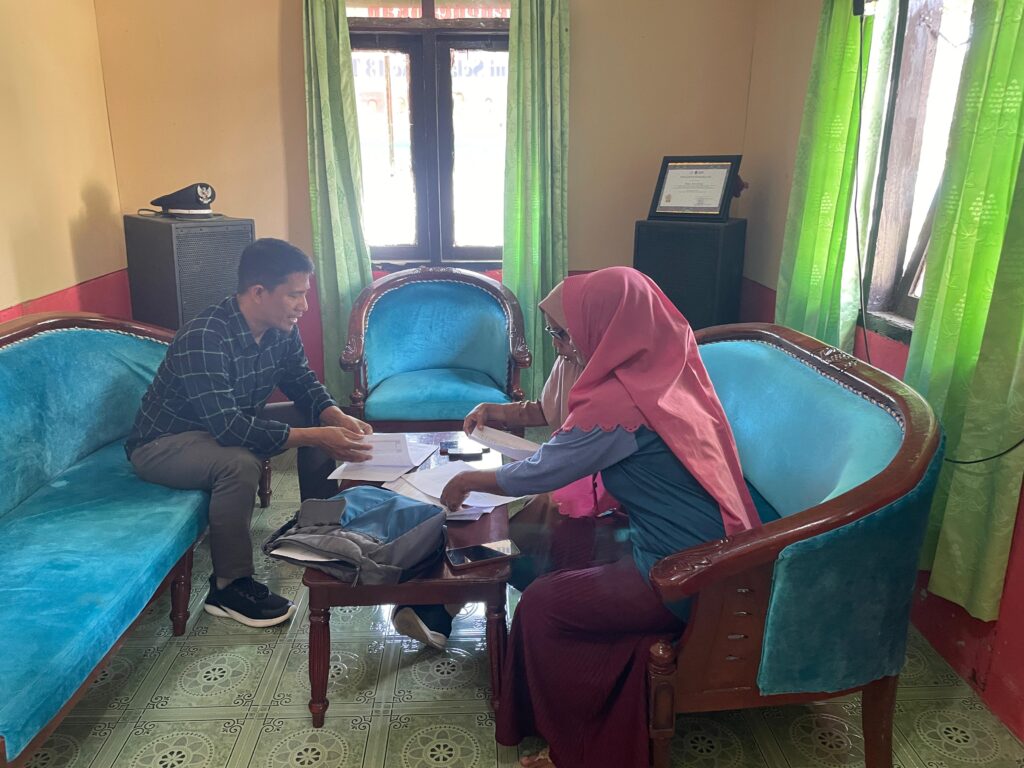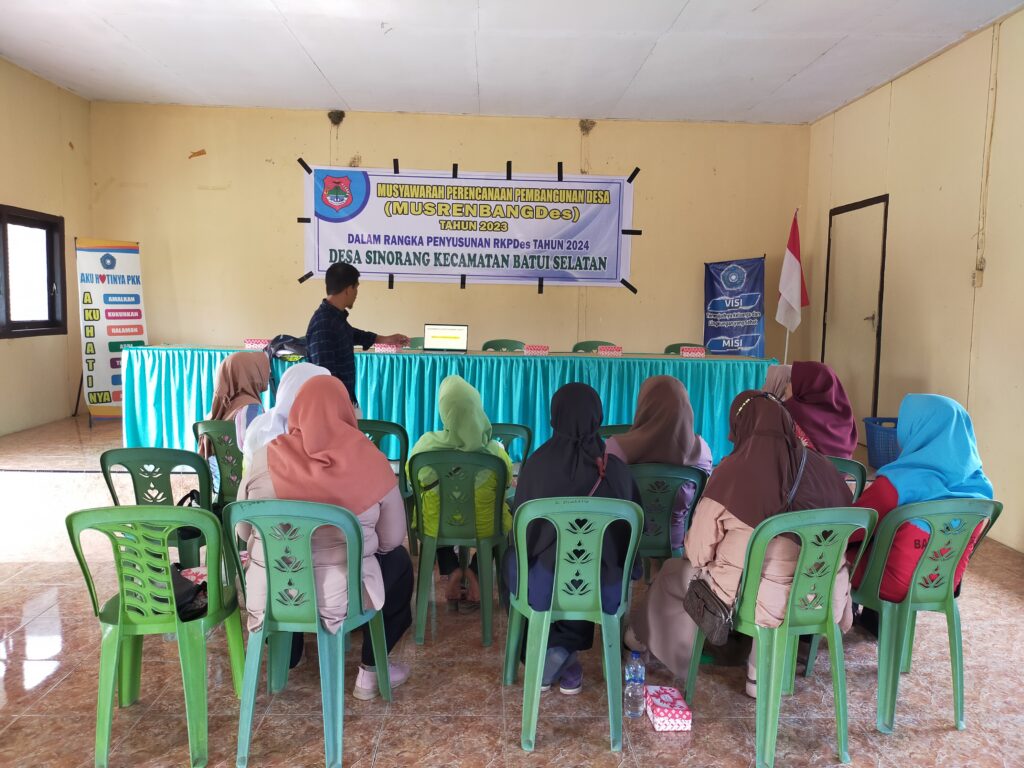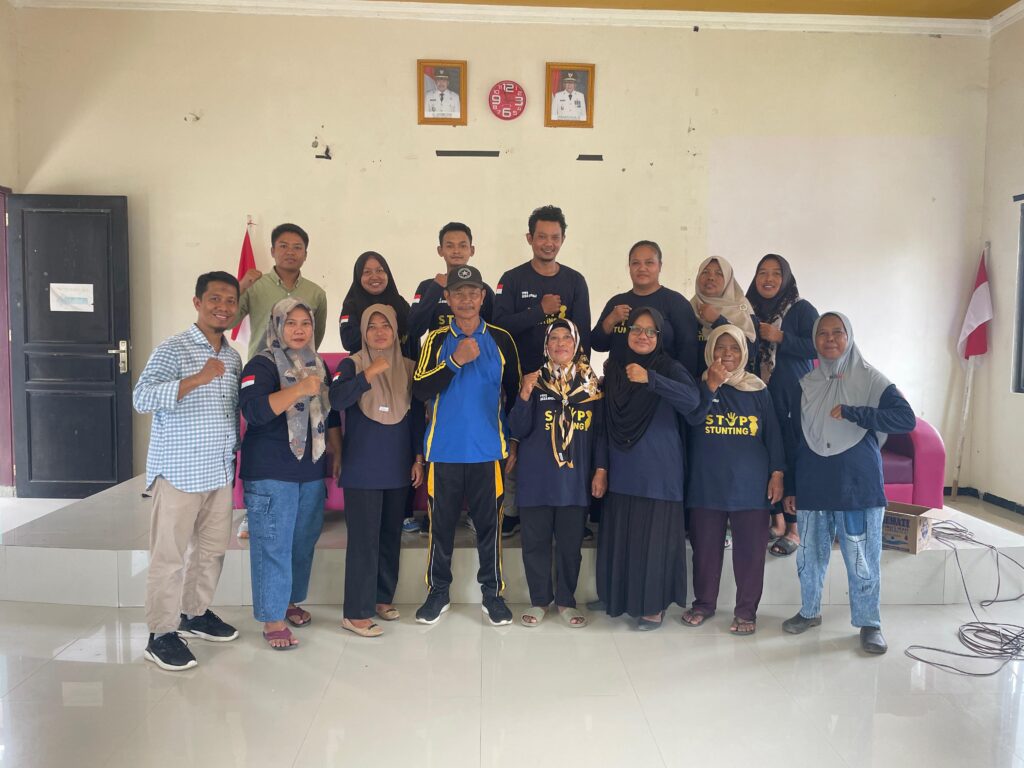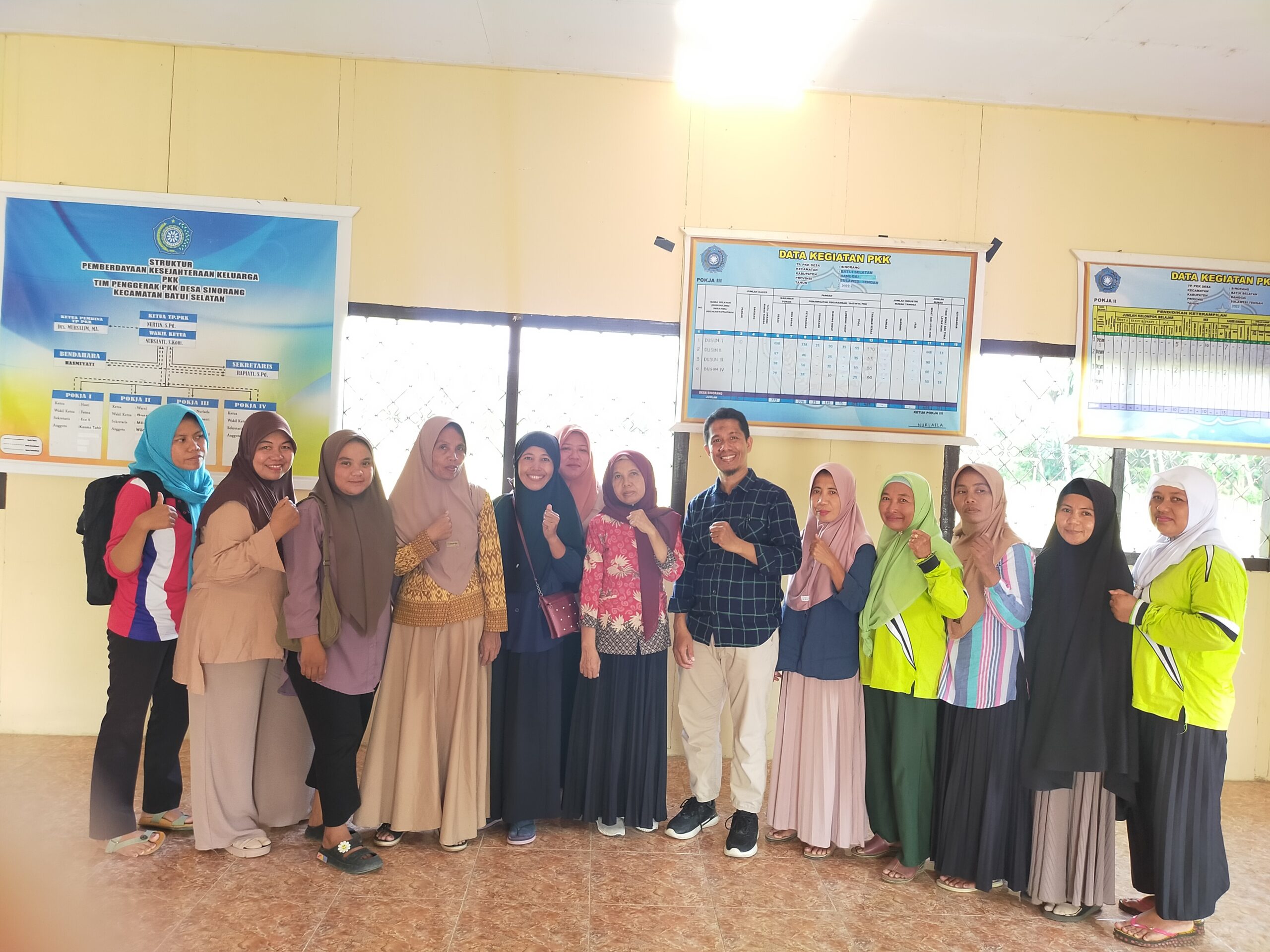

South Batui District, Banggai Regency, Central Sulawesi — November 2023–January 2024 — A qualitative research activity was conducted by Thaha Gande, a Master’s student in Nutrition at Hasanuddin University, with the assistance of Abdul Fandir, to explore the obstacles and potential solutions to the formation of the Village Stunting Acceleration Team (TPPS). The activity was conducted in three villages, namely Ombolu Village, Sinorang Village, and Bone Balantak Village, in South Batui District, Banggai Regency, Central Sulawesi.
The formation of village-level TPPS is important for strengthening coordination and accelerating stunting prevention at the community level. However, the existence and role of TPPS at the village level remain under-recognized. This study therefore aimed to identify the barriers faced by villages in establishing TPPS and to explore practical solutions that could support its formation and implementation.
Session focus: Identifying barriers and developing solutions for the establishment of village-level Stunting Acceleration Teams (TPPS).
The study used a qualitative approach and involved 15 informants from the three study villages. Data were collected through in-depth interviews focusing on the existence of TPPS, stakeholders’ understanding of the team, barriers to its establishment, and possible solutions for strengthening village-level coordination. This approach enabled the researchers to capture the perspectives of village stakeholders regarding the implementation of stunting prevention structures.
The findings showed that the majority of informants had heard of the term TPPS. However, all informants stated that TPPS had not yet been established in their respective villages. Several barriers to TPPS establishment were identified, including the perception among village governments that the team had already been formed, the perception that team formation should be accompanied by an honorarium or incentive, limited human resources, and a lack of technical socialization regarding TPPS formation.
The proposed solution was to strengthen the knowledge and understanding of village stakeholders through a persuasive and informative approach. Engagement with village governments was considered important to clarify the purpose, role, and mechanism of TPPS formation. This approach can help address misconceptions regarding the establishment of the team and encourage stronger local commitment to stunting prevention.
The findings highlight the importance of strengthening village-level governance and community participation in addressing stunting. Clear communication and technical information are essential to ensure that village stakeholders understand the function and responsibilities of TPPS and can support its establishment as part of local stunting prevention efforts.
The activity contributes to SDG 3: Good Health and Well-being by supporting stronger community-level structures for stunting prevention and child health. It also supports SDG 17: Partnerships for the Goals through its emphasis on coordination and collaboration among village stakeholders. The research demonstrates the importance of evidence-based identification of local barriers and the use of persuasive, informative approaches to strengthen community health governance.
Overall, the study concludes that establishing village-level TPPS remains challenging because of limited awareness, misconceptions about team formation and incentives, and limitations in human resources. A persuasive, informative, and collaborative approach with village governments is therefore recommended to facilitate the establishment and strengthening of TPPS.