


MAKASSAR, Indonesia April 9 2026/LIMAR/ – Imagine a material that is light like aluminum but much stronger, tougher, and longer-lasting. This is no longer just an idea—it is becoming reality thanks to innovations in material science. A recent study published in Materials Science Forum shows how adding a small amount of magnesium can significantly improve aluminum composites reinforced with carbon nanotubes (CNTs).
Aluminum is widely used in industries such as automotive, aerospace, and construction because it is lightweight and affordable. However, it still has limitations, especially in strength and durability. To overcome this, scientists are developing Aluminum Matrix Composites (AMCs), which combine aluminum with other materials to enhance its performance.
In this study, researchers added carbon nanotubes—extremely tiny structures known for their exceptional strength—into aluminum. But there was a challenge. CNTs tend to stick together and do not spread evenly in the aluminum matrix. This uneven distribution can weaken the final material instead of strengthening it.
This is where magnesium plays an important role. Magnesium acts as a “helper,” improving the bonding between aluminum and CNTs. It allows the nanotubes to spread more evenly throughout the material. Using a process called stir-squeeze casting, the researchers created composites with different magnesium contents, ranging from 0% to 6%.
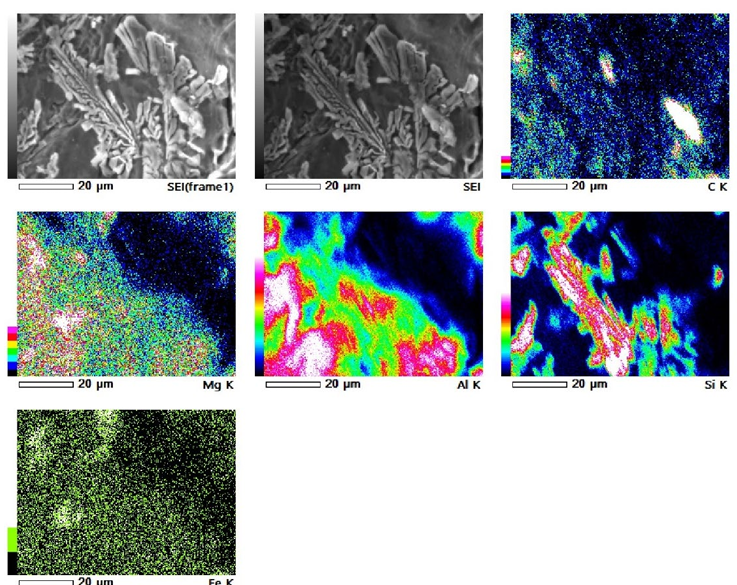
The results were impressive. First, the addition of magnesium reduced porosity, meaning there were fewer tiny holes inside the material. This made the composite denser and stronger. The density increased from 2.70 g/cm³ to 2.80 g/cm³ as magnesium content increased.
Second, the mechanical properties improved significantly. Hardness increased by up to 74%, while tensile strength more than doubled, reaching 241 MPa at 6% magnesium. This means the material can withstand greater forces without breaking, making it more reliable for demanding applications.
Microscopic observations also showed a more uniform structure. The CNTs were better distributed, and the grain size became finer—both of which contribute to improved strength and durability.
This research strongly supports Sustainable Development Goal (SDG) 4: Quality Education. It provides valuable knowledge that can be used in engineering education, helping students and researchers understand how material properties can be improved through innovation. By learning from studies like this, future engineers can develop better and more efficient technologies.
In addition, this work aligns with SDG 17: Partnerships for the Goals. Advances in material science often require collaboration between researchers, universities, and industries. Sharing knowledge and working together enables faster innovation and real-world application of these discoveries.
In conclusion, this study shows that even small additions like magnesium can create a big impact. By improving how materials interact at the microscopic level, scientists are opening the door to stronger, lighter, and more reliable materials. This is not just a scientific achievement—it is a step toward smarter technology and a more collaborative future.
Reference:
DOI: https://www.scientific.net/MSF.1145.71
Contact:
Muhammad Syahid
+62 852-5563-1651
syahid@unhas.ac.id


