

MAKASSAR, Indonesia 23 October 2025/Karstbios/ – When people hear the word mangrove, they often imagine muddy roots, coastal forests, crabs, and waves. But mangroves are more than natural sea walls. In many coastal communities, they are also a source of food, traditional medicine, culture, and livelihood.
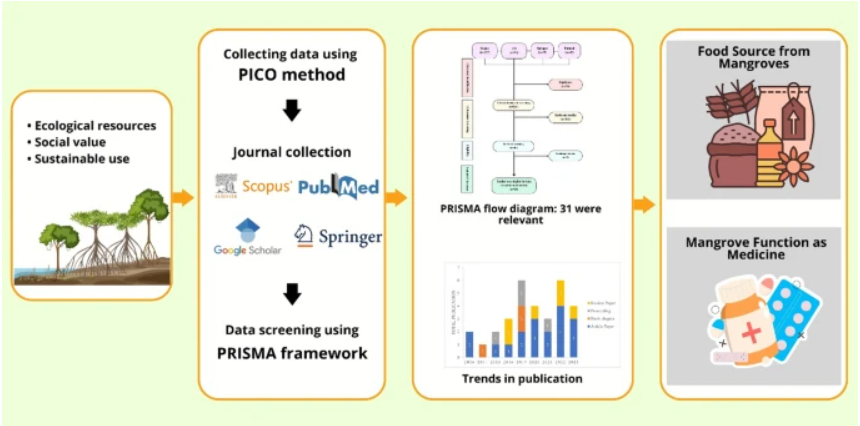
A recent review article titled “Edible and medicinal uses of mangroves in Indonesia with a systematic review on blue food potential and health benefits” was published in Discover Sustainability by Springer Nature in 2025. The study reviewed 31 selected publications to understand how mangrove species in Indonesia and other regions are used as food and medicine.
Blue Food from the Mangrove Forest
Mangroves live between land and sea, making them part of the blue food system. Blue food usually refers to food from aquatic environments, such as fish, shellfish, seaweed, and edible coastal plants. This review shows that mangroves also deserve attention as blue food because their fruits, leaves, sap, seeds, and propagules can be consumed or processed into useful products.
Two species are especially important: Nypa fruticans and Bruguiera gymnorrhiza. Nypa can be processed into sugar, syrup, flour, vinegar, sweet drinks, and even fermented beverages. Bruguiera gymnorrhiza, locally known in some areas as lindur, can be used to make flour, syrup, vegetables, wet noodles, and traditional food products. Other mangrove species can also be processed into tea, juice, crackers, cakes, puddings, coffee, and herbal drinks.
This is important for coastal communities because mangrove-based food can support local diets, create small businesses, and reduce dependence on outside food supplies.
A Natural Source of Health
The study also highlights the medicinal potential of mangroves. Several mangrove species contain bioactive compounds such as flavonoids, tannins, phenolics, alkaloids, saponins, and antioxidants. These compounds are linked to health benefits, including antioxidant, antidiabetic, anticancer, antimicrobial, and anti-inflammatory activities.
This makes mangroves relevant to SDG 3: Good Health and Well-being. Health is not only supported by hospitals and medicine. It can also be supported by nature, local knowledge, nutritious food, and sustainable ecosystems. Mangrove-based foods and traditional medicinal resources may help communities improve nutrition, maintain health, and develop safer natural products.
Protecting the Forest That Protects Us
However, the benefits of mangroves are threatened by environmental degradation, land conversion, pollution, and unsustainable harvesting. If mangrove forests disappear, coastal communities may lose not only protection from waves, but also food, medicine, income, and cultural identity.
This study reminds us that mangrove conservation is also a public health strategy. By protecting mangroves, we protect coastal nutrition, traditional knowledge, and future sources of natural medicine.
The message is simple: mangroves do not only guard the coast. They can also feed people, heal communities, and support a healthier future.
Article Metadata
Article title: Edible and medicinal uses of mangroves in Indonesia with a systematic review on blue food potential and health benefits
Journal name: Discover Sustainability
Publisher: Springer Nature
Publication date: 23 October 2025
Reference
DOI: https://doi.org/10.1007/s43621-025-01967-3
Contact:
Mohammad Basyuni
m.basyuni@usu.ac.id


