
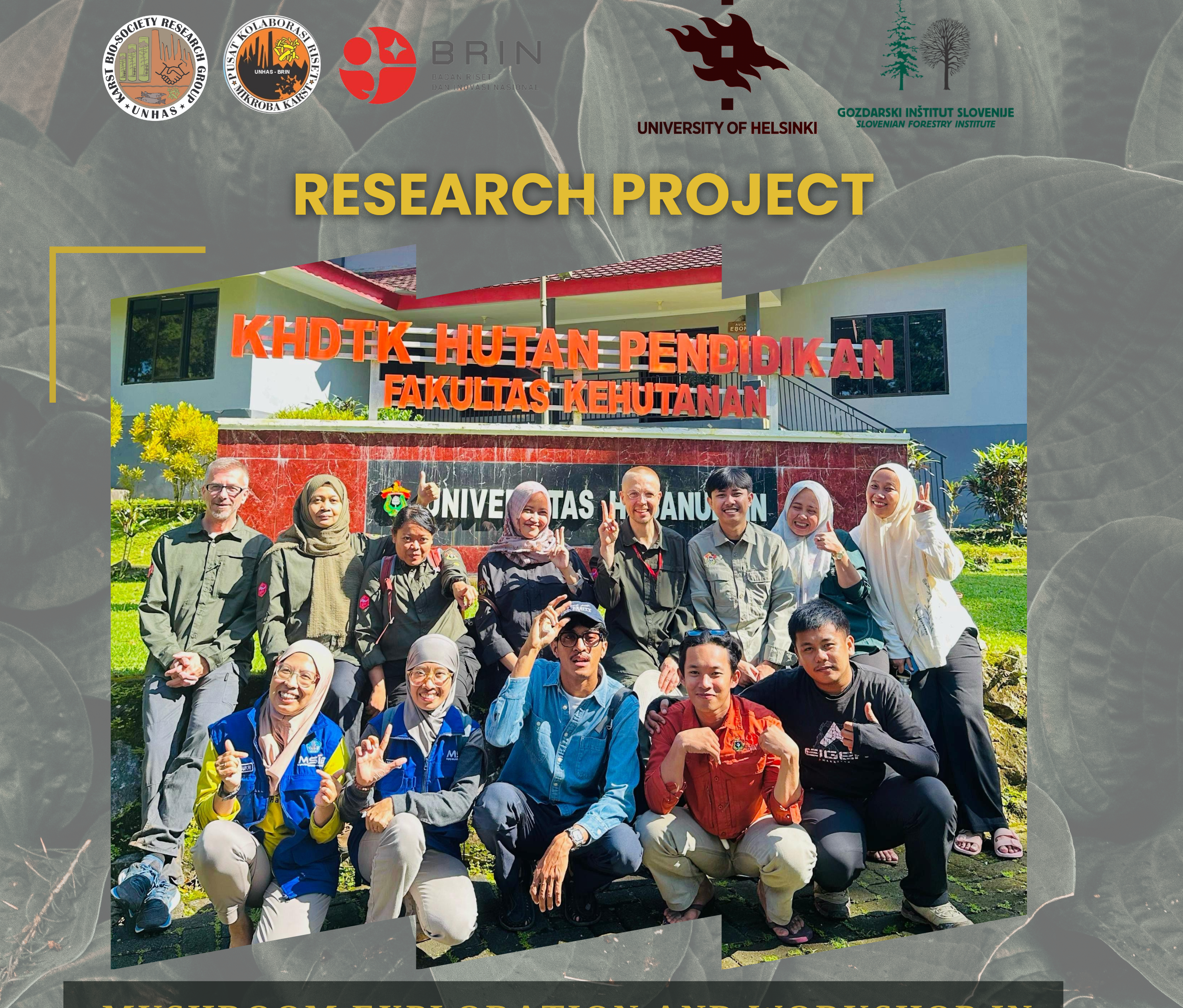

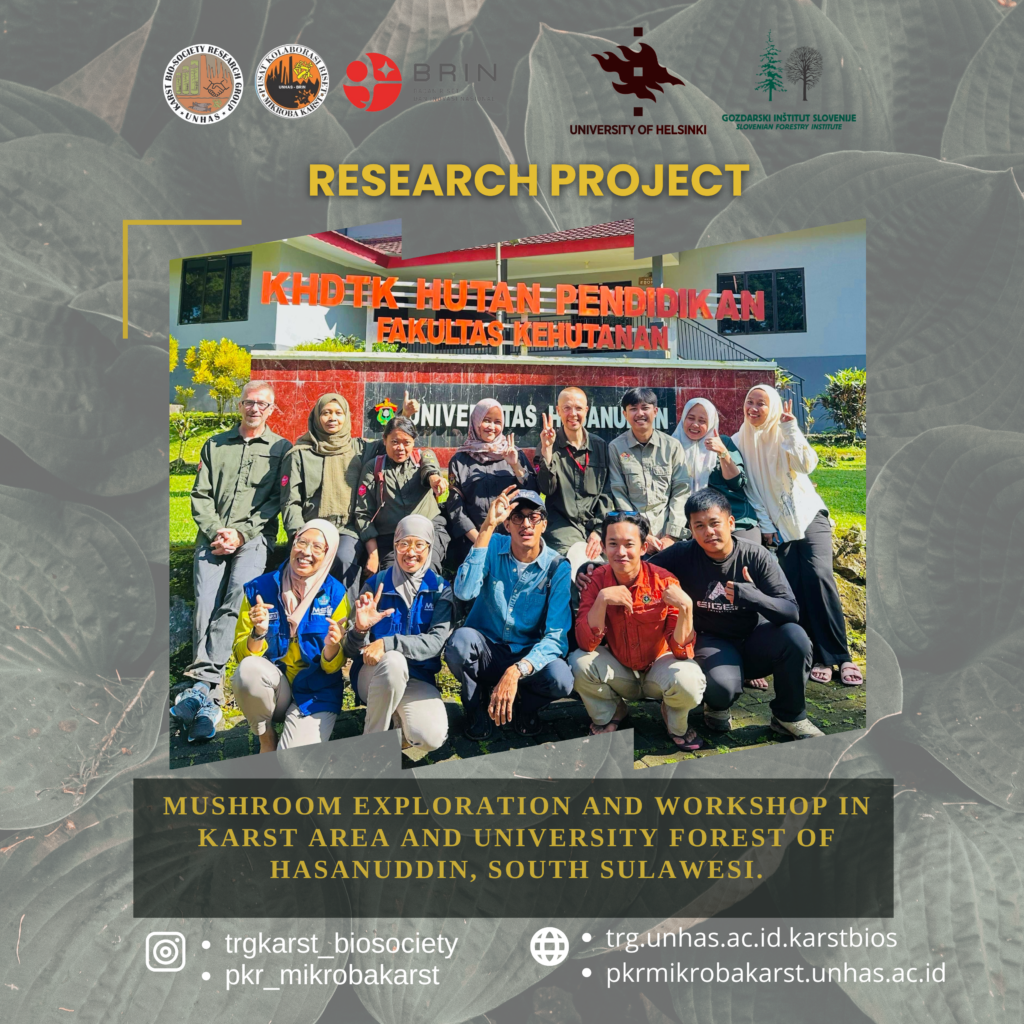
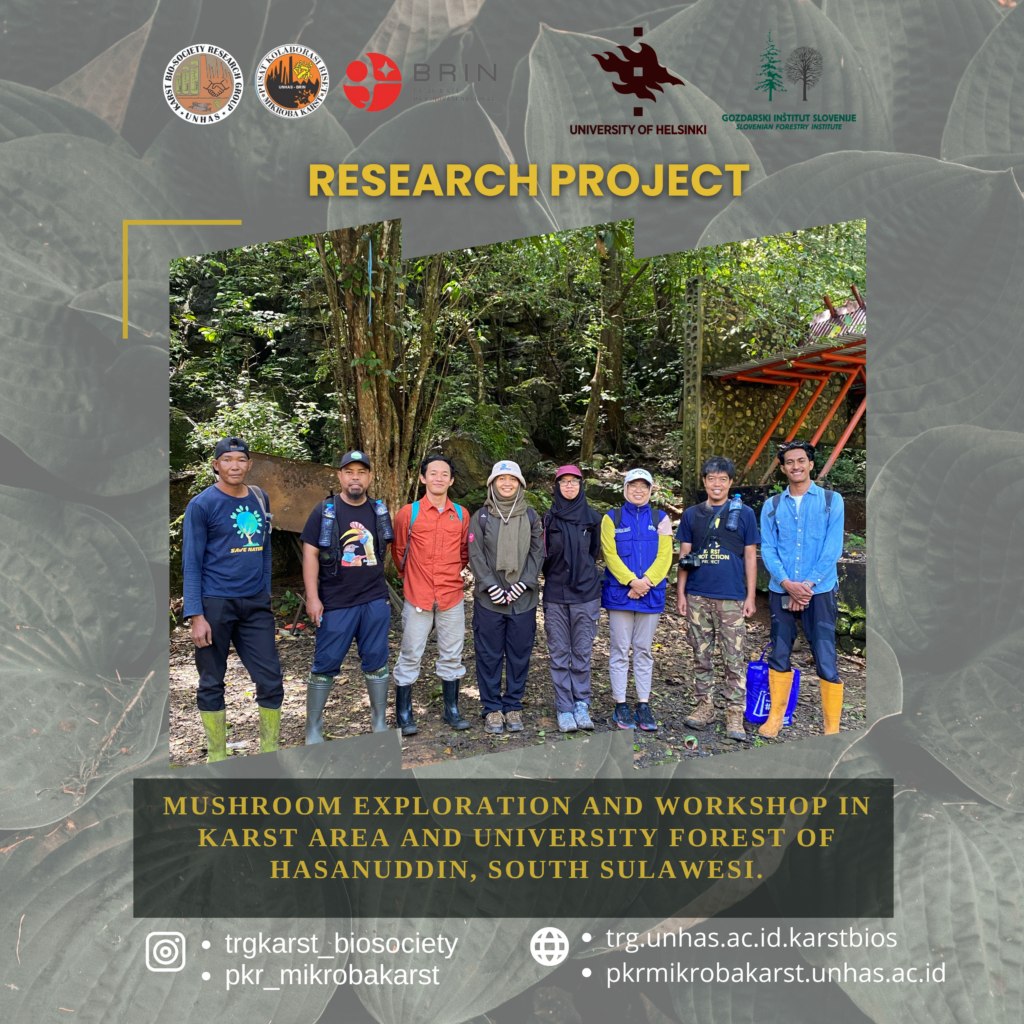
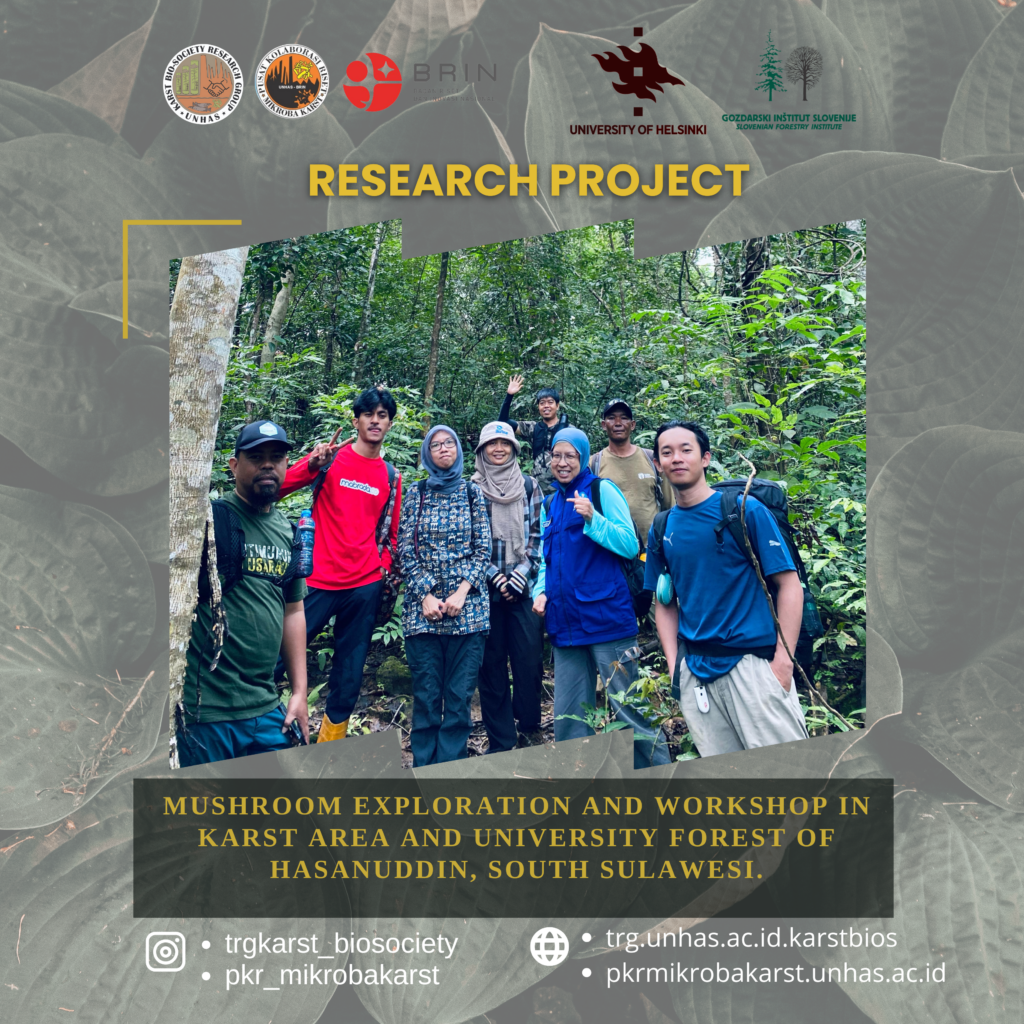
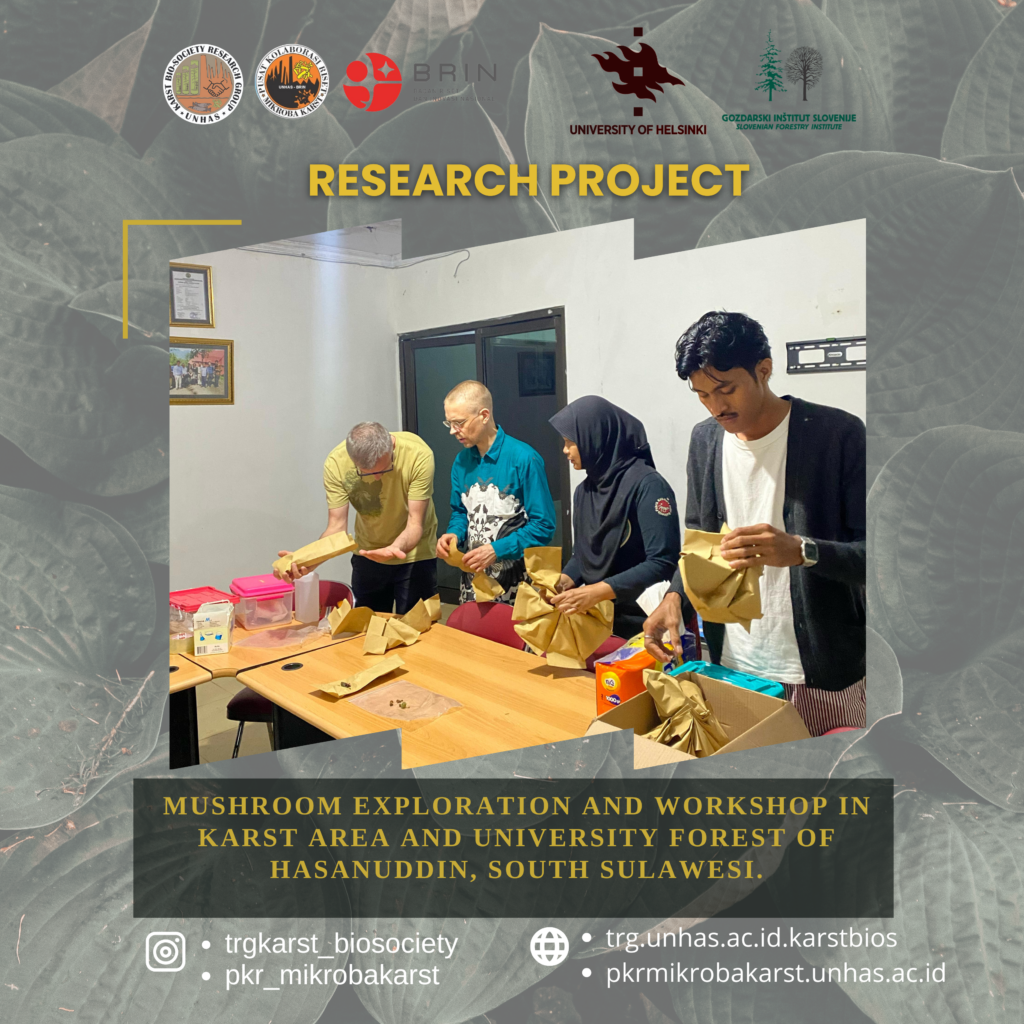
A team of researchers has investigated a unique ecosystem in the karst area and University of Hasanuddin (Unhas) Education Forest, revealing a diversity of fungi and microorganisms that play an important role in maintaining ecological balance. The findings provide new insights into Indonesia’s rich biodiversity, which has yet to be fully mapped.
Highlights of Research Activities
The research team conducted a series of activities to study karst and forest ecosystems, including:
🔍 Fungal Species Survey and Identification – Collection of fungal species that play a role in decomposition and nutrient cycling.
Interactive Workshop on the Role of Microbes – In-depth discussions on the function of microorganisms in soil ecosystems and their interactions with plants.
🏞️ Karst Area Exploration – An exploration of a unique karst landscape to study the adaptation of organisms in extreme environments.
Promising Early Findings
Preliminary data suggest the presence of endemic fungal and microbial species with potential ecological roles and biotechnological applications. “Every discovery here opens the door to a new understanding of how natural ecosystems function,” says one of the researchers.
Implications for Conservation and Science
This research is not only important for science, but also provides a basis for conservation efforts for karst ecosystems that are vulnerable to environmental change. Going forward, the team plans to expand collaboration with other research institutions for more in-depth exploration.
