
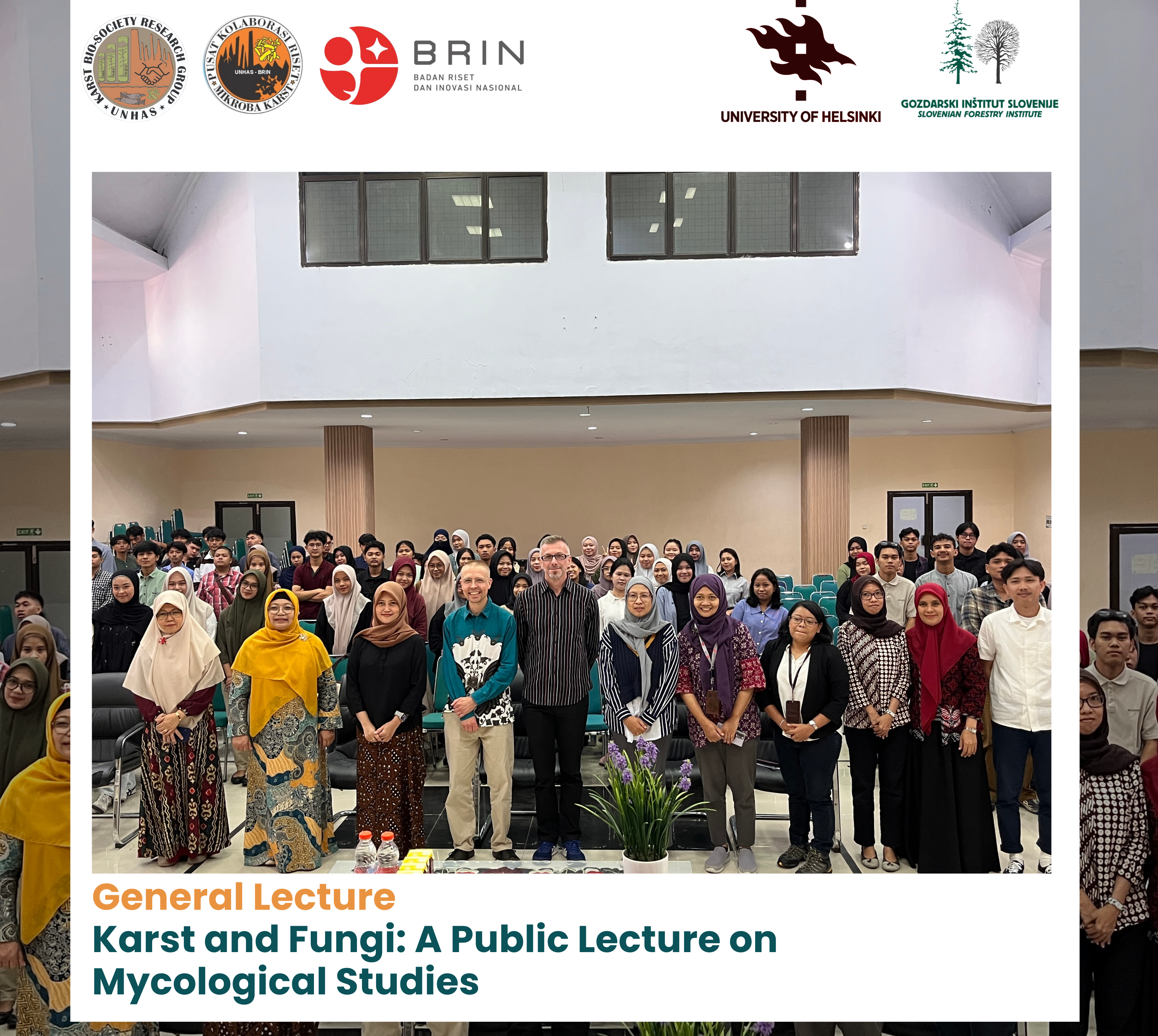

Makassar, South Sulawesi — On 6 May 2025, the Faculty of Forestry Hall became a meeting point for academic curiosity, environmental awareness, and international scientific collaboration through a general lecture entitled “Karst and Fungi: General Lecture on Mycological Studies.” The activity was attended by 50 participants, including students, researchers, lecturers, conservation enthusiasts, and members of the public who shared an interest in biodiversity, ecology, and the hidden world of fungi.
This general lecture was designed to reveal the unique symbiotic relationship between karst ecosystems and fungal diversity, as well as their contribution to maintaining the balance of nature. Karst landscapes are known for their distinctive geological formations, underground drainage systems, caves, limestone structures, and specialized ecological conditions. These environments provide unique habitats for various organisms, including fungi, which often remain underexplored despite their essential ecological roles.
Fungi are more than just organisms found on soil, wood, or rocks. In karst ecosystems, they function as decomposers, symbiotic partners, and important agents in nutrient cycling. By breaking down organic matter, fungi help return nutrients to the environment and support the survival of other organisms. Some fungi also form close relationships with plants and microorganisms, helping ecosystems remain productive and resilient. Through this lecture, participants were invited to understand that fungi are not only scientifically fascinating, but also vital for environmental health and long-term conservation.
The event also introduced recent developments in mycological research, including molecular approaches used to identify fungal species more accurately and to understand their ecological functions. These innovations are important because many fungal species in karst areas are still undocumented. With better research methods, scientists can explore the biotechnological potential of fungi while supporting responsible and sustainable use of biodiversity.
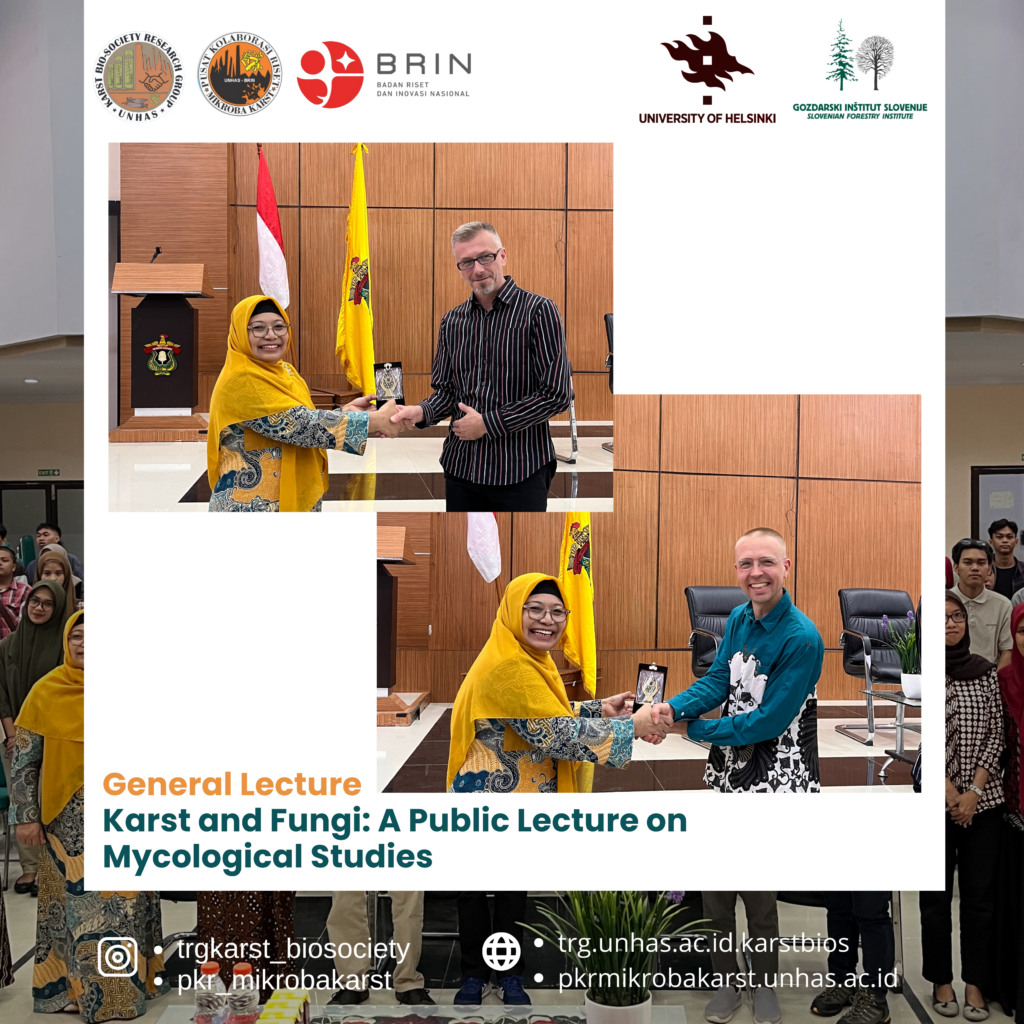
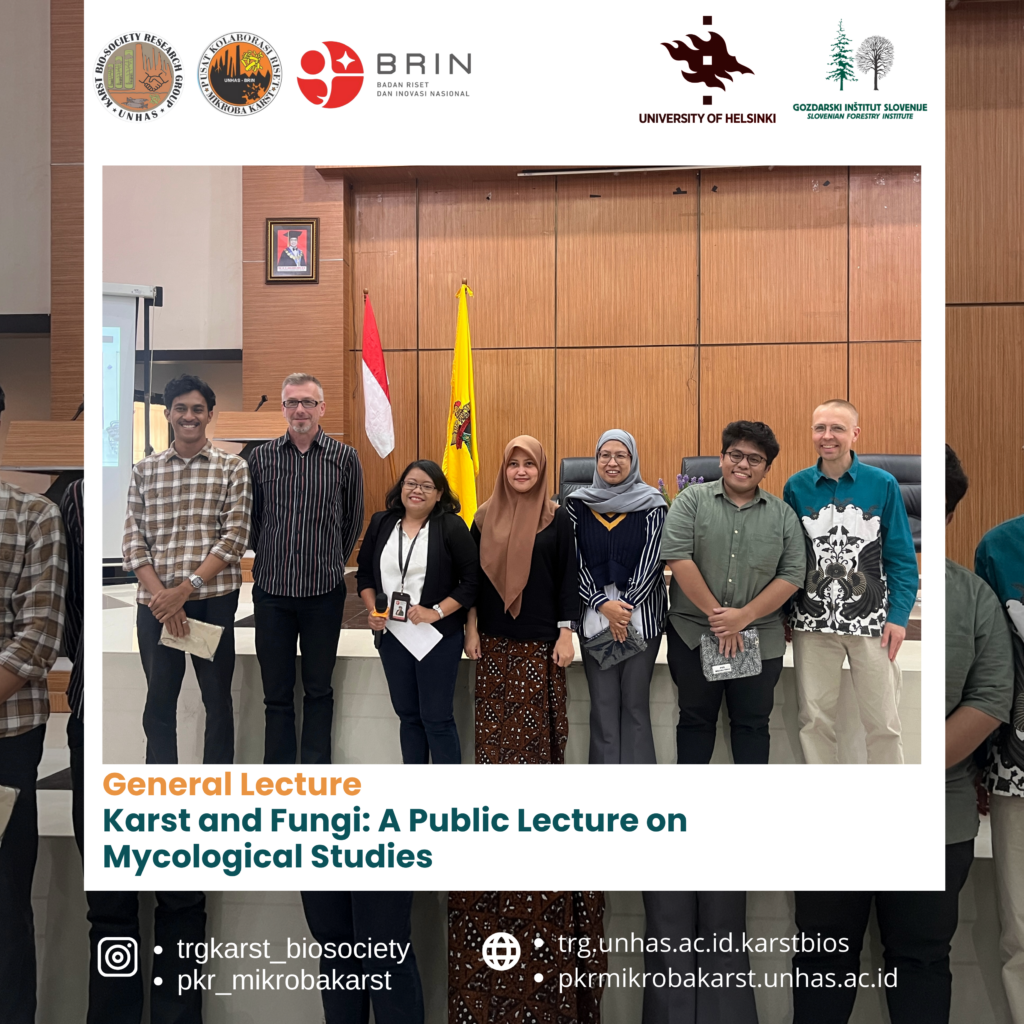
This activity was strengthened by the presence of international partners, Otto Miettinen from Finland and Tine Grebenc from Slovenia, who contributed valuable global perspectives on mycological studies. Their involvement highlighted the importance of international collaboration in advancing biodiversity research, especially in ecosystems that require interdisciplinary and cross-country scientific attention.
Several students also took part in the activity, including Muhammad Dewan, Ali Hasan Salman, Nurshanty, and Rachel Aulia Riany, along with other participants. Their participation reflected the importance of engaging young scholars in environmental research and conservation issues. By involving students directly, the lecture supported knowledge transfer and encouraged future academic contributions in the fields of biology, forestry, microbiology, and environmental science.
This activity is closely aligned with the Sustainable Development Goals, particularly SDG 4: Quality Education, by providing accessible scientific learning for students and the wider community; SDG 15: Life on Land, by promoting awareness of terrestrial biodiversity and ecosystem conservation; and SDG 17: Partnerships for the Goals, through collaboration with international experts. It also supports SDG 1: No Poverty, as biodiversity knowledge can contribute to sustainable natural resource management that may benefit local communities.
Through this general lecture, “Karst and Fungi” became more than an academic discussion. It became a platform for learning, collaboration, and ecological awareness. By understanding the relationship between karst and fungi, society can take meaningful steps toward conservation, sustainable research, and a deeper appreciation of nature’s unseen but essential networks.
