

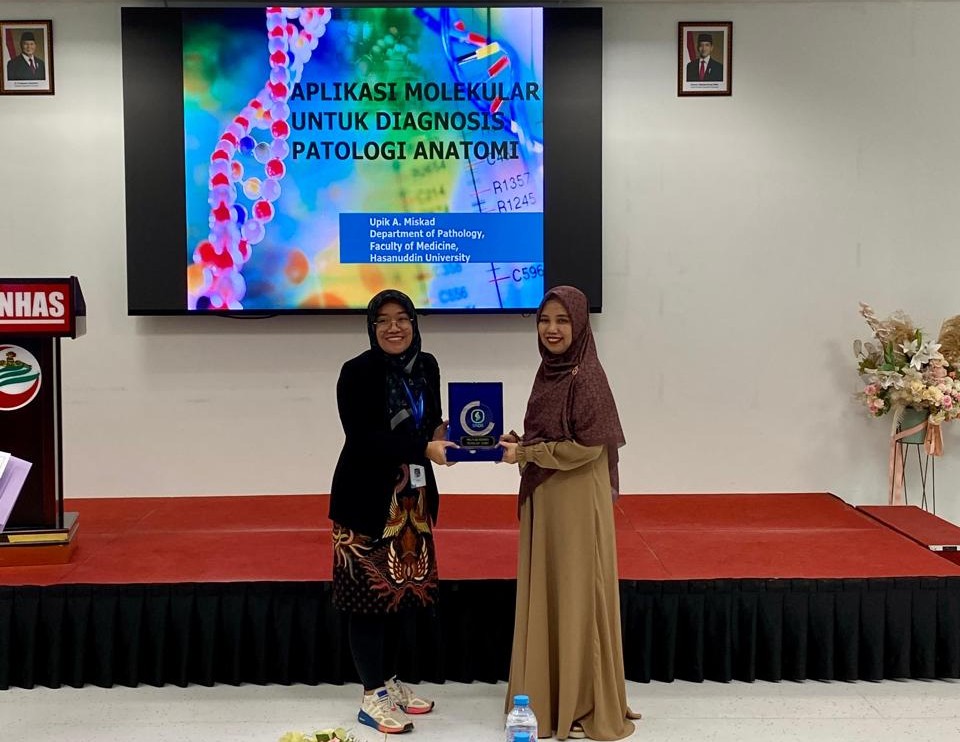
The rapid development of molecular technology has transformed the field of medicine, particularly in disease diagnosis and personalized patient care. Recognizing the importance of these innovations, Hasanuddin University successfully organized an academic sharing session entitled “Application of Molecular Techniques for Anatomical Pathology Diagnosis,” presented by Prof. dr. Upik A. Miskad, Sp.PA(K). The event was held on 25 May 2025 and brought together 55 participants, including students, pathology residents, and healthcare professionals who share a common interest in advancing diagnostic medicine.
The primary objective of this educational activity was to provide a more detailed and comprehensive understanding of the application of molecular approaches in anatomical pathology. As medical science continues to evolve, traditional histopathological examination is increasingly complemented by molecular techniques that enable clinicians and pathologists to identify specific genetic and molecular alterations associated with various diseases, particularly cancer. These technologies contribute to earlier diagnosis, more accurate prognostic assessment, and personalized treatment strategies.
During the session, Prof. Upik A. Miskad discussed the growing role of molecular pathology in modern healthcare, highlighting its applications in tumor classification, biomarker identification, and targeted therapy selection. Participants gained valuable insights into how molecular diagnostics can bridge the gap between laboratory findings and clinical decision-making, ultimately improving patient outcomes. The discussion also emphasized the importance of integrating conventional pathology with molecular testing to meet the demands of precision medicine in the future.
This educational initiative directly supports the United Nations Sustainable Development Goal (SDG) 3: Good Health and Well-Being by promoting innovations that strengthen healthcare systems and improve disease prevention, diagnosis, and treatment. Through knowledge sharing and capacity building, healthcare professionals are better equipped to provide accurate and effective medical services, contributing to healthier communities.
The activity also aligns with SDG 4: Quality Education, as it fosters lifelong learning and encourages the continuous development of scientific competencies among students and medical professionals. By providing access to updated knowledge and current technological advances, the program helps prepare future healthcare practitioners for the rapidly changing landscape of modern medicine.
In addition, the event reflects the spirit of SDG 17: Partnerships for the Goals, demonstrating the importance of collaboration between educators, researchers, clinicians, and academic institutions in advancing medical science. Such partnerships create opportunities for interdisciplinary learning and strengthen networks that support research and innovation.
Furthermore, improved diagnostic capabilities can contribute indirectly to SDG 1: No Poverty. Early and accurate disease detection may reduce the economic burden associated with delayed diagnosis and prolonged treatment, helping individuals and families avoid catastrophic healthcare expenses while maintaining productivity and quality of life.
The success of this scientific activity was further supported by the active participation of Riza Ilyasa, whose involvement reflects the commitment of young scholars to advancing medical knowledge and promoting evidence-based healthcare practices.
By bringing together experts and aspiring professionals, this educational session at Hasanuddin University demonstrated that scientific knowledge is not only a tool for academic advancement but also a meaningful investment in public health, quality education, and sustainable development. Through continued collaboration and innovation, molecular pathology will play an increasingly vital role in shaping the future of healthcare and improving the lives of communities worldwide.

