

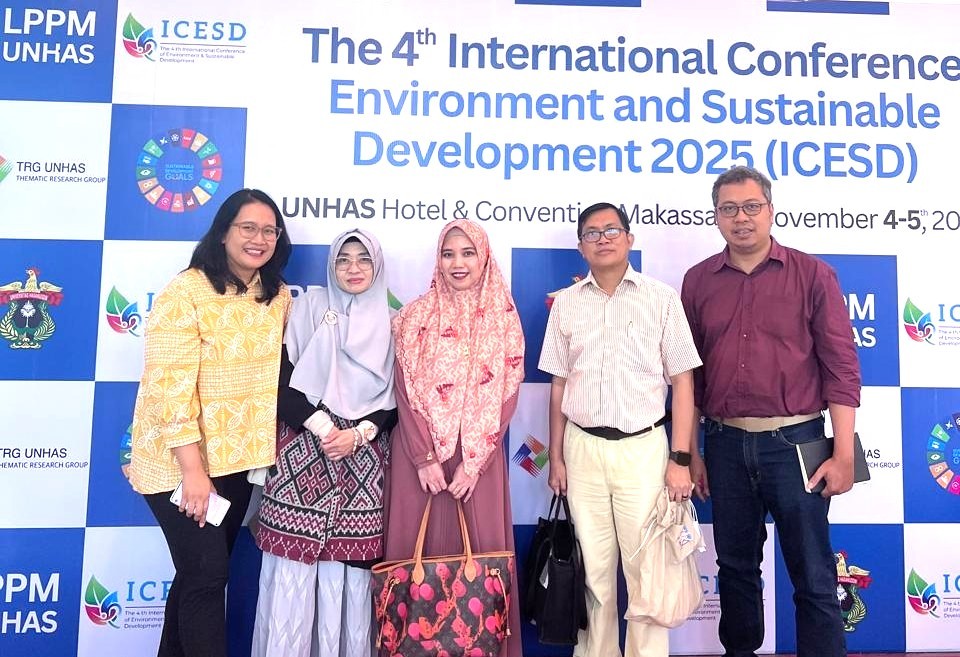
Makassar, 21 April 2026. The 4th International Conference on Environment and Sustainable Development 2025 (ICESD 2025), held in Makassar on November 4–5, 2025, brought together 80 participants from diverse academic and professional backgrounds to exchange knowledge and foster interdisciplinary collaboration. This international forum served as a strategic platform for addressing global challenges through scientific innovation, particularly in the context of sustainable development and health advancement.
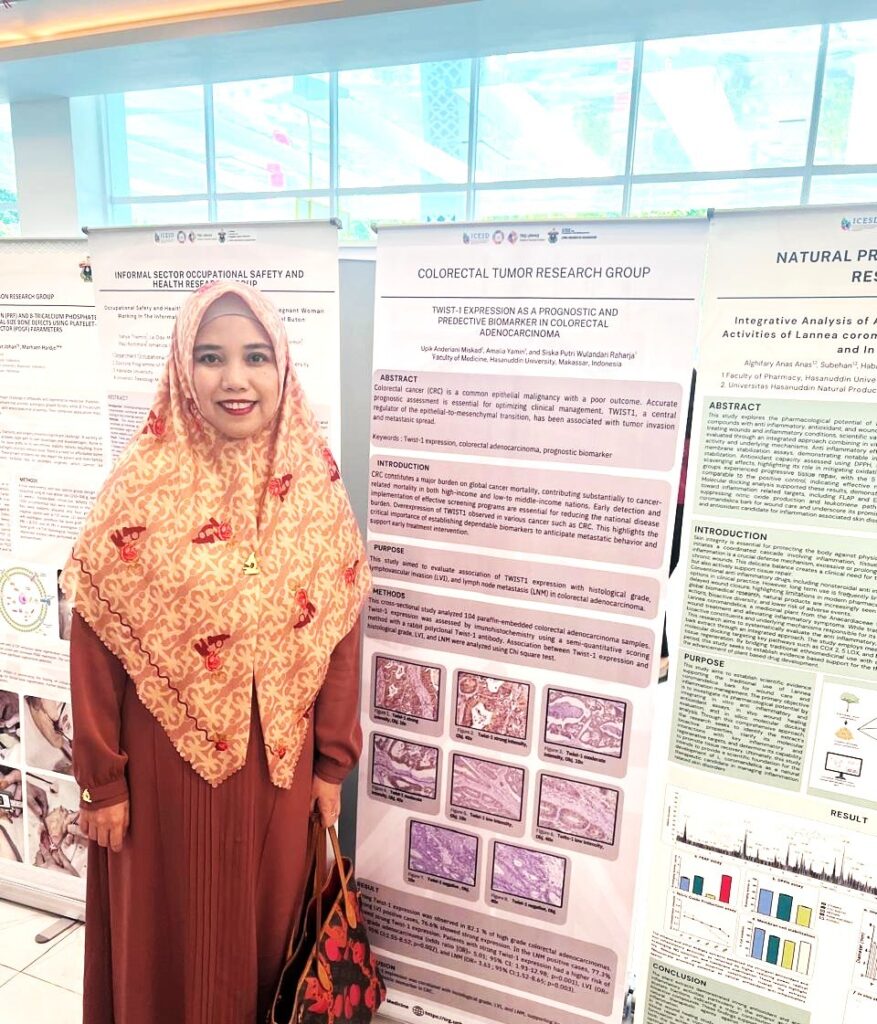
In this event, participation was centered on a scientific poster presentation entitled “TWIST1 Expression and Tumor Infiltrating Lymphocytes: Exploring Novelty Biomarkers in Cancer Immunology.” The primary objective of this activity was to contribute meaningful insights into the evolving landscape of cancer diagnostics, especially within the field of anatomical pathology and immunohistochemistry. The study highlighted the role of TWIST1 as a key regulator in epithelial-mesenchymal transition (EMT), alongside the significance of tumor-infiltrating lymphocytes (TILs) as indicators of tumor microenvironment dynamics and immune response.
Through this poster presentation, the activity aimed to disseminate accessible and scientifically grounded information regarding emerging biomarkers that can improve diagnostic accuracy, prognostic stratification, and therapeutic decision-making in oncology. By bridging molecular pathology with clinical relevance, the research underscores the importance of integrating immunological markers into routine pathological assessment to support precision medicine.
This participation aligns strongly with several Sustainable Development Goals (SDGs), particularly SDG 3: Good Health and Well-being, which emphasizes the importance of reducing mortality from non-communicable diseases such as cancer through early detection and advanced diagnostics. The exploration of novel biomarkers like TWIST1 and TILs contributes directly to improving cancer care outcomes and supports innovation in healthcare systems.
Additionally, the activity reflects SDG 4: Quality Education, as it promotes the dissemination of scientific knowledge and encourages continuous learning among researchers, clinicians, and students. By presenting complex biomedical concepts in an understandable and communicative manner, the activity enhances public and academic awareness of cutting-edge developments in pathology.
Furthermore, the conference environment fostered collaboration and knowledge exchange, aligning with SDG 17: Partnerships for the Goals. The gathering of multidisciplinary participants facilitated networking opportunities, enabling the sharing of research perspectives and encouraging future collaborative initiatives across institutions and countries.
Overall, participation in ICESD 2025 not only provided a valuable opportunity to present innovative research but also reinforced the critical role of scientific communication in advancing global health. By integrating research findings with sustainable development priorities, this activity contributes to a broader effort to improve cancer diagnostics and promote equitable access to high-quality healthcare information worldwide.

