Makassar, Indonesia – On April 25, 2026, at Hotel Amaris, the Indonesian Diabetic Foot Care Research Group (TRG) conducted a scientific workshop focusing on investigating the capability of artificial intelligence (AI) in constructing and answering Nursing Competency Examination items based on diabetic foot ulcer (DFU) cases. This initiative represents a systematic effort by TRG to evaluate both the potential and limitations of AI technologies within the context of nursing education and clinical decision-making.
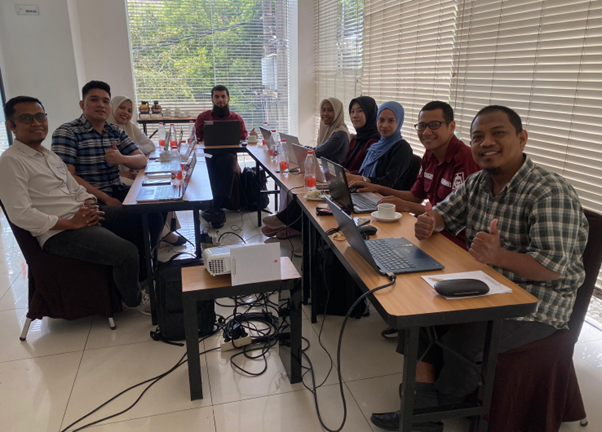
The workshop specifically assessed the performance of several prominent AI platforms, including ChatGPT, Perplexity AI, Google Gemini, and Claude AI, in generating and answering vignette-based clinical questions. The evaluation utilized a dataset of 50 DFU-related items developed by the TRG team, proportionally distributed across the Wagner scale classification system, covering five levels of severity (10 items per level). All clinical cases were derived from real-world practice at Griya Afiat Makassar, ensuring strong contextual relevance to actual healthcare settings.
As part of the validation process, three nursing professional (Ners) graduates who had successfully passed the national competency examination were recruited to evaluate the quality of items generated by the four AI systems. The preliminary findings indicate that AI is capable of producing structurally organized examination items. However, critical components of high-quality item construction—such as the clinical vignette, lead-in question, and answer options—were not optimally developed. This limitation resulted in items that could be easily answered without comprehensive clinical reasoning, thereby reducing their validity as measures of professional competence.
These findings suggest that, at its current stage, AI capability in generating Nursing Competency Examination items remains insufficient to replace expert item writers, particularly in producing questions that require higher-order clinical reasoning and strong construct validity.
The head of TRG, Saldy Yusuf, PhD, emphasized the importance of further research exploration. He highlighted that future studies should extend beyond DFU cases and competency examination formats to encompass broader clinical domains, in order to comprehensively evaluate the accuracy and reliability of artificial intelligence as a learning tool for nursing students and as an educational support system for patients.
Through this initiative, TRG reaffirms its commitment to advancing technology-driven research grounded in scientific rigor, academic validity, and the practical needs of clinical healthcare.
Alignment with Sustainable Development Goals (SDGs):
This initiative primarily contributes to SDG 4 (Quality Education) by strengthening competency-based assessment and advancing the quality of nursing education through the integration of artificial intelligence. It also supports SDG 3 (Good Health and Well-being) by enhancing the preparedness of future healthcare professionals in managing diabetic foot ulcer cases. Furthermore, this activity aligns with SDG 9 (Industry, Innovation and Infrastructure) and SDG 17 (Partnerships for the Goals) through the application of innovative technologies and collaborative research efforts.