New Study Highlights the Potential of Complementary Therapies for Diabetic Foot Ulcer Healing in Asia
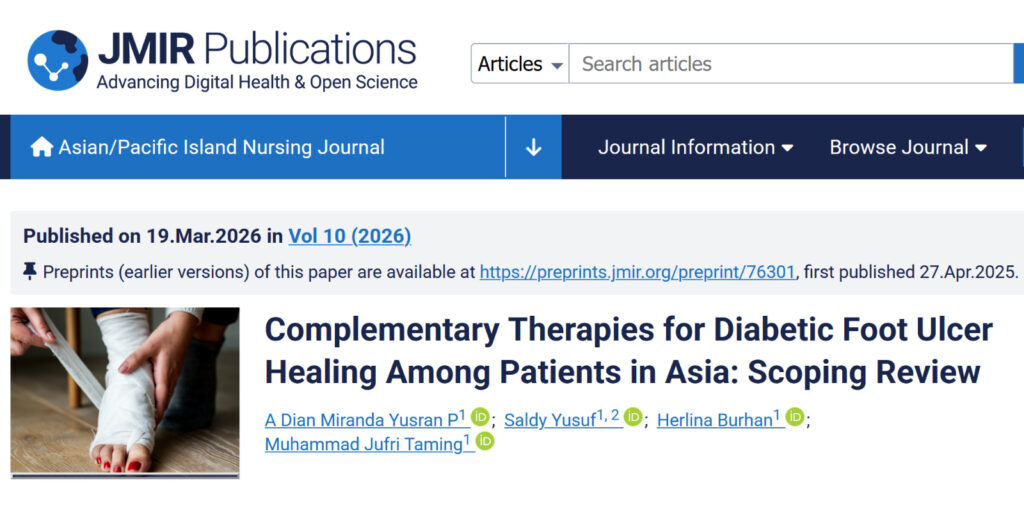
Makassar, Indonesia – A recent study published in the Asian Pacific Island Nursing Journal (Vol. 10, 2026) sheds new light on the growing role of complementary therapies in the management of diabetic foot ulcers (DFUs) across Asia.
The study, led by A Dian Miranda Yusran P and Saldy Yusuf along with colleagues, explores how non-conventional approaches are increasingly being used alongside standard medical care to improve wound healing outcomes.
A Persistent Challenge in Diabetes Care
Diabetic foot ulcers remain one of the most serious complications of diabetes mellitus, often leading to infection, amputation, and even death. While conventional treatments are essential, they are not always sufficient, prompting interest in complementary and alternative therapies.
Across Asia, where traditional medicine is deeply rooted in culture, such therapies are widely practiced. However, their clinical effectiveness and integration into formal healthcare systems have not been fully understood—until now.
Mapping Complementary Therapies Across Asia
Using a rigorous scoping review methodology based on the PRISMA-ScR framework and Arksey & O’Malley approach, the researchers analyzed studies published between 2014 and 2024 from major databases including PubMed, Scopus, and ProQuest.
A total of eight studies met the inclusion criteria, revealing four major categories of complementary therapies used in DFU care:
- Herbal therapies
Including traditional Chinese medicinal foot soaks and Teucrium polium, which showed significant wound size reduction - Biological therapies
Such as maggot debridement therapy and platelet-rich fibrin combined with hyaluronic acid, which enhanced healing markers and reduced inflammation - Physical therapies
Including acupuncture, widely used to support circulation and pain management - Psychological therapies
Notably music therapy, which was found to reduce diabetes-related distress
Promising Results with Important Challenges
The findings highlight that complementary therapies can provide meaningful benefits in DFU management. For example:
- Topical Teucrium polium significantly accelerated wound healing
- Platelet-rich fibrin improved vascular endothelial growth factor (VEGF) levels
- Music therapy helped reduce psychological burden among patients
Despite these promising outcomes, several challenges remain:
- Limited large-scale randomized controlled trials
- Regulatory and standardization issues
- Cultural perceptions influencing acceptance and use
Towards Integrated and Culturally Sensitive Wound Care
The study emphasizes the importance of integrating complementary therapies into conventional DFU management through a multidisciplinary approach. Collaboration among healthcare providers, policymakers, and traditional practitioners is crucial to ensure safety, effectiveness, and cultural relevance. As Asia continues to face a growing burden of diabetes and its complications, such integrative strategies may offer a more holistic and patient-centered model of care.
Strengthening Evidence for Future Practice
The authors conclude that while complementary therapies hold strong potential, further high-quality research—particularly well-designed randomized controlled trials—is needed to establish robust evidence and guide policy development.
This study marks an important step toward bridging traditional practices and modern medicine in improving outcomes for patients with diabetic foot ulcers.
DOI: