



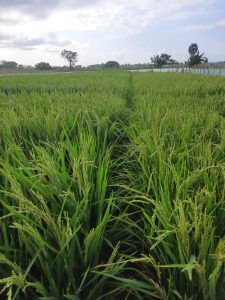
Rice is the staple food of more than 95% of Indonesians. National rice production has not yet met domestic demand, necessitating continued importation. One of the primary obstacles to increasing rice production is the prevalence of plant pests and diseases. This research project aims to develop novel control tactics that will be integrated with existing methods to create a comprehensive strategy for managing rice plant pests and diseases. Several studies are underway to evaluate the impact of various factors on major rice pests and diseases in South Sulawesi, including blast (Pyricularia oryzae), bacterial leaf blight Xanthomonas oryzae pv. oryzae), tungro (Rice tungro virus), stem borers (Scirpophaga spp.), green leafhoppers (Nephotettix spp.), brown planthoppers (Nilaparvata lugens), and rice bugs (Leptocorisa spp.). These factors include rice variety, plant density, planting method, fertilizer dosage, and pesticide use. Additionally, the project investigates the effectiveness of fences for controlling rice-field rats and nets for bird control. The outcomes of this project are expected to contribute significantly to efforts aimed at boosting rice production to achieve sustainable rice self-sufficiency.
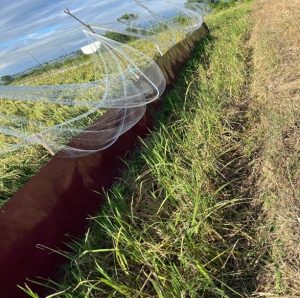
Net for bird control
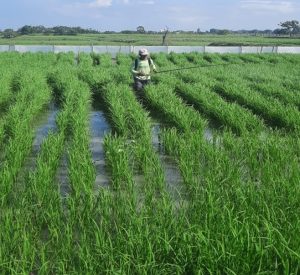
Experiment with planting system, plant density, variety, and fertilizer
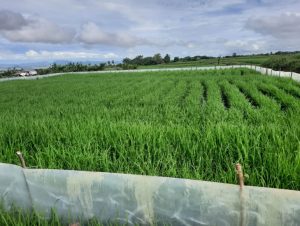
Fence for rice-field rats
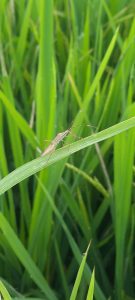
Leptocorisa spp.
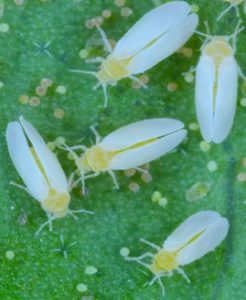
Pepper yellow leaf curl Indonesia virus (PepYLCIV) is a damaging disease of pepper that can cause total yield loss to the crop. The virus is persistently transmitted by the sweet potato whitefly, Bemisia tabaci. Growers rely heavily on insecticides to suppress the vector population and prevent the spread of the disease. An integrated strategy should be developed to avoid the negative impacts of the excessive use of insecticides. In this research project, a strategy is being developed to integrate crop cultural practices, including the use of mulch, resistant cultivars, healthy seeds, protected seedlings, and biological control agents.
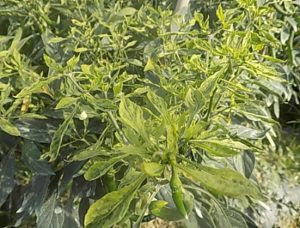
PepYLCIV symptoms
Bemisia tabaci
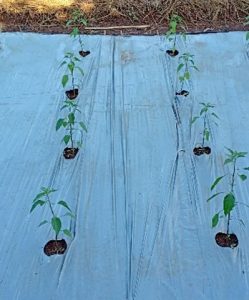
Plastic mulch
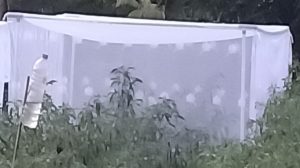
Protected seedlings in a cage