Research Sub-Theme
Enhancing Productivity and Product Quality Through Value Chain Integration
Investigates how value chain frameworks facilitate the adoption of modern farming technologies and best practices to increase agricultural productivity and improve crop quality. The study focuses on identifying gaps in farming practices, input supply, and post-harvest handling, while analyzing the impact of high-quality seeds, fertilizers, and improved techniques on yield, profitability, and market competitiveness.
Strengthening Market Linkages for Smallholder Farmers
Examines how value chain coordination enhances market access and transparency for smallholder farmers. It explores the establishment of direct farmer-buyer relationships, price negotiation mechanisms, and the role of digital tools in providing real-time market information. The study evaluates how reduced dependency on intermediaries and increased market integration contribute to higher profits and economic stability for farmers.
Infrastructure Development and Logistics Optimization in Agricultural Value Chains
Focuses on the role of infrastructure and logistics in reducing post-harvest losses and maintaining product quality. It assesses the impact of investments in transportation, storage, and processing facilities on the efficiency and profitability of the agricultural sector. The study also explores how infrastructure bottlenecks affect the timely and cost-effective movement of goods, identifying strategies to improve logistics systems for better market access.
Capacity Building and Knowledge Transfer for Sustainable Agricultural Development
Explores how knowledge dissemination and training initiatives within value chains empower farmers with skills to enhance their agricultural practices. It examines the effectiveness of training programs on sustainable farming techniques, financial literacy, and post-harvest management. The study also evaluates the role of partnerships in facilitating capacity building, ensuring that farmers are equipped to adapt to evolving market demands and technological advancements.
Governance, Social Inclusion, and Environmental Sustainability in Value Chains
investigates how governance structures, inclusivity, and environmental responsibility are integrated into agricultural value chains. It examines policies that promote gender equity, the inclusion of marginalized groups, and fair trade practices. The study assesses sustainable farming practices that protect natural resources, improve soil health, and mitigate climate change impacts. The findings aim to provide policy recommendations for a more resilient, equitable, and environmentally sustainable agricultural sector.
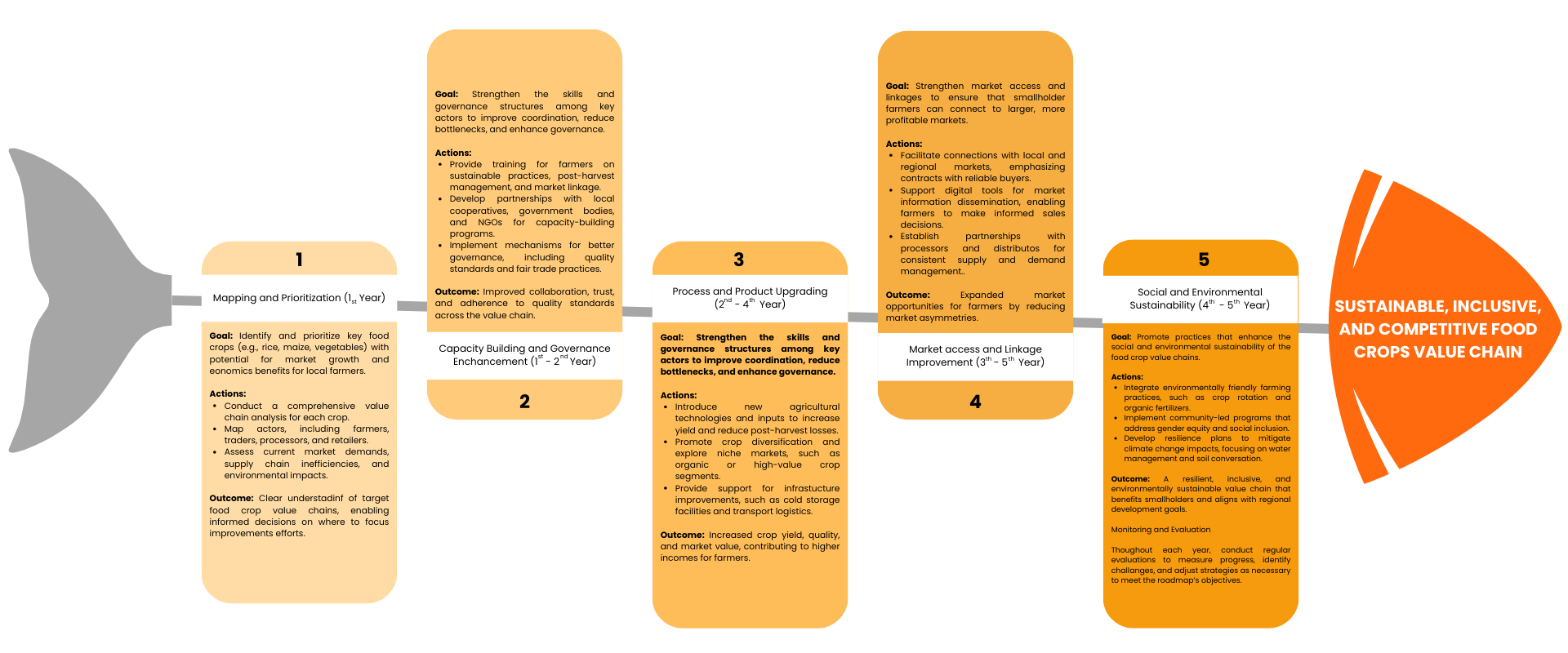
Road Map