
Coconut farming is an important source of livelihood in South Sulawesi, yet many farmers still sell coconuts as fresh fruit and remain vulnerable to fluctuating market prices. In Bonto Pengka Farmer Group, Karassing Village, Bulukumba Regency, this challenge inspired a community service program designed to turn local agricultural potential into higher-value products through practical food-processing technology.
The activity, titled “Strengthening the Economy of Coconut Farmers through the Downstream Processing of Ready-to-Use Coconut Milk with the Bonto Pengka Farmer Group,” was conducted in Karassing Village, Herlang District, Bulukumba Regency, South Sulawesi. Its main objective was to increase the added value of coconuts by developing hygienic, good-quality, ready-to-use coconut milk, while improving farmers’ knowledge and skills in processing, packaging, storage, and product marketing. The program was implemented on 19–20 June 2026 and involved 21 participants, consisting of members of the Bonto Pengka Farmer Group and an agricultural extension officer.
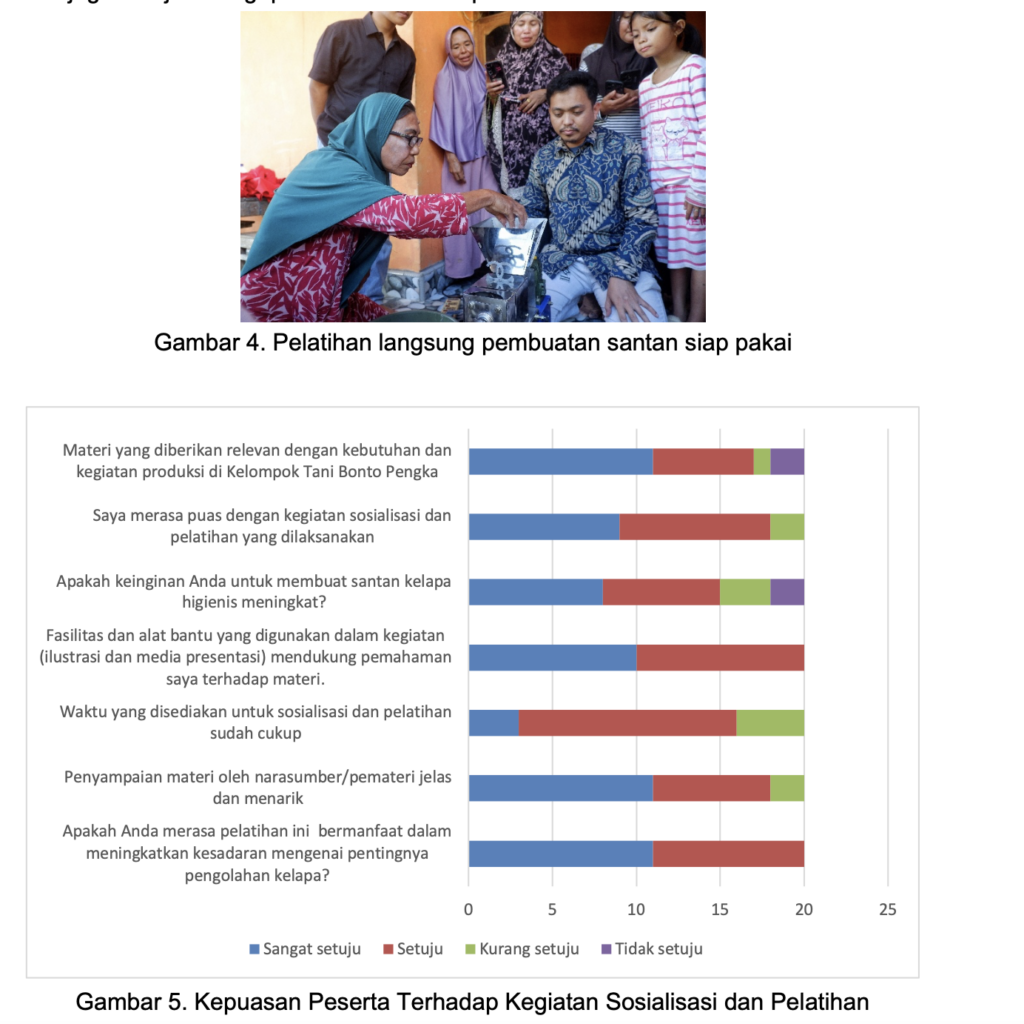
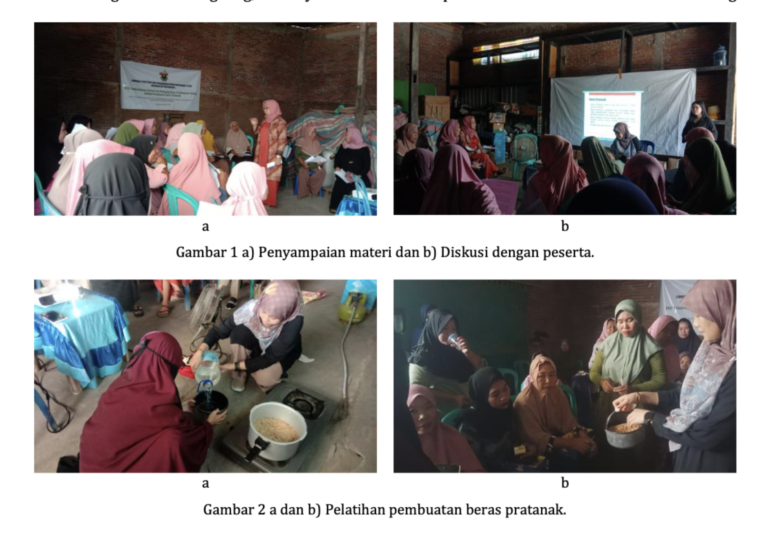
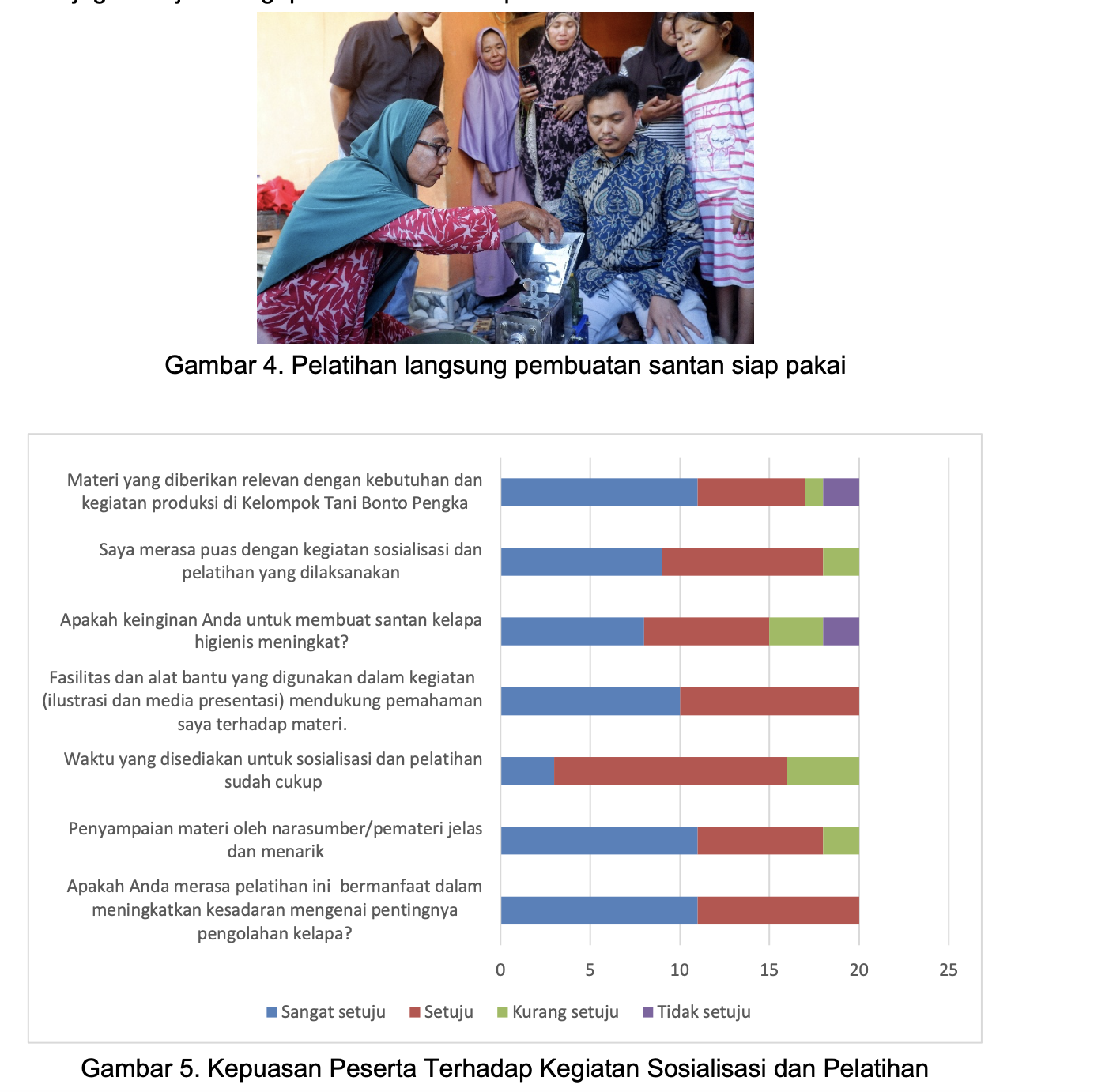
The program combined knowledge sharing with hands-on practice. Participants first received an introduction to coconut milk processing, equipment operation, hygiene, product quality, storage, and simple marketing strategies. They then practiced producing coconut milk using equipment provided through the program, including a coconut grater, coconut milk extractor, temperature-controlled soup warmer, cup sealer, and freezer. The processing method included grating and pressing the coconut, pasteurizing the milk at 75°C for 30 minutes, cooling it, sealing it in cups, and storing it under cold or frozen conditions. These steps were introduced as practical technologies suitable for household-scale production.
The activity addressed more than food processing. It was also an effort to strengthen household and community economic resilience. This directly supports Sustainable Development Goal 1 (SDG 1): No Poverty, because adding value to locally produced coconuts can create opportunities for farmers to earn more than they would from selling raw coconuts alone. By developing ready-to-use coconut milk, farmers can diversify their income sources and reduce their dependence on unstable fresh-coconut prices.
The program also contributes to Sustainable Development Goal 4 (SDG 4): Quality Education. Learning did not take place in a classroom alone; participants learned through demonstration, discussion, and direct practice. This approach helped them develop practical skills in food processing, equipment use, hygiene, storage, and small-scale business planning.
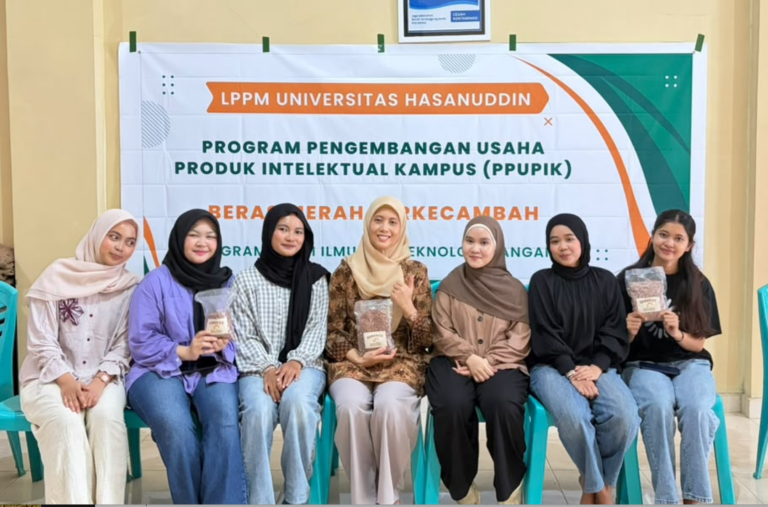
Equally important, the activity reflects Sustainable Development Goal 17 (SDG 17): Partnerships for the Goals. The program brought together the Bonto Pengka Farmer Group, an agricultural extension officer, and Universitas Hasanuddin through its community partnership support. This collaboration connected academic knowledge, local experience, and appropriate technology in a shared effort to improve livelihoods.
By the end of the program, participants showed greater understanding of hygienic coconut milk production, packaging, storage, and simple marketing. More importantly, they gained a practical pathway to transform a familiar local commodity into a product with higher economic value. The initiative demonstrates how science, education, and partnership can work together to strengthen rural communities—starting with something as simple and familiar as a coconut.