
In rural Enrekang, dairy farming plays an essential role in supporting household livelihoods and local food production. However, producing and selling milk does not automatically guarantee financial stability. Without clear records of income, expenses, and production costs, farmers may struggle to understand their actual profits or plan for the future.
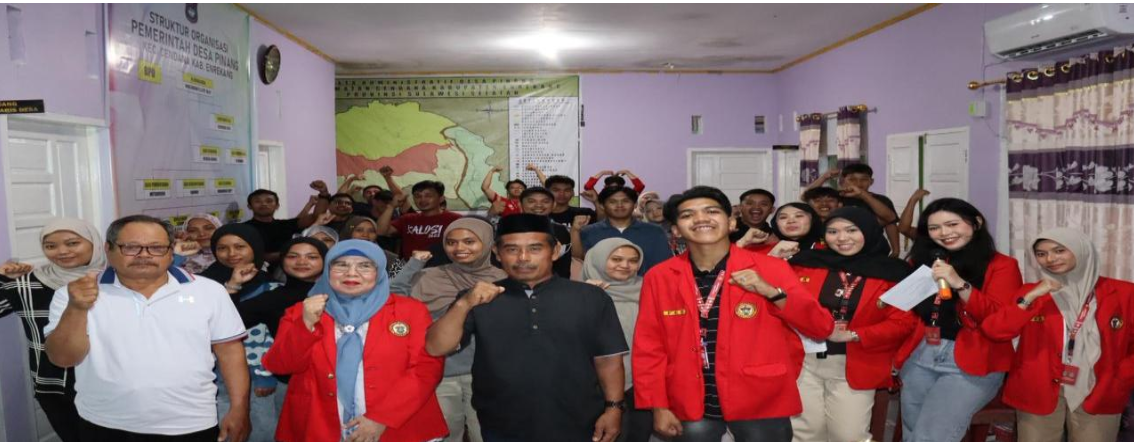
To respond to these challenges, Hasanuddin University conducted a community service initiative entitled “Financial Literacy Education and Financial Recordkeeping for Farmers” on January 14, 2026. The activity brought together 30 farmers in Padang Malua Hamlet, Pinang Village, Cendana District, Enrekang Regency, South Sulawesi, Indonesia. The program aimed to improve dairy farmers’ financial literacy as the foundation for effective, efficient, and sustainable business management.
The initiative began with discussions and field observations to understand the financial challenges farmers faced in their daily operations. Many relied on memory instead of written records, mixed household and farm finances, and accepted milk prices without systematically calculating production costs. These habits made it difficult to evaluate business performance, prepare for unexpected expenses, or negotiate selling prices with confidence.
Through interactive education, practical training, and hands-on mentoring, participants learned how to record cash inflows and outflows using simple cashbooks. The sessions introduced essential concepts such as production costs, financial planning, and the separation of personal and business funds. Examples came directly from dairy farming activities, including milk sales, animal feed, veterinary care, and routine maintenance. This practical approach made financial concepts easier to understand and apply without requiring advanced accounting knowledge.
Participants were encouraged to view these records not as administrative paperwork, but as practical tools for deciding when to save, how much to reinvest, and whether the price of milk fairly reflects the cost of production.
As reported in the published community service article, farmers showed improved understanding of financial recording and began organizing daily and weekly transactions more systematically. They also became more aware of how production costs influence selling prices and profit margins. These encouraging early changes provide a foundation for better decisions, although sustained improvements in income and business resilience will depend on consistent practice and continued support.
Beyond individual skills, this initiative contributes to three United Nations Sustainable Development Goals. It supports SDG 4: Quality Education by bringing relevant, practical learning opportunities directly to a rural community. It advances SDG 1: No Poverty by strengthening financial capabilities that may help farming households manage resources and protect their livelihoods. It also reflects SDG 17: Partnerships for the Goals through collaboration between university educators and local farmers, while highlighting the value of wider cooperation with village institutions.
The activity demonstrates that meaningful economic empowerment can begin with a simple habit: writing down what comes in and what goes out. With ongoing mentoring and stronger community partnerships, financial literacy can become a lasting tool for more independent, competitive, and sustainable dairy farms in Enrekang.