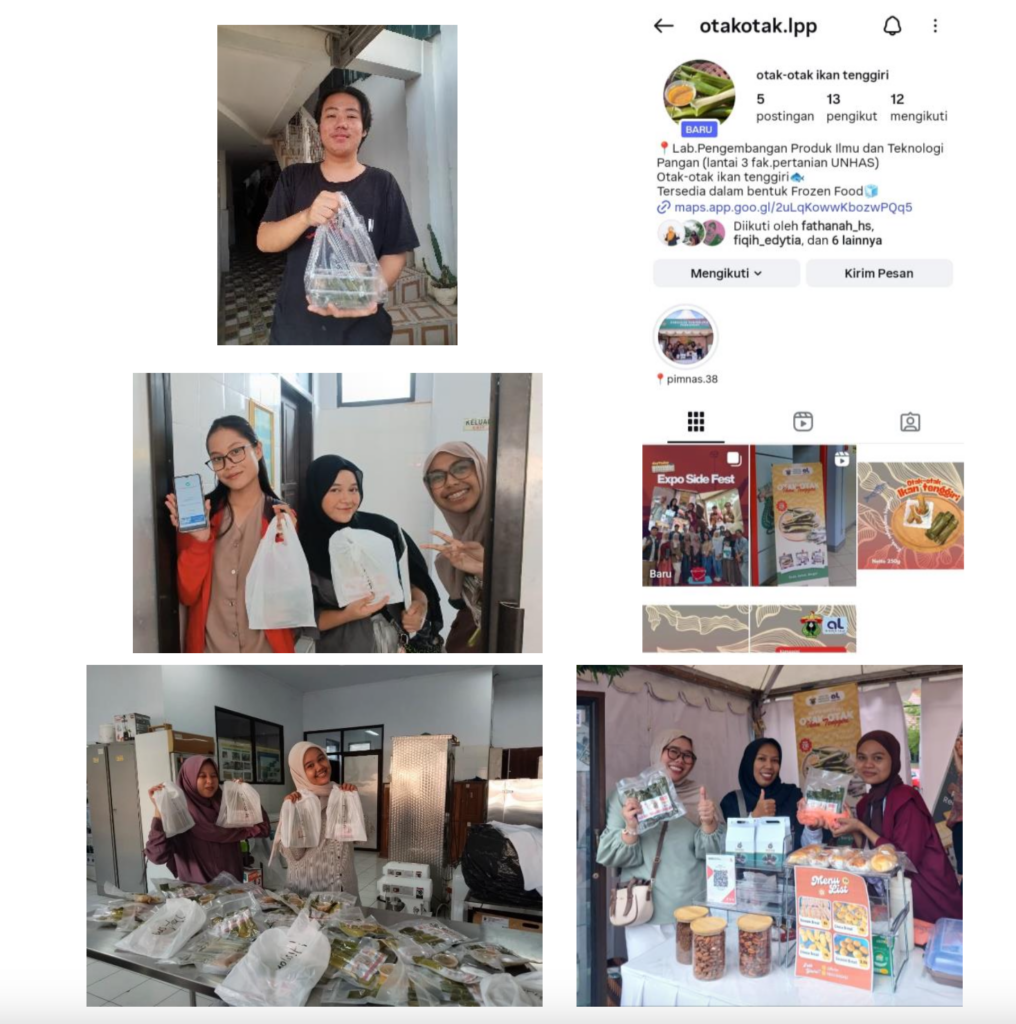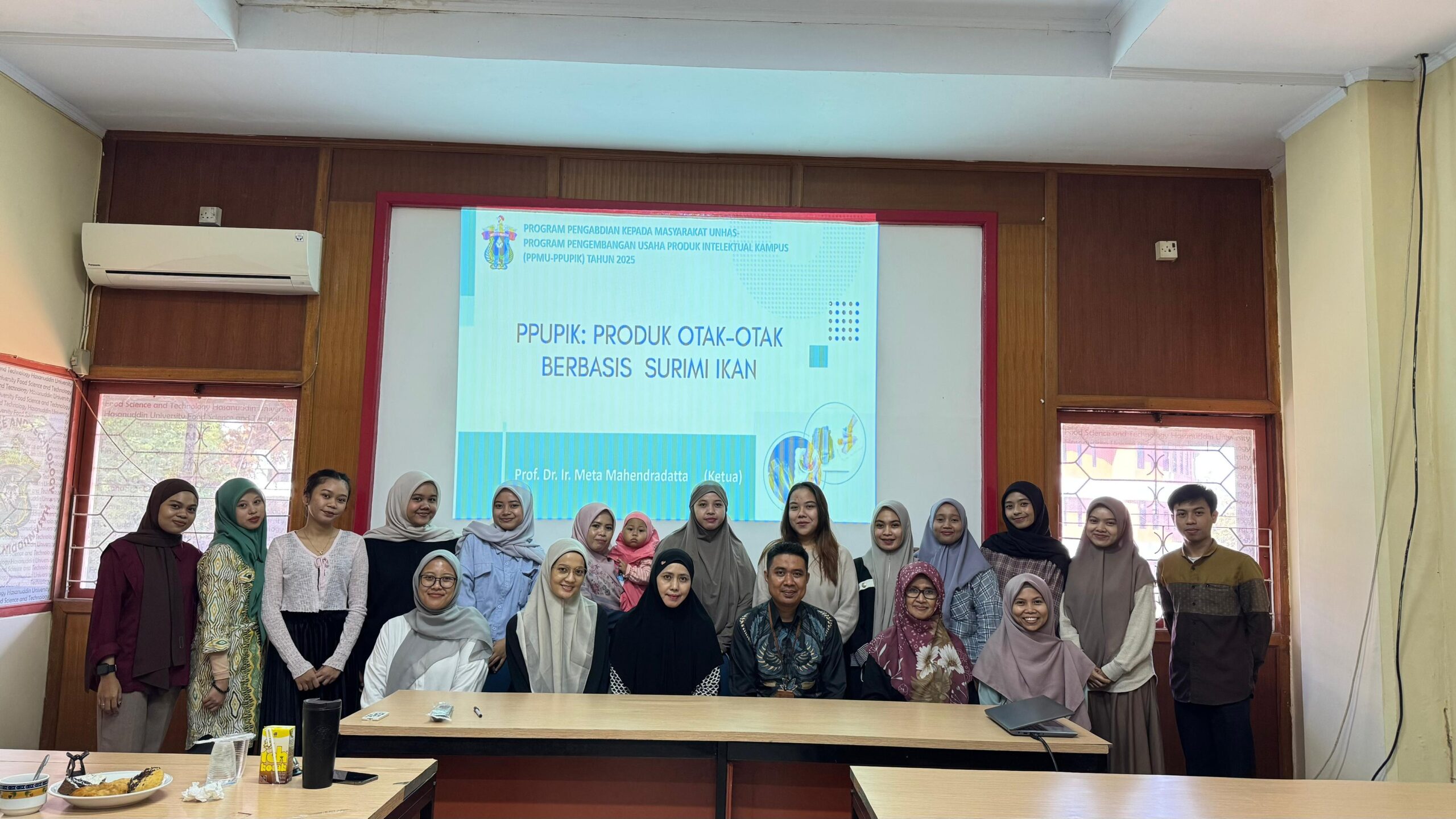

Makassar – Prof. Meta Mahendradatta, as the head of the Functional Food Technology Thematic Research Group, successfully implemented a community empowerment and business development initiative through the Program Pengembangan Usaha Produk Intelektual Kampus (PPUPIK). This program focused on the development and commercialization of fish surimi-based otak-otak products as an innovative campus-derived food business. Conducted at the Laboratorium Pengembangan Produk ITP, Universitas Hasanuddin, the activity aimed to strengthen entrepreneurial capacity among students and alumni while supporting the downstream utilization of research-based food innovations.
The main objective of this program was to encourage the commercialization and industrial application of innovative research products by involving final-year students, alumni, and local business actors in the production and marketing of surimi-based otak-otak. Through this initiative, participants were introduced to practical knowledge and hands-on experience in fish processing technology, product standardization, and small-scale food business management. The activity was implemented during July–December 2025 and involved 10 students/alumni and 5 business actors who actively participated throughout the program.
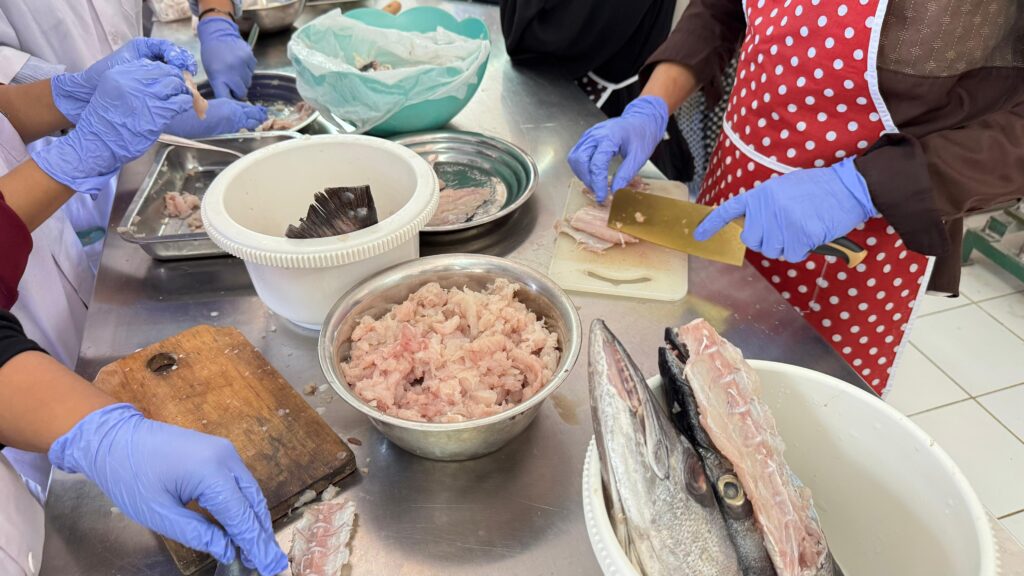
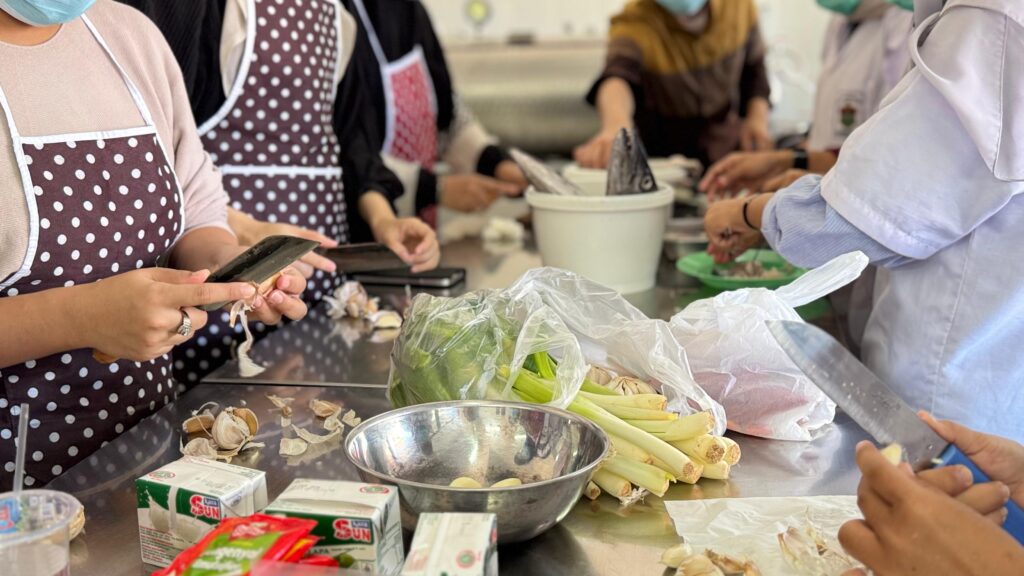
This initiative was designed to ensure that research-based products could be downstreamed, further developed, and commercialized as leading campus products rather than remaining solely as academic research outputs. This activity aimed to improve participants’ knowledge and practical skills in producing value-added fish-based processed products, particularly otak-otak with strong market potential. The participants were not only provided with theoretical knowledge regarding the importance of selecting high-quality raw materials as a determinant of product quality, but were also directly involved in the entire production process, from ingredient preparation to product packaging.
The implementation method consisted of several integrated stages, including facility preparation, technical training on surimi and otak-otak processing, entrepreneurship and business management training, production mentoring, and evaluation of participant understanding and market acceptance. Participants learned the complete production flow, beginning from raw fish material preparation, surimi processing techniques, formulation development, shaping and cooking processes, packaging, and product quality control. In addition, participants were trained in marketing strategies, cost calculation, branding, and customer-oriented product development to support the sustainability of the business initiative.
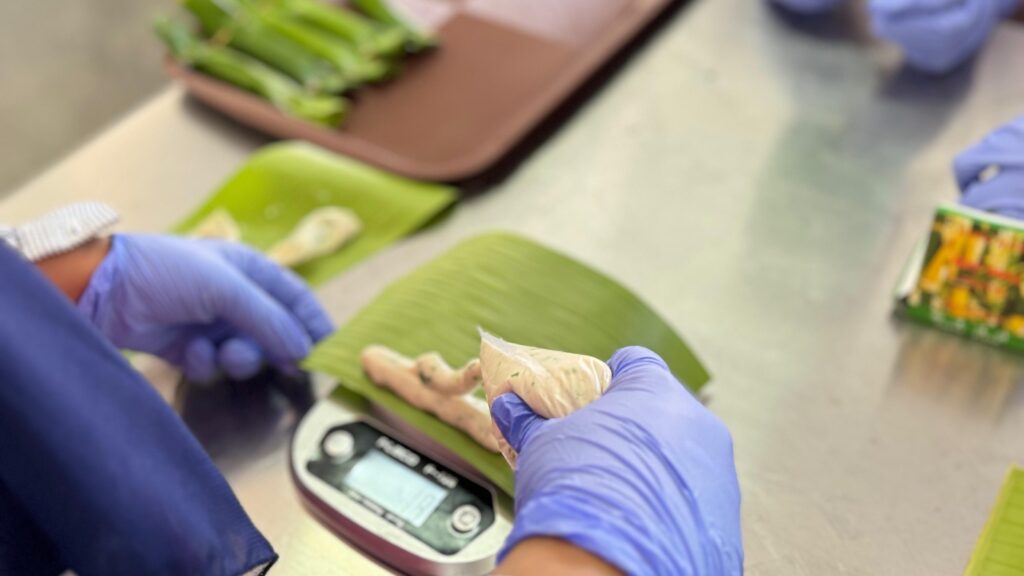
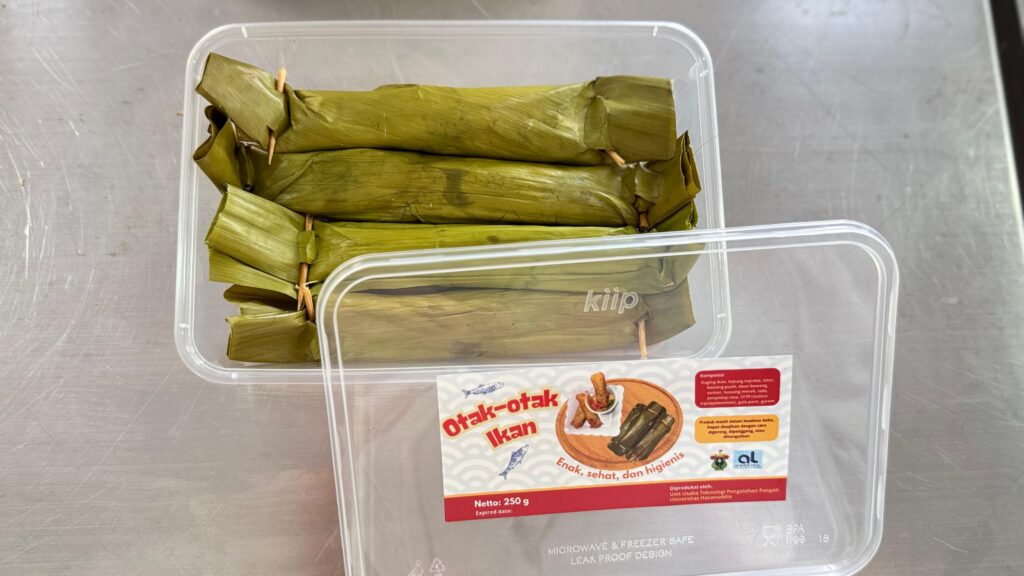
Evaluation results demonstrated a significant improvement in participant knowledge and technical competence. Based on the post-test assessment, participants achieved an average score of 85, indicating that most participants had successfully understood and mastered the production process of surimi and otak-otak products. Furthermore, sales trends and gross profit analysis showed positive market acceptance of the products despite fluctuations in production costs. These outcomes indicate that the program effectively enhanced entrepreneurial skills while also creating opportunities for campus-based food business development.
This activity strongly supports several Sustainable Development Goals (SDGs), particularly SDG 1: No Poverty, SDG 4: Quality Education, and SDG 17: Partnerships for the Goals. Through entrepreneurial empowerment and skills development, the program contributes to income generation opportunities and economic independence among students and alumni, aligning with SDG 1. The educational and technical training components reflect the implementation of SDG 4 by promoting inclusive and practical learning experiences in food innovation and entrepreneurship. Moreover, collaboration among universities, students, alumni, and local business actors demonstrates the importance of partnerships in achieving sustainable innovation, in accordance with SDG 17.
Overall, the PPUPIK program on fish surimi-based otak-otak products has proven to be an effective model for transforming academic research into productive business opportunities. The initiative not only strengthened technical and entrepreneurial competencies but also promoted sustainable collaboration between academia and society. Through continuous development and commercialization efforts, this program is expected to contribute to the advancement of local food innovation and the growth of sustainable community-based enterprises in Indonesia.