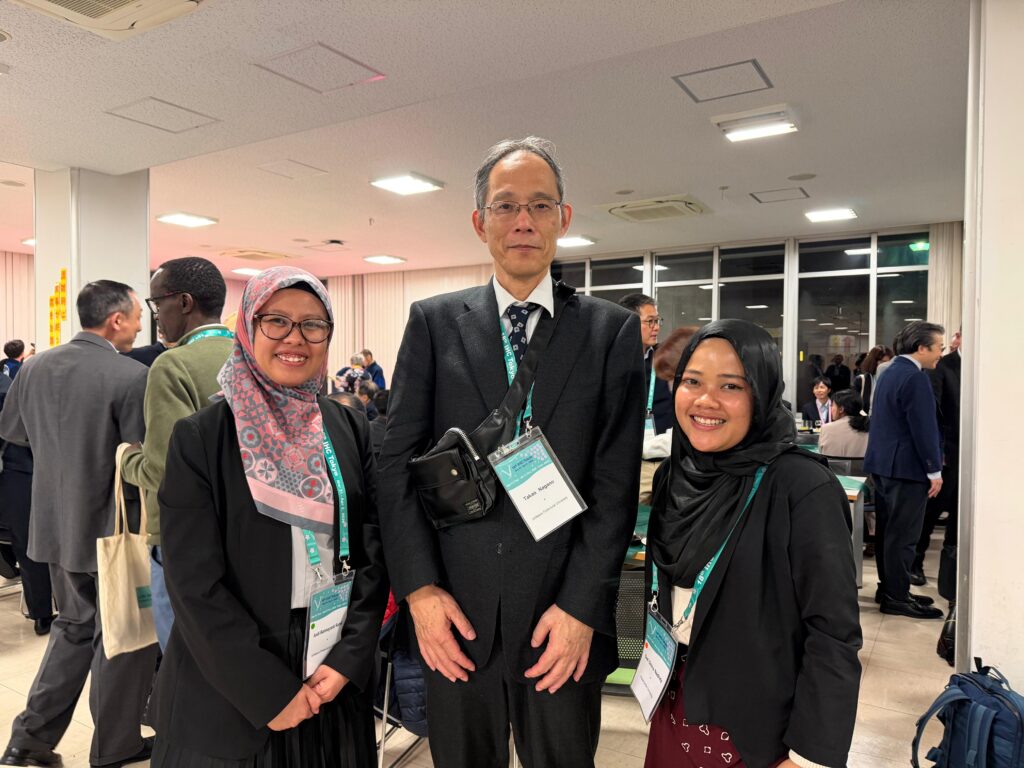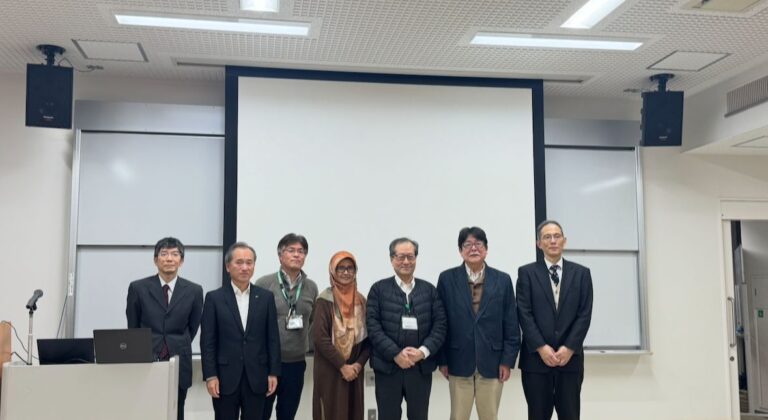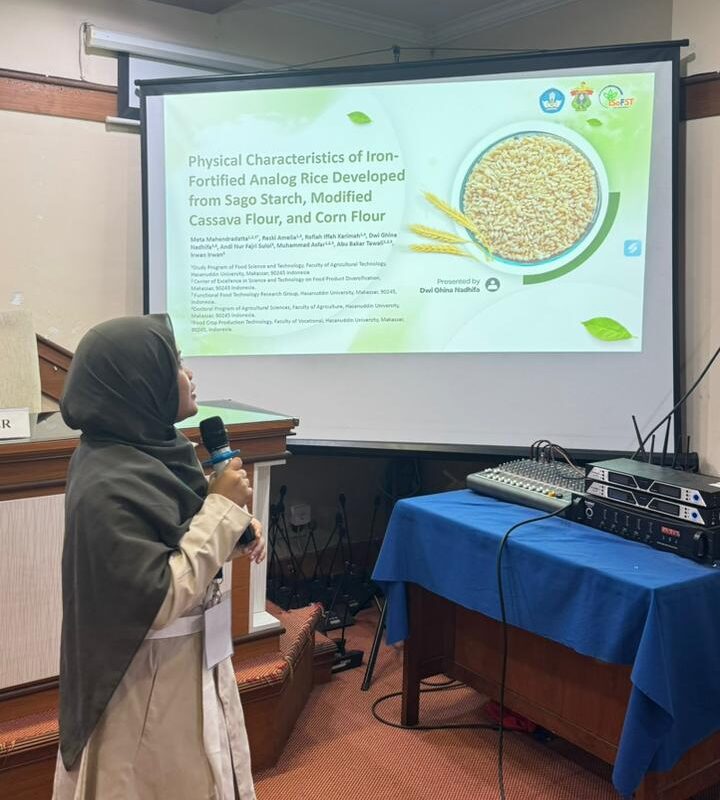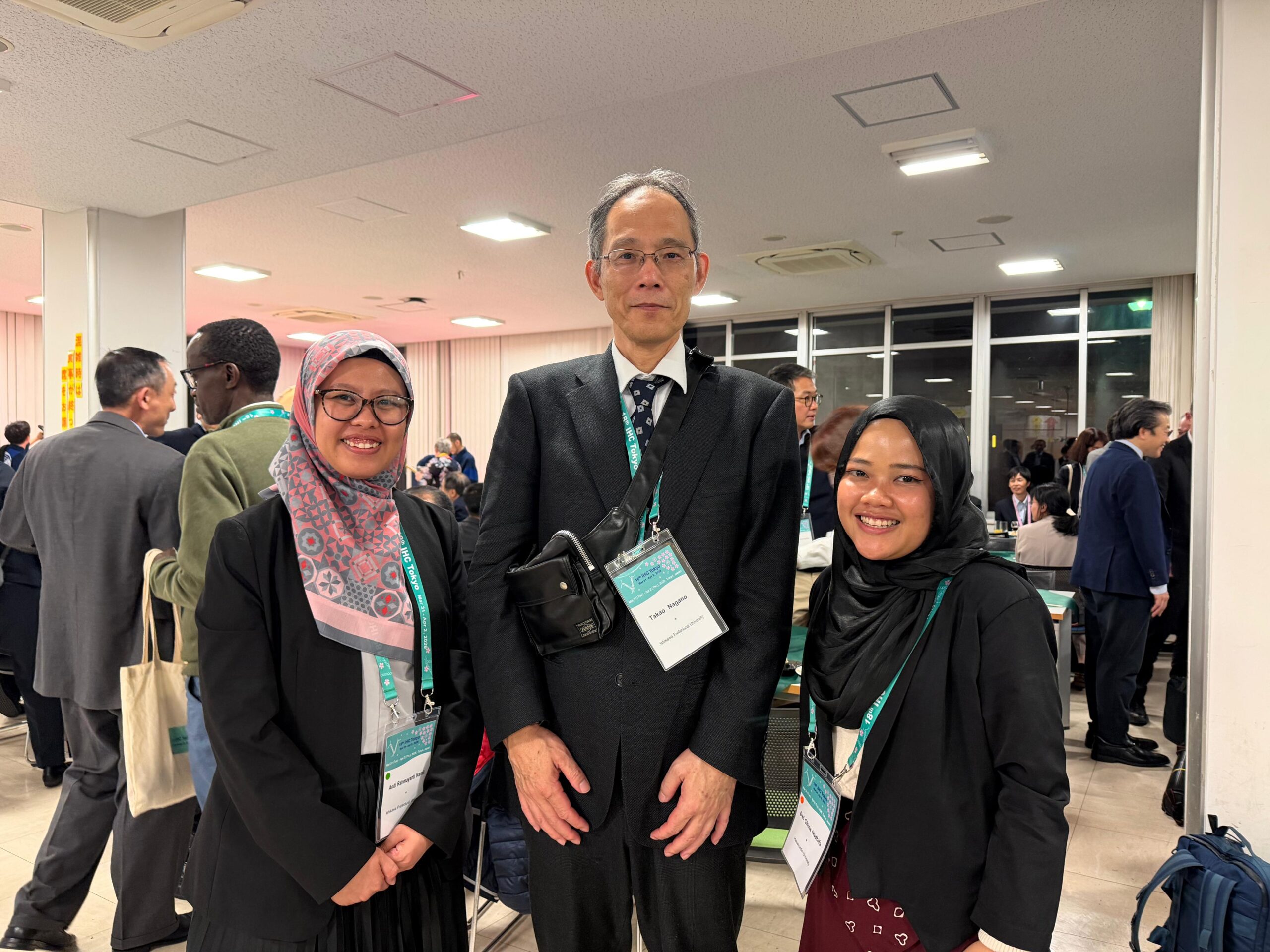

Tokyo, March 31 to April 2, 2026—The 18th International Hydrocolloids Conference (18IHC) served as a premier global stage for the latest innovations in food sustainability and biopolymer science. Among the distinguished participants, consisting of approximately 50 scholars, scientists, and professionals, the Functional Food Technology TRG made a significant impact by showcasing cutting-edge research aimed at revolutionizing functional food structures.
Highlighting Innovation in Analog Rice and Gluten-Free Solutions
Representing the TRG team, Dwi Ghina Nadhifa, a PhD student at Hasanuddin University, and Andi Rahmayanti Ramli, S.TP., M.Si, a lecturer at the Department of Food Science and Technology, Hasanuddin University, and currently pursuing a PhD at Ishikawa Prefectural University, presented their latest findings, which focused on the structural and nutritional enhancement of staple food products through advanced hydrocolloid application.
Dwi Ghina Nadhifa delivered a technical presentation titled “Textural Engineering of Analog Rice using Sago Starch and Bioprocessed Kidney Bean Flour Hydrocolloids.” Her research provided critical insights into how specific starch-protein ratios and bioprocessing techniques can optimize the physical attributes of engineered grains, offering a sustainable and nutritious alternative to traditional rice.
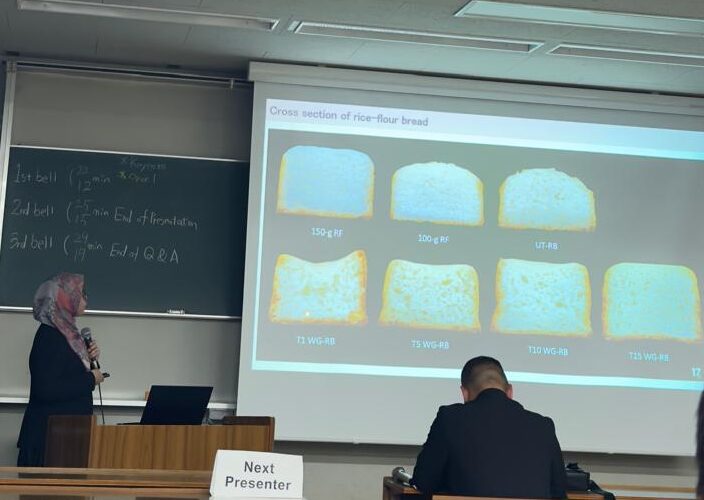
Complementing this work, Andi Rahmayanti Ramli presented her research on “Wet-type grinder treated rice bran as a natural hydrocolloid alternative for improving gluten-free rice bread quality.” Her study addresses the growing demand for high-quality gluten-free products by utilizing processed rice bran to naturally enhance the texture and structural integrity of rice-based bread.
Strengthening International Collaborations
The participation of these researchers highlights a robust academic bridge between Indonesia and Japan. Dwi Ghina Nadhifa is currently conducting advanced research and refining her academic publications at Ishikawa Prefectural University through the PKPI PMDSU program.
She is hosted by Professor Takao Nagano, a key collaborator of the Functional Food Technology TRG and the supervisor for Andi Rahmayanti Ramli. This partnership underscores the group’s commitment to fostering international synergy and leveraging global expertise to solve modern food science challenges.
A Sustainable Roadmap
As 18IHC concluded in Tokyo, the contributions from the TRG team stood out as a testament to the conference’s theme of finding sustainable solutions through hydrocolloid innovation. By bridging the gap between fundamental biopolymer science and practical food engineering, these researchers are helping to pave the way for a more food-secure and health-conscious future.
This international conference participation strongly aligns with key Sustainable Development Goals, notably SDG 17 (Partnerships for the Goals), SDG 2 (Zero Hunger), and SDG 4 (Quality Education). By uniting researchers from Hasanuddin University and Ishikawa Prefectural University on a global stage, the collaboration showcases how cross-border academic networks empower early-career researchers with world-class scientific exposure. Furthermore, by translating biopolymer science into functional food applications—such as nutrient-dense analog rice and value-added gluten-free bakery products derived from agricultural byproducts—this research directly contributes to sustainable food security, bioresource utilization, and improved global health and nutrition.