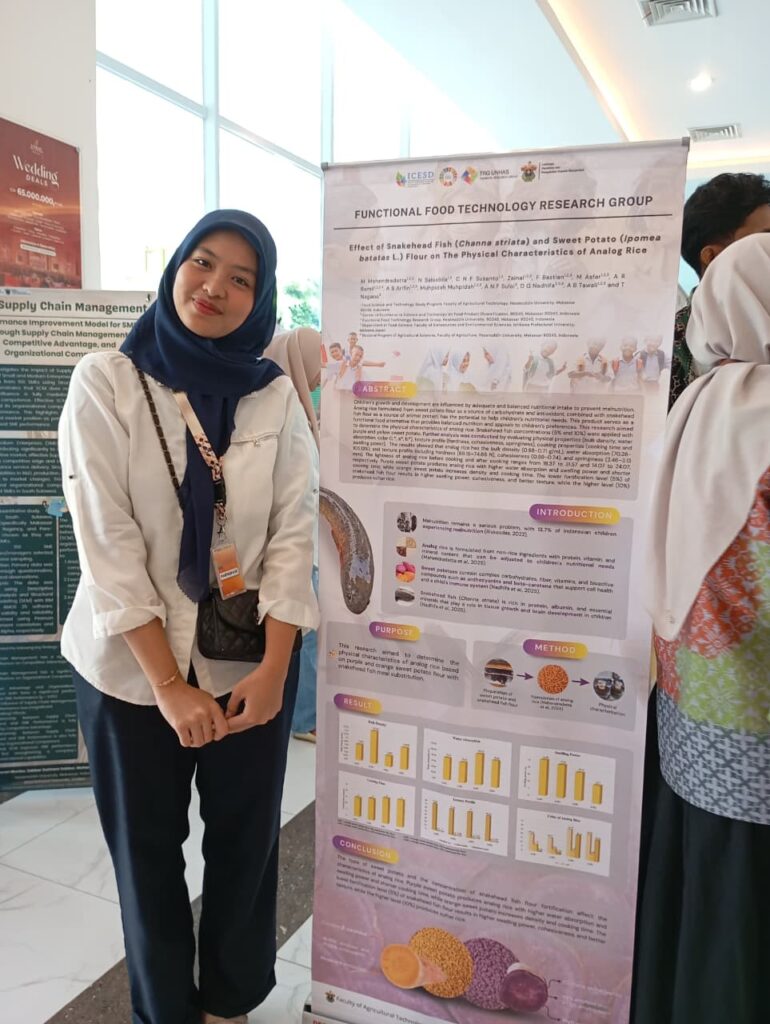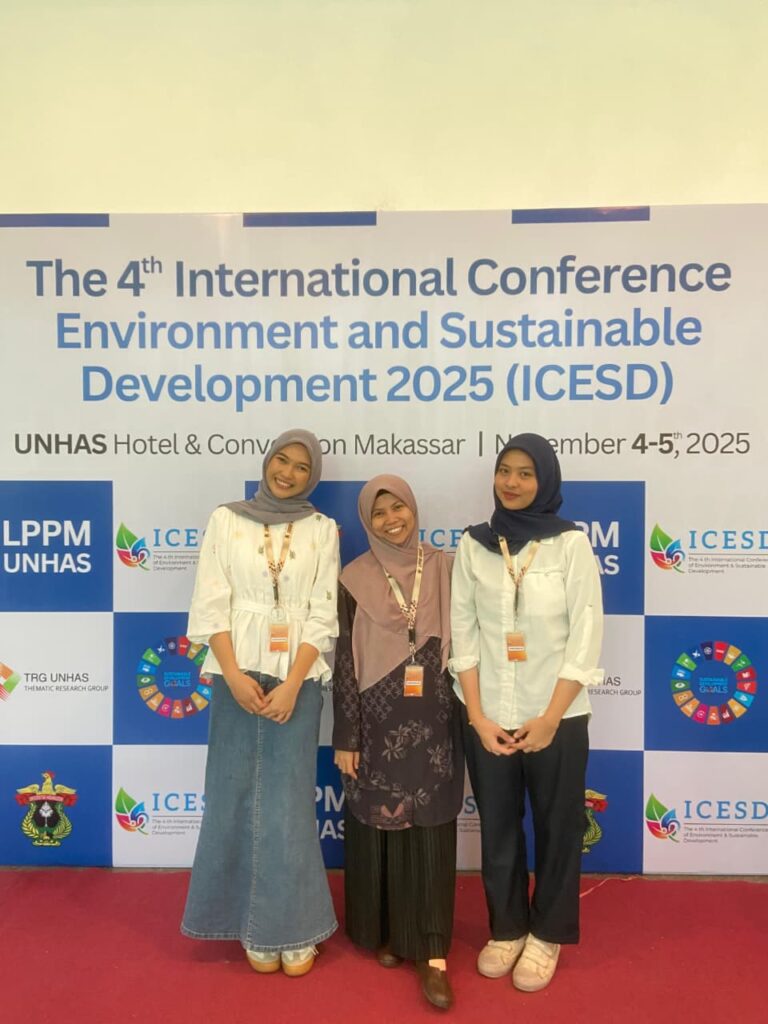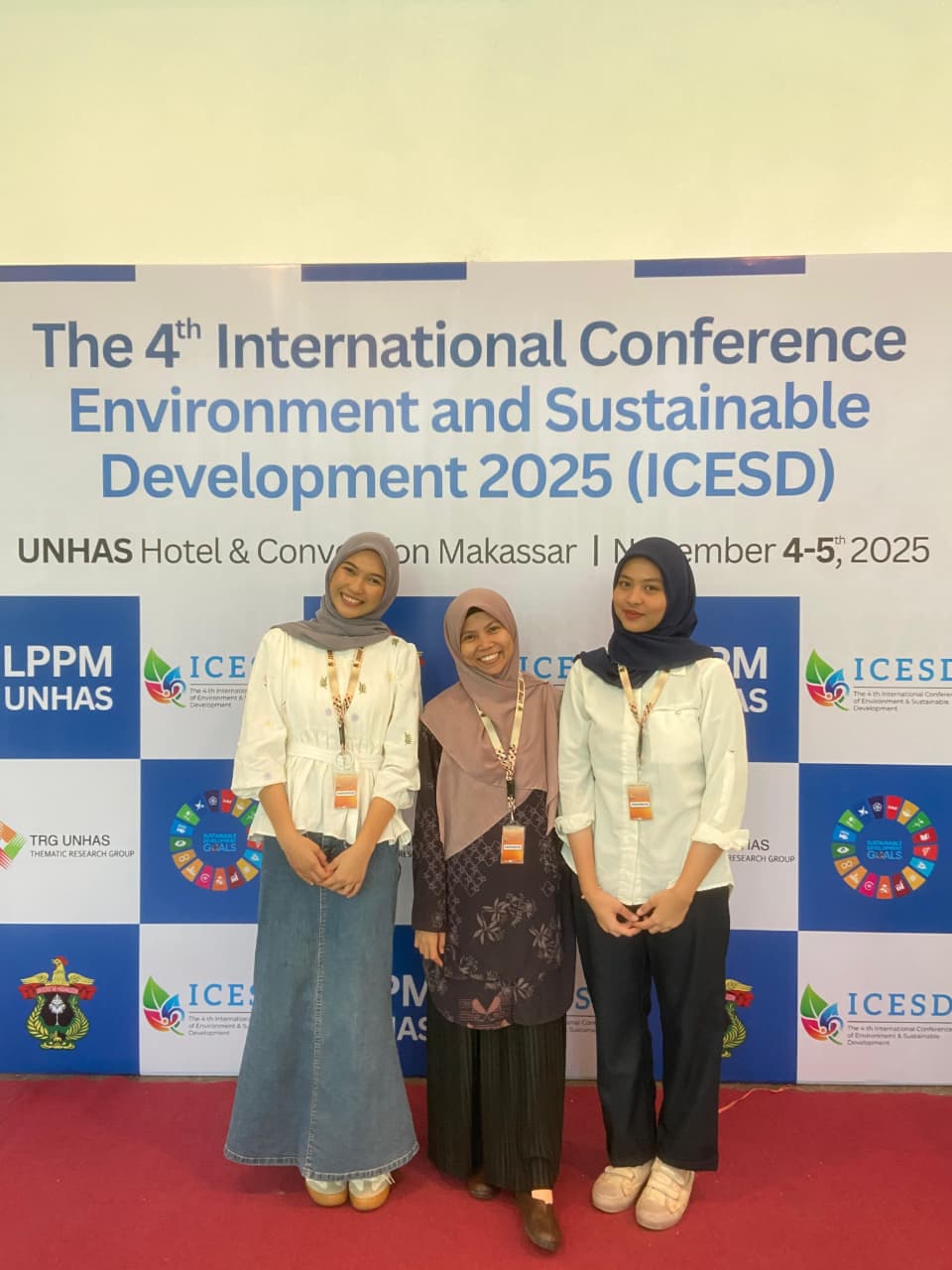

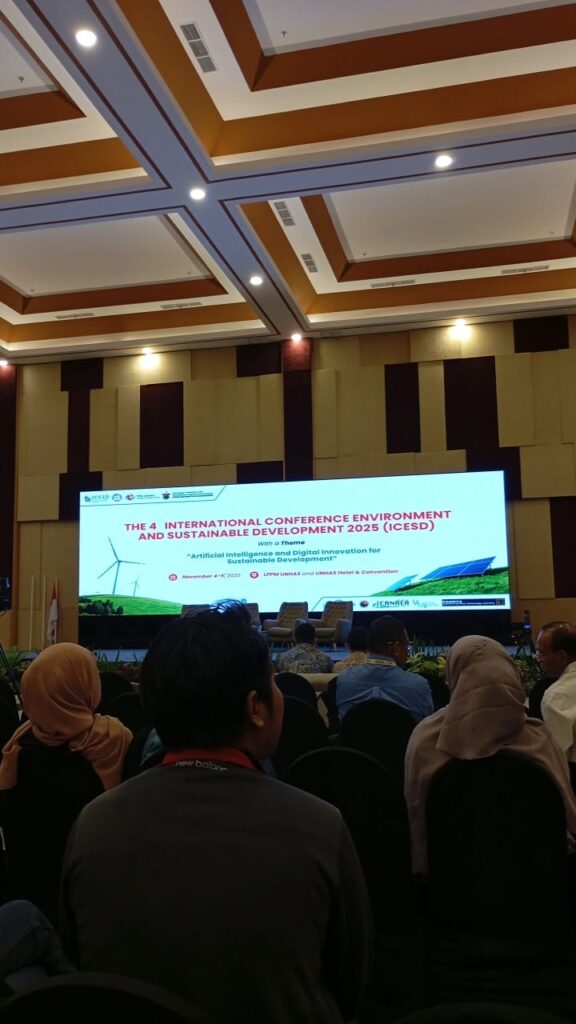
Makassar, Indonesia — On Tuesday, November 4, 2025, the prestigious Unhas Hotel & Convention, located on the Universitas Hasanuddin (UNHAS) campus (Jl. Perintis Kemerdekaan No. KM 10), served as the vibrant hub for the 4th International Conference on Environment and Sustainable Development (ICESD) 2025.
Centering on the timely and forward-looking theme, “Artificial Intelligence and Digital Innovation for Sustainable Development,” the high-profile conference was organized by the UNHAS Institute for Research and Community Service (LPPM) through the Thematic Research Group (TRG) Expo. The international forum successfully brought together an elite cohort of global researchers, academics, industry practitioners, and policymakers, all aiming to exchange breakthroughs in green technology and digital innovation to secure long-term environmental sustainability.
A Breakthrough in Sustainable Food Technology
Among the standout 20 contributors to this year’s expo was the Functional Food Technology Research Group from Universitas Hasanuddin. Recognizing the urgent global need for climate-resilient and health-conscious dietary alternatives, the research team unveiled a groundbreaking food innovation: Analog Rice crafted from a unique blend of locally sourced snakehead fish (Channa striata) and sweet potato (Ipomoea batatas L.) flour.
Driving Local Innovation and Food Security
By presenting this functional food matrix, the research group addressed two critical modern challenges: the heavy reliance on traditional paddy rice and the rising demand for non-communicable disease management (such as diabetes and malnutrition). The snakehead fish and sweet potato analog rice stands out as a powerful double-threat—offering a highly nutritious, low-glycemic staple while simultaneously championing eco-friendly agricultural processing.
Through this successful international showcase, the Functional Food Technology Research Group aims to bridge the gap between academic research and commercial application. It is hoped that the public, food scientists, and key industry players will gain valuable insights into alternative carbohydrate sources. Ultimately, this innovation serves as a scalable blueprint for high-nutrition dietary staples that strengthen local food security and actively support global sustainable development goals.
This event highlights the spirit of SDG 17 (Partnerships for the Goals) and SDG 4 (Quality Education) by creating an inclusive platform for interdisciplinary collaboration and knowledge transfer. Showcasing cutting-edge academic innovations—such as snakehead fish and sweet potato analog rice—at a high-profile international expo provides students, researchers, and industry stakeholders with real-world exposure to green technology and functional food engineering. By strengthening the bridge between academic research, local community impact, and cross-sector partnerships, the initiative demonstrates how university-led research groups can elevate higher education outcomes while driving collaborative solutions for global sustainability.