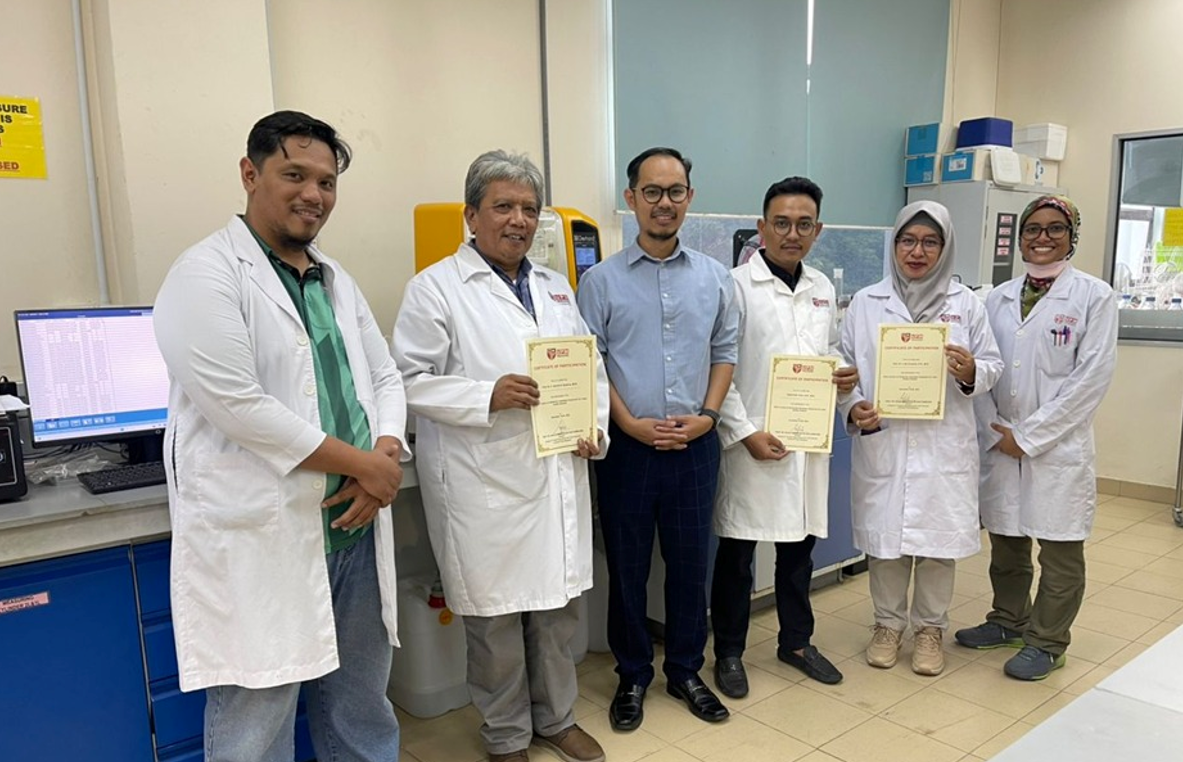

Feed quality is a critical foundation for sustainable livestock production because the nutritional value, safety, and consistency of feed influence animal performance, production efficiency, and the livelihoods of livestock farmers. Recognizing the importance of strengthening expertise in feed analysis, the Feed Technology and Industry Research Group (FeedTechRG) of Hasanuddin University participated in the Short Course on Advanced Laboratory Equipment for Feed Quality Analysis at the Institute of Tropical Agriculture and Food Security (ITAFoS), Universiti Putra Malaysia (UPM). The activity was conducted as part of the implementation of the Memorandum of Understanding (MoU) between Hasanuddin University and Universiti Putra Malaysia, particularly through collaboration between researchers and lecturers from the Faculty of Animal Husbandry, Hasanuddin University, and ITAFoS, UPM.
The short course provided an intensive, practice-oriented learning experience in feed quality evaluation and nutritional analysis. Participants engaged in 14 practical sessions, beginning with sampling and preparation of feed and fecal samples for proximate analysis. The training covered the determination of dry matter, organic matter, crude protein, ether extract, and crude fiber, as well as the analysis of Neutral Detergent Fiber, Acid Detergent Fiber, and lignin using the Van Soest approach. Participants also learned about evaluating nutrient contents, identifying and characterizing feedstuffs, estimating in vitro and in vivo digestibility, and formulating rations. These practical sessions strengthened participants’ understanding of laboratory-based feed evaluation and its application in livestock nutrition and feed development.
The activity brought together 15 participants, including three lecturers and researchers from Hasanuddin University and 12 students from Universiti Putra Malaysia (UPM). The activity was conducted on 19–20 November 2024 at the Institute of Tropical Agriculture and Food Security (ITAFoS), Universiti Putra Malaysia, Malaysia. The international partner was Universiti Putra Malaysia (UPM), particularly ITAFoS, represented by Prof. Dr. Anjas Asmara bin Syamsuddin as the partner researcher. The Hasanuddin University participants were Prof. Dr. Ir. Jasmal A. Syamsu, M.Si, IPU, ASEAN Eng.; Prof. Dr. Ir. Sri Purwanti, S.Pt., M.Si, IPU, ASEAN Eng.; and Abdul Alim Yamin, S.Pt., M.Si.
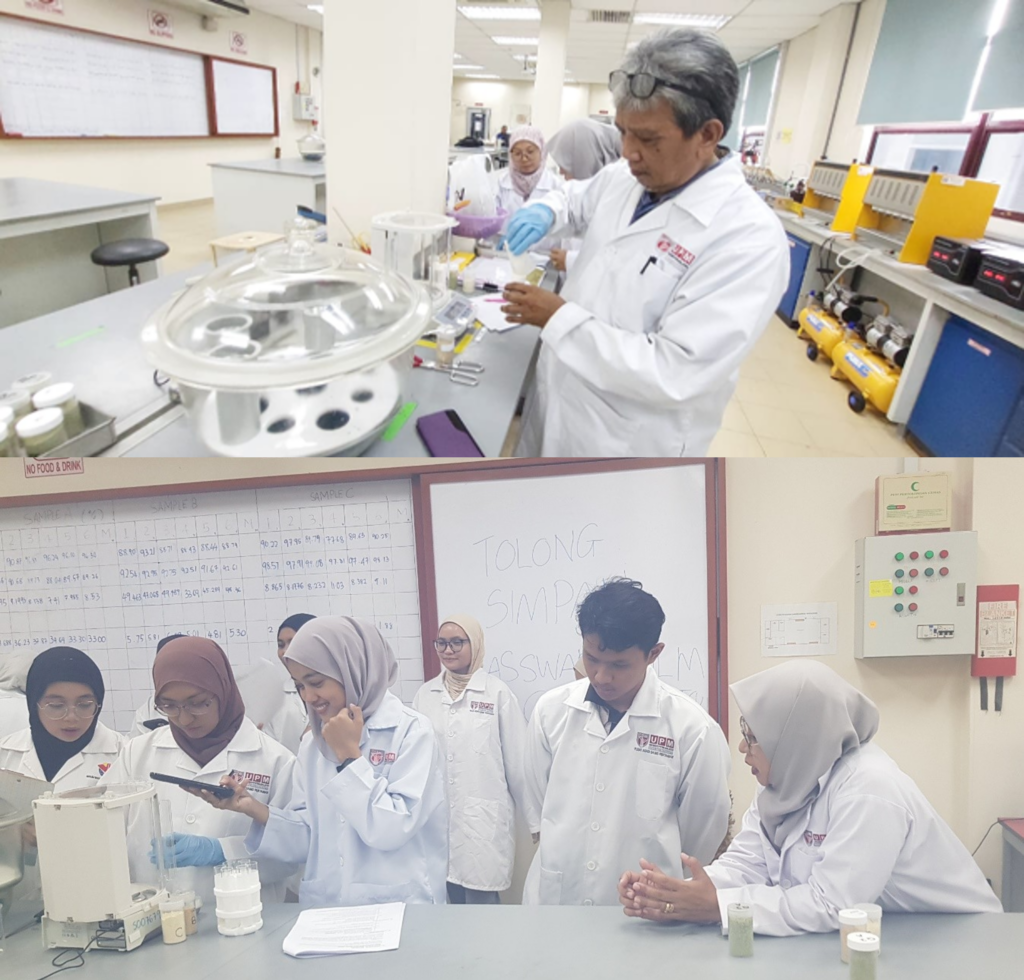
The activity directly supports SDG 4 (Quality Education) by creating an international, practice-based learning environment that strengthens technical competencies and facilitates knowledge exchange among researchers, lecturers, and students. It also contributes to SDG 3 (Good Health and Well-being) by strengthening knowledge and skills in feed quality assessment, an important component of producing safe and nutritionally appropriate animal feed. Enhanced technical capacity in feed evaluation can further contribute to SDG 1 (No Poverty) by supporting more productive and efficient livestock production systems that can contribute to improved livelihoods.
Most importantly, the activity advances SDG 17 (Partnerships for the Goals) by translating the institutional MoU between Hasanuddin University and UPM into a concrete academic and research capacity-building activity. The collaboration provides a platform for knowledge exchange, practical training, and continued interaction among researchers and students. Through this international partnership, both institutions contribute to strengthening human resources and scientific capacity for more sustainable livestock and feed development.