
Integrating crop and livestock production can create a more efficient agricultural system by turning agricultural residues into valuable resources for livestock. This approach was promoted by Universitas Hasanuddin (UNHAS) through a technology-based training program in Bone, South Sulawesi, introducing farmers to the processing of rice straw as feed for beef cattle.
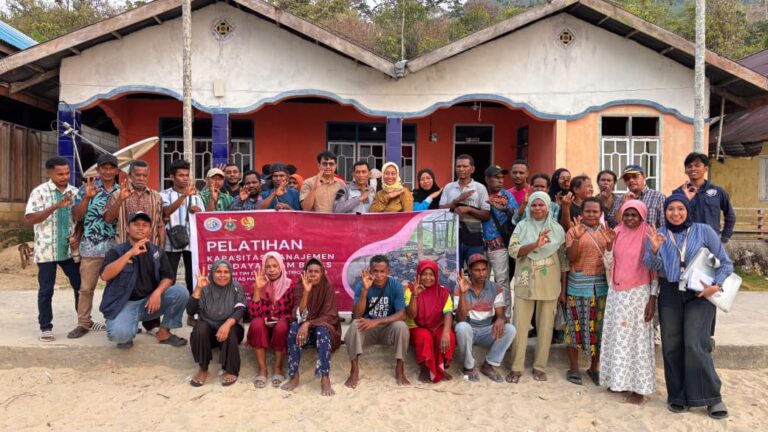
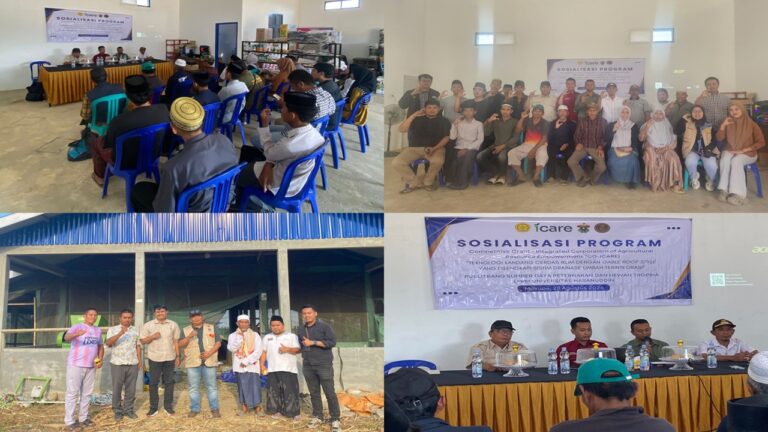
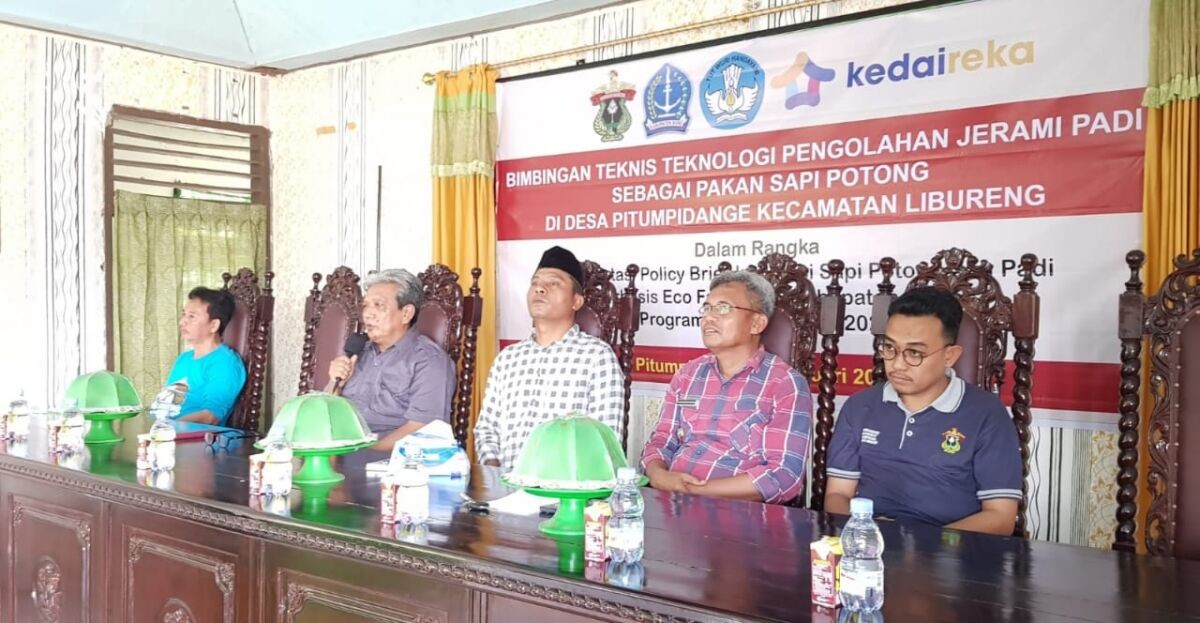
The Activity Title was “Technical Training on Rice Straw Processing for Beef Cattle Feed as Part of an Eco-Farming-Based Rice–Cattle Integration Program.” The activity was conducted on 25 January 2025 and involved 43 participants, consisting of livestock farmers and community leaders from the local community. The program represented an implementation and continuation of the Kedaireka Team 2024 Policy Brief on Eco-Farming-Based Beef Cattle and Rice Integration in Bone Regency.
The Purpose of the Activity was to improve farmers’ knowledge and practical skills in processing rice straw into cattle feed and to support the development of an integrated rice–cattle production system. The training addressed a key challenge faced by cattle farmers in rice-producing areas: the availability of large quantities of rice straw after harvest but limited knowledge and facilities for converting this residue into useful livestock feed.
The Location of the Activity was the Pitumpidange Village Hall, Libureng District, Bone Regency, South Sulawesi. The training provided participants with practical and technical information on rice straw processing and the infrastructure required for future implementation. Particular attention was given to the need for suitable facilities, such as a feed-processing warehouse or dedicated processing area, where larger quantities of rice straw could be collected and processed collectively after the rice harvest.
Prof. Dr. Ir. Jasmal A. Syamsu, M.Si., IPU, ASEAN Eng., Head of the Center for Research and Development of Livestock Resources and Tropical Animals at UNHAS, served as the Head of the Kedaireka Team and led the technical training. He emphasized that capacity building among cattle farmers is an important component of the rice–cattle integration policy. According to him, farmers need both knowledge and practical skills in feed processing to ensure that agricultural residues can be effectively utilized as livestock resources.
The activity was also supported by local government and village institutions. Andi Syamsul Musrya, S.STP., Head of Libureng District, highlighted the strong potential of Pitumpidange and surrounding areas for beef cattle development, particularly because of the availability of rice straw associated with extensive rice production. Andi Muhammad Amran, S.T., M.S.P., Head of Pitumpidange Village, expressed appreciation for the UNHAS team and emphasized the importance of continuing the planned demonstration plot as a practical model for local farmers.
The training involved members of the Kedaireka team, including Andi Muh. Fuad, S.Pt., M.Si., and Dr. Abdul Alim Yamin, S.Pt., M.Si., who contributed to the knowledge transfer and community engagement process.
The initiative contributes to Sustainable Development Goal (SDG) 1: No Poverty by supporting more efficient livestock production and strengthening rural livelihoods. It advances SDG 4: Quality Education through practical training and knowledge transfer for farmers. The utilization of rice straw as livestock feed contributes to SDG 15: Life on Land by promoting more efficient use of agricultural biomass and supporting an integrated, resource-efficient farming system. Collaboration between UNHAS, local government, village institutions, and farmers also reflects SDG 17: Partnerships for the Goals. By connecting rice production with cattle development, the initiative demonstrates how locally available resources can be transformed into productive inputs while building farmers’ capacity for more integrated and sustainable agricultural development.