
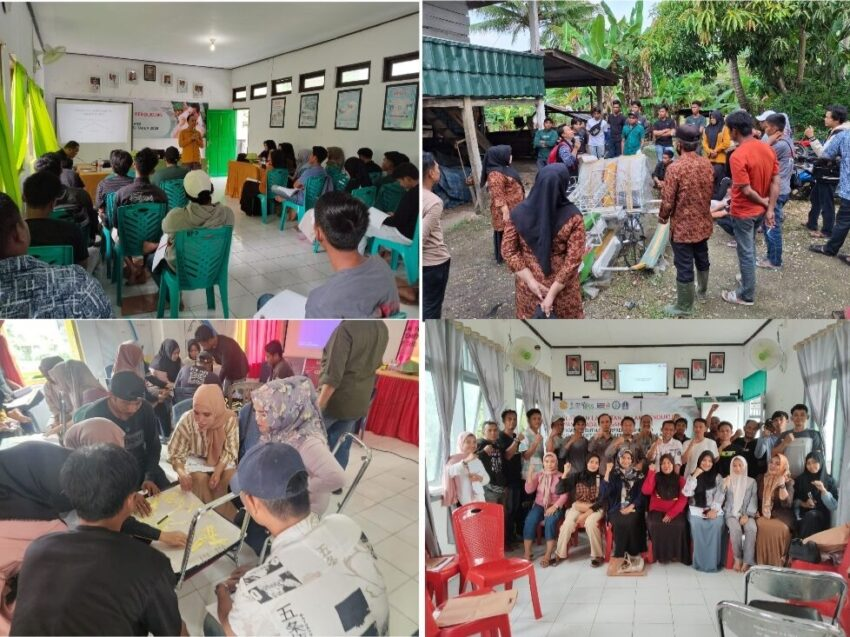
Developing a productive and resilient agricultural sector requires not only access to technology but also people who possess the knowledge and skills to apply it effectively. Responding to this need, the Institute for Research and Community Engagement (LPPM) of Universitas Hasanuddin (UNHAS), through its Center for Natural Resources Research and the Center for Research and Development of Livestock Resources and Tropical Animals, collaborated with the Ministry of Agriculture’s Youth Entrepreneurship and Employment Support Services (YESS) Program to deliver advanced training for agricultural communities in Bone, South Sulawesi.
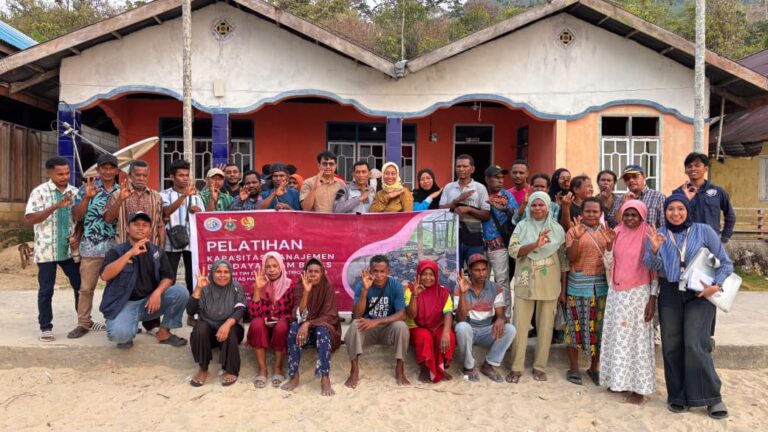
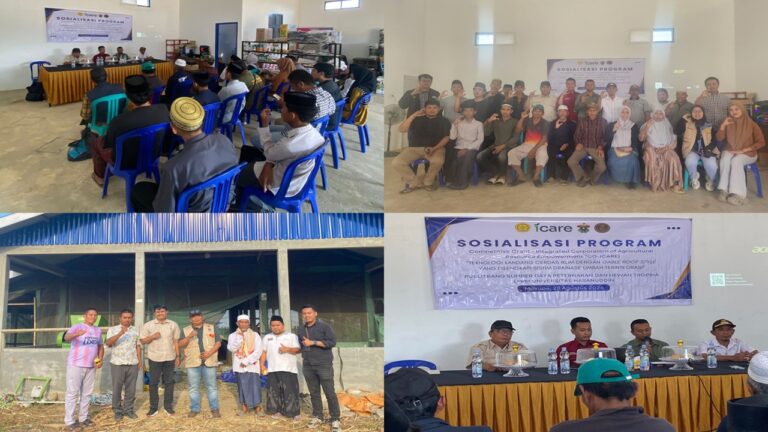
The Activity Title was “Advanced Training to Support Food Self-Sufficiency through the Youth Entrepreneurship and Employment Support Services (YESS) Program.” The training was conducted from 23–26 June 2025 across four locations in Bone Regency. The program brought together members of the Food Brigade (Brigade Pangan), Food Brigade extension facilitators, and farmers at each training location. The number of participants was 32 of participants.
The Purpose of the Activity was to strengthen the knowledge, technical capacity, and understanding of Food Brigade members and agricultural stakeholders so that they could perform their responsibilities more effectively in supporting agricultural productivity and food self-sufficiency. The training also emphasized the importance of technology and the involvement of young people in developing a more productive and adaptive agricultural sector.
The Location of the Activity covered four sites in Bone Regency: the Agricultural Extension Center (BPP) of Tellusiateng District, BPP of Dua Boccoe District, BPP of Cenrana District, and the Lea Village Office in Tellusiateng District. Conducting the training at multiple local sites enabled participants to receive learning and technical guidance within their own agricultural environment, making the program more relevant to field conditions.
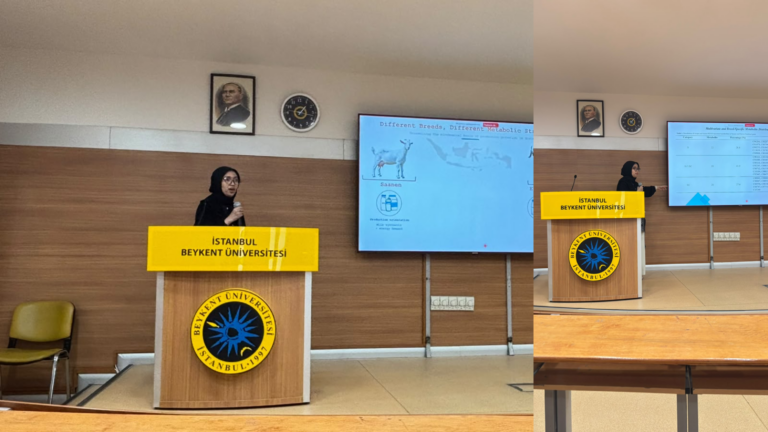
The training was facilitated by experts from UNHAS and partner institutions. Prof. Dr. Ir. Jasmal A. Syamsu, M.Si., IPU, ASEAN Eng., Head of the Center for Research and Development of Livestock Resources and Tropical Animals at UNHAS, contributed as one of the resource persons. He emphasized the importance of ensuring that Food Brigades understand their roles and responsibilities so they can operate effectively in the field.
Other resource persons included Prof. Dr. Ir. Abd. Rasyid, M.Si., Head of the Center for Natural Resources Research at UNHAS; Dr. Iqbal, S.TP., M.Si., IPM; Asman, S.P., M.P., PhD; Muh. Dalvi, S.Pi., M.Sc.; Muhammad Erik Kurniawan, S.Pt., M.Si.; and Muh. Darwis, S.Pt., M.Si. Their involvement provided participants with knowledge and perspectives relevant to agricultural production, technology utilization, and field implementation.
The training reflects a practical approach to human resource development, in which agricultural actors are equipped not only with information but also with an understanding of how to apply knowledge in their respective roles. The Food Brigade concept promoted through the program is intended to increase agricultural productivity through the use of technology and greater participation from the younger generation.
The initiative contributes to Sustainable Development Goal (SDG) 1: No Poverty by strengthening agricultural skills and productivity that can support sustainable livelihoods and economic opportunities in rural communities. It directly supports SDG 4: Quality Education through continuing education, technical training, and knowledge transfer for farmers, extension personnel, and Food Brigade members. The collaboration between UNHAS and the Ministry of Agriculture’s YESS Program also demonstrates SDG 17: Partnerships for the Goals, highlighting the role of institutional cooperation in strengthening agricultural human resources and supporting food self-sufficiency.
Through continued collaboration, knowledge transfer, and field-oriented capacity building, the program demonstrates how higher education institutions can contribute directly to strengthening agricultural communities and preparing human resources to respond to the evolving needs of Indonesia’s food production sector.