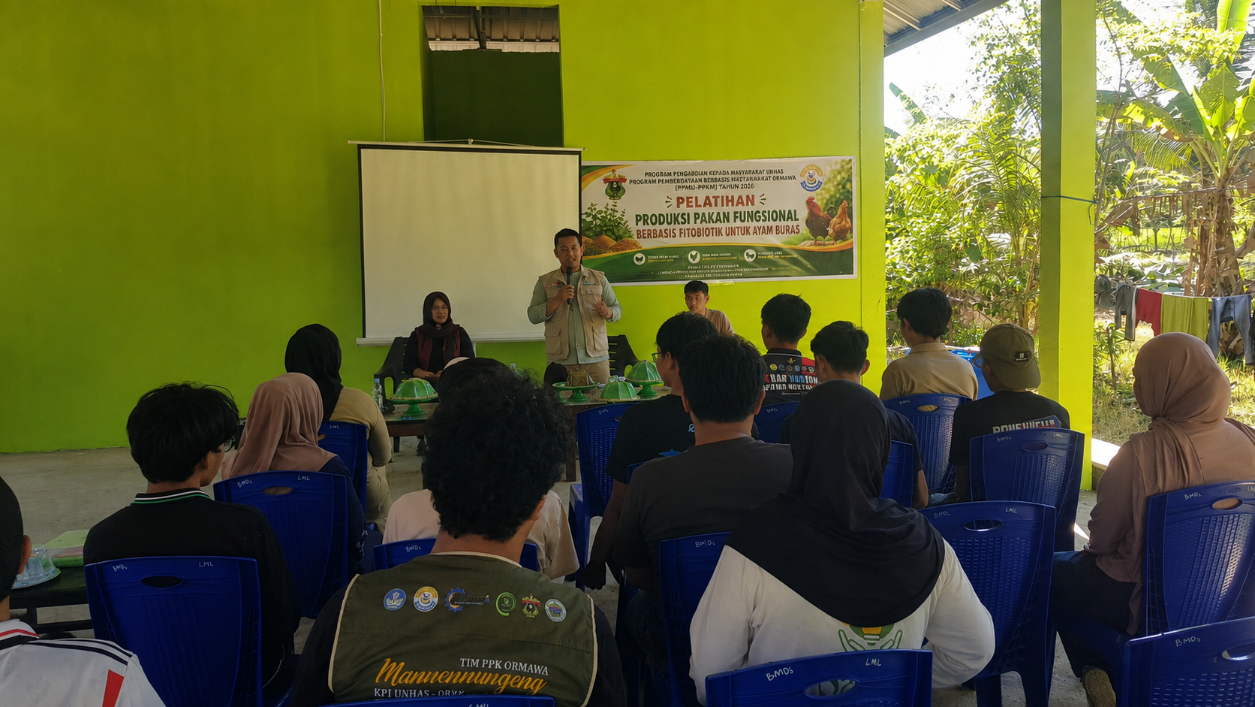

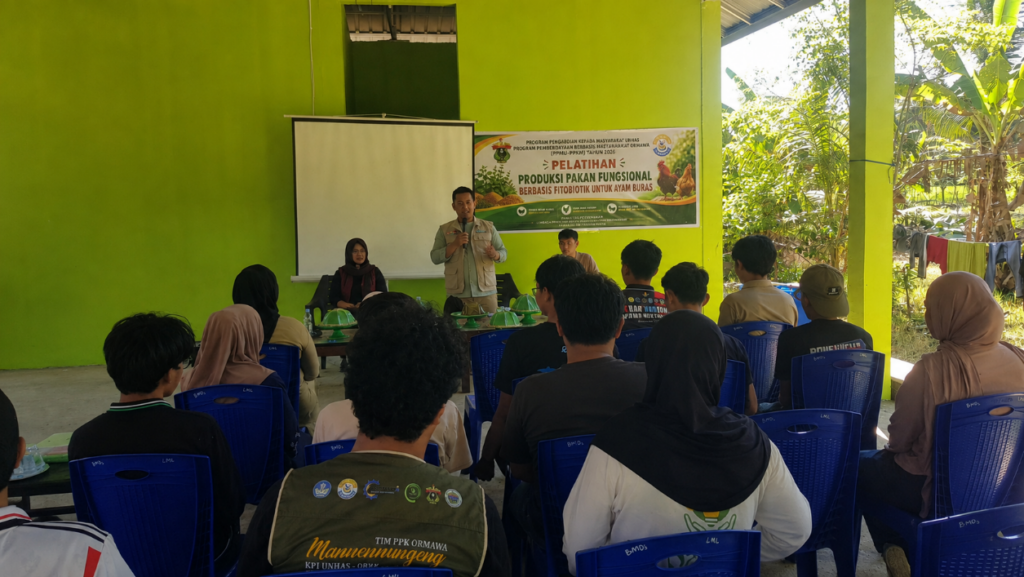
Innovative livestock development becomes more meaningful when research-based knowledge can be translated into practical solutions for farmers. This principle was demonstrated through a community training program in Bone, South Sulawesi, where farmers, students, academics, and the private sector collaborated to promote phytobiotic feed technology and circular farming practices for smallholder poultry production.
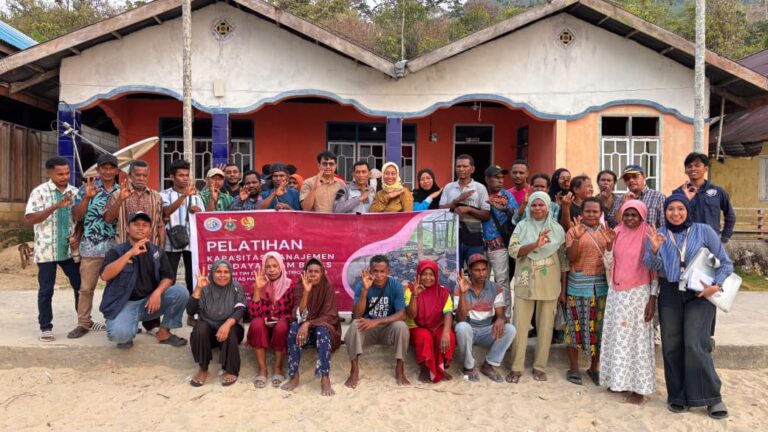
The Activity Title was “Phytobiotic Feed Innovation and Circular Farming Training for Smallholder Poultry Farmers.” The activity was conducted on 4–5 July 2026 and involved 41 participants, consisting of 23 farmers and 18 students participating in the PPK Ormawa program. The program was organized by the Mannennungeng Team of the Student Organization Capacity Strengthening Program (PPK Ormawa) of the Scientific Knowledge and Reasoning Student Unit (UKM KPI), Universitas Hasanuddin (UNHAS) in collaboration with the 2026 PPMU-PPUPIK Team of the Faculty of Animal Science, UNHAS.
The Purpose of the Activity was to improve farmers’ knowledge and practical skills in utilizing phytobiotics as natural feed additives, producing functional feed for native chickens, and applying circular farming principles that connect crop and livestock production. The approach was designed to reduce dependence on commercial feed, improve production efficiency, and encourage more sustainable livestock enterprises.
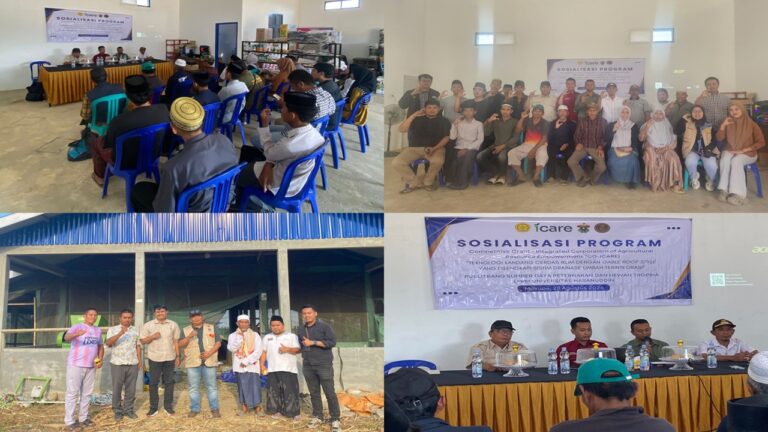
The Location of the Activity was P4S Lamellong Hall, Kajaolaliddong Village, Bone Regency, South Sulawesi. The two-day program combined classroom-based learning with hands-on demonstrations. On the first day, participants learned about phytobiotics derived from herbal plants and their potential applications in livestock production. The second day focused on demonstrating the production of phytobiotic-based functional feed for native chickens, allowing farmers to directly practice the techniques introduced during the training.
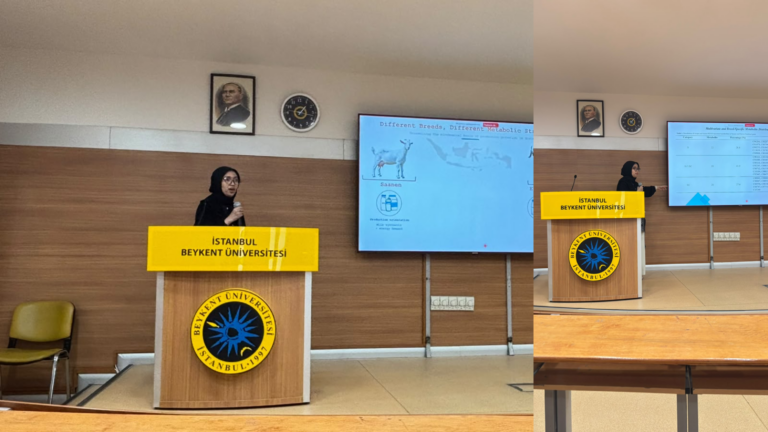
The training featured Prof. Dr. Ir. Sri Purwanti, S.Pt., M.Si., IPU, ASEAN Eng.; Prof. Dr. Ir. Jasmal A. Syamsu, M.Si., IPU, ASEAN Eng.; and Ichlasul Amal, S.Pt., M.Si., lecturers and researchers from the Faculty of Animal Science, UNHAS, as resource persons. Their contributions connected scientific knowledge with practical livestock management. Prof. Dr. Ir. Jasmal A. Syamsu, M.Si., IPU, ASEAN Eng., Head of the Center for Research and Development of Livestock Resources and Tropical Animals at UNHAS and Head of the Feed Technology and Industry Research Group (FeedTech RG) at UNHAS, highlighted circular farming as an integrated approach in which agricultural residues can be converted into livestock feed while livestock manure can return to farmland as organic fertilizer.
The program also involved Hasbi Ashshiddiqy, S.Kom., owner of PT Sitinrola Organik Indonesia, who shared practical experience in organic livestock business development and market opportunities for healthier animal products. This participation strengthened the connection between community empowerment, innovation, and market access.
The activity contributes to Sustainable Development Goal (SDG) 1: No Poverty by supporting more efficient livestock enterprises and potential income generation. It advances SDG 3: Good Health and Well-being through the promotion of healthier livestock production and animal-derived products. The knowledge transfer and practical training directly support SDG 4: Quality Education, while the circular use of agricultural and livestock resources contributes to SDG 15: Life on Land. Finally, collaboration among students, academics, farmers, P4S Lamellong, and the private sector demonstrates SDG 17: Partnerships for the Goals.
Through the integration of research, practical learning, student engagement, and private-sector support, the program provides a model for translating university innovation into community-level livestock development and sustainable rural livelihoods.