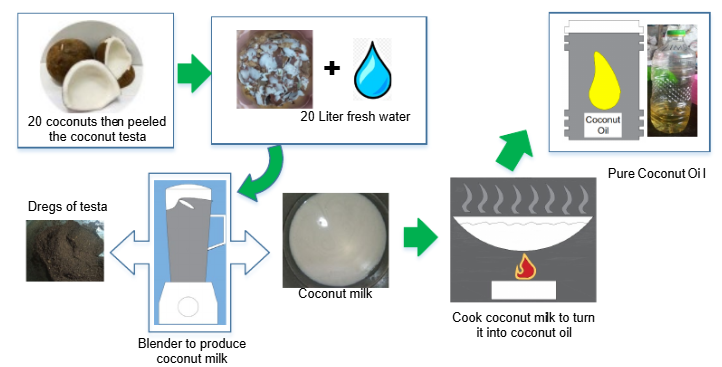

Fluid Dynamics and Energy Research Group (FDERG), Universitas Hasanuddin, continues to explore alternative energy technologies through research on renewable fuels and sustainable engine applications. One of its recent studies investigates the potential of coconut testa, the brown outer layer of coconut meat, as a source of biodiesel for compression ignition engines.
Coconut processing generates agricultural residues that are often discarded even though they may still contain valuable organic compounds. Converting these residues into fuel can create an opportunity to reduce waste while producing an alternative energy source. This approach is particularly relevant for Indonesia, where coconut is widely cultivated and processed in many regions.
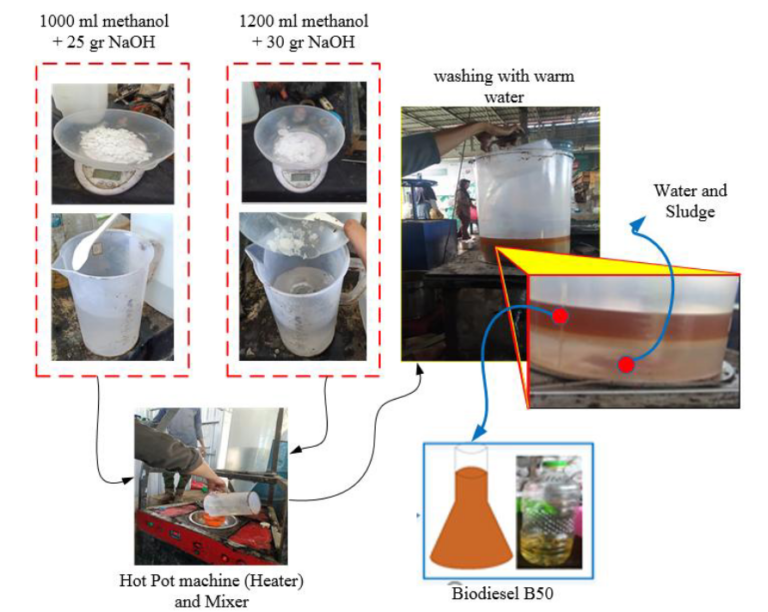
The research, entitled Performance and Feasibility Analysis of Biodiesel Production from Coconut (Cocos nucifera) Testa for CI Engine Applications, investigates the production of biodiesel from coconut testa oil using the transesterification process. The resulting biodiesel was blended with conventional diesel fuel at two concentrations, B30 and B50, and subsequently tested on a compression ignition diesel engine. The researchers evaluated fuel properties and engine performance through measurements of density, viscosity, flash point, torque, specific fuel consumption (SFC), thermal efficiency, and brake mean effective pressure.
The results demonstrate that coconut testa has potential as a biodiesel feedstock. The B30 blend produced the highest torque, reaching 11.51 Nm at 1,000 RPM with a 4,000-watt load. The study also found that biodiesel blends could achieve fuel properties within the referenced fuel standards. The researchers concluded that coconut testa waste can be developed into biodiesel and that B30 demonstrated stronger overall engine performance than B50 under the tested conditions.
The research provides an example of how agricultural waste can be transformed into a useful energy resource. Rather than treating coconut testa simply as a disposal problem, it can be investigated as part of a circular approach to energy production. Further research can focus on improving biodiesel production efficiency, optimizing fuel composition, conducting longer engine durability tests, and assessing its potential application in marine diesel engines.
This research contributes to SDG 1 by supporting sustainable economic opportunities through waste-to-energy innovation, SDG 3 through the development of cleaner alternative fuels, and SDG 4 by strengthening scientific and engineering knowledge. It also contributes to SDG 14 by supporting cleaner energy options that may reduce environmental pressures associated with marine transportation, and SDG 15 through the productive utilization of agricultural biomass waste. SDG 17 is supported through research collaboration involving researchers from Universitas Hasanuddin and Institut Teknologi Kalimantan.
The study demonstrates the potential of combining agricultural waste utilization, renewable energy, and engine technology. By transforming coconut processing residues into biodiesel, this research contributes to the broader effort to develop cleaner and more sustainable energy solutions for Indonesia.
Publication:
Suardi, S., Mahmuddin, F., Pawara, M. U., Alamsyah, & Setiawan, W. (2026). Performance and Feasibility Analysis of Biodiesel Production from Coconut (Cocos nucifera) Testa for CI Engine Applications. Journal of Advanced Research in Applied Mechanics, 141(1), 137–147.
DOI:
10.37934/aram.141.1.137147
Publication Link:
https://doi.org/10.37934/aram.141.1.137147
Contact Person:
Suardi
Institut Teknologi Kalimantan
Email: suardi@lecturer.itk.ac.id