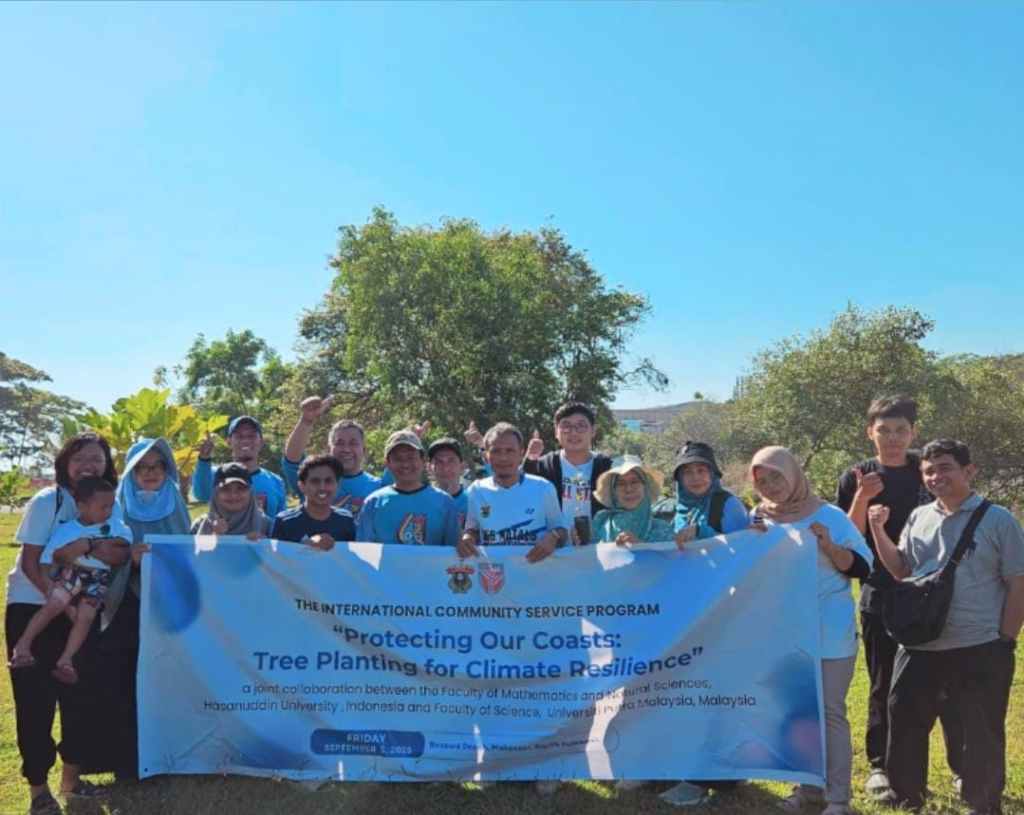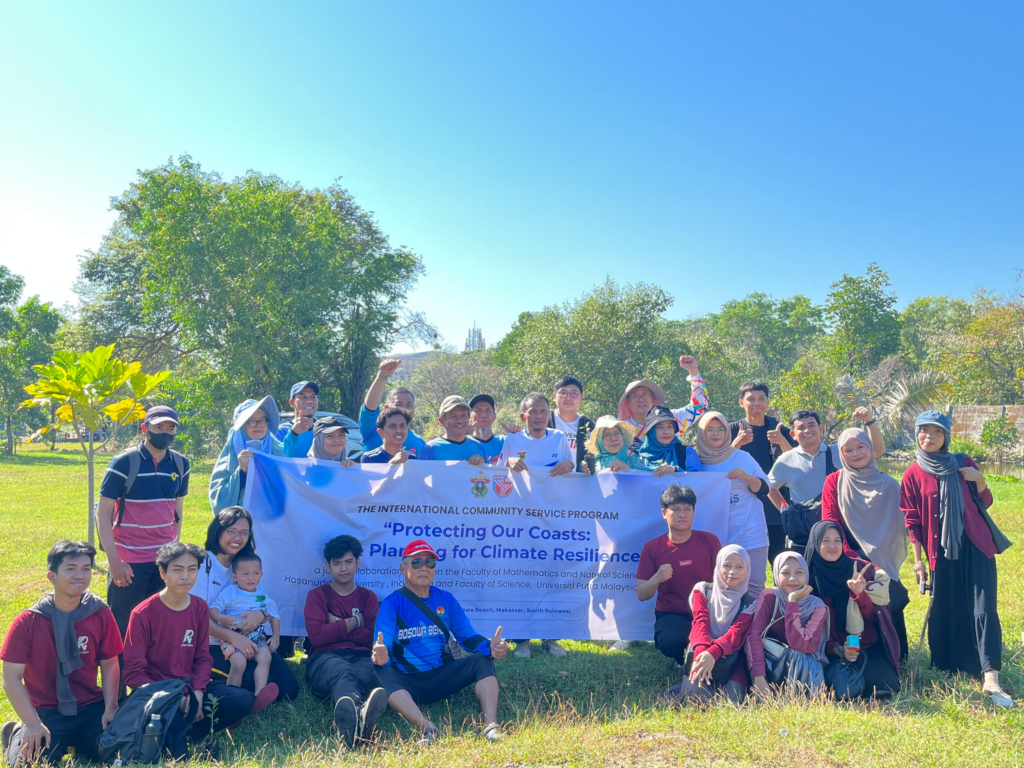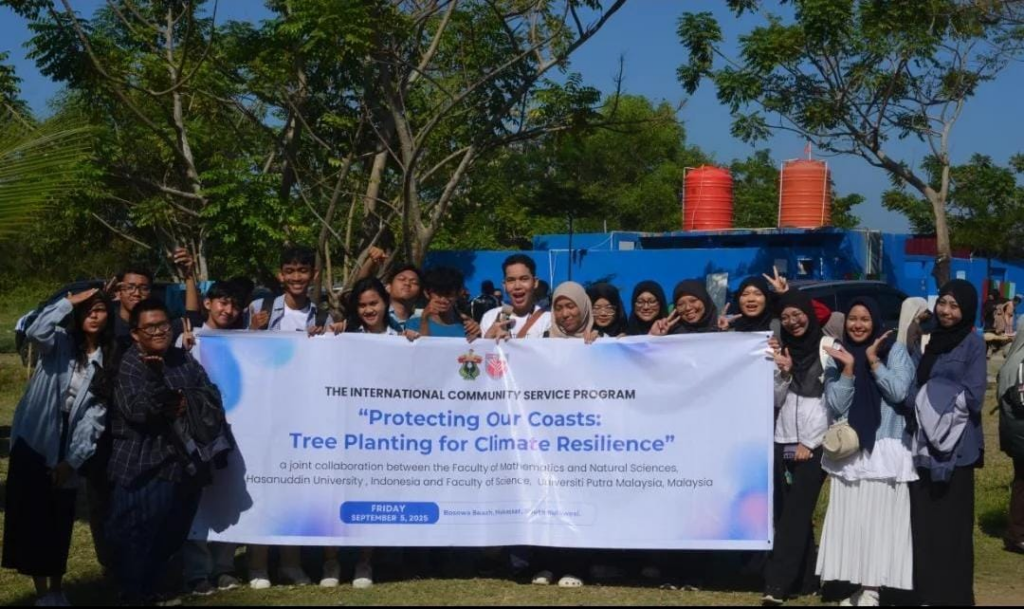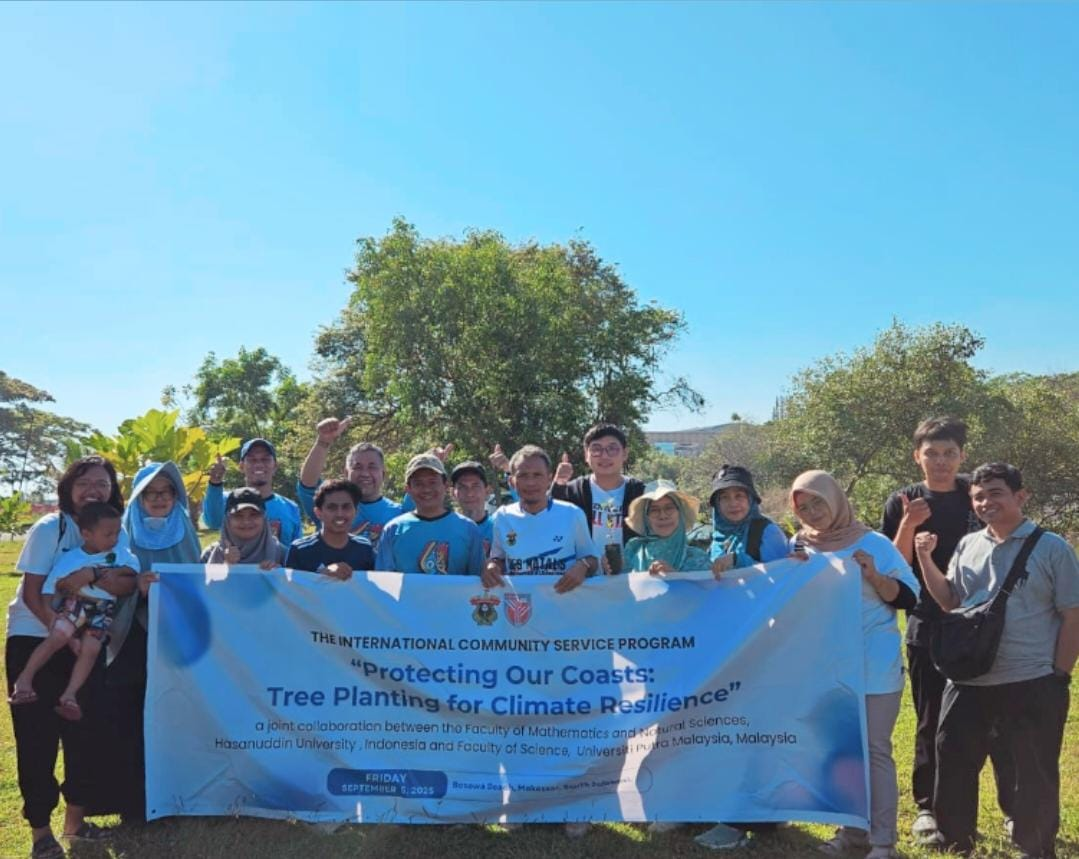

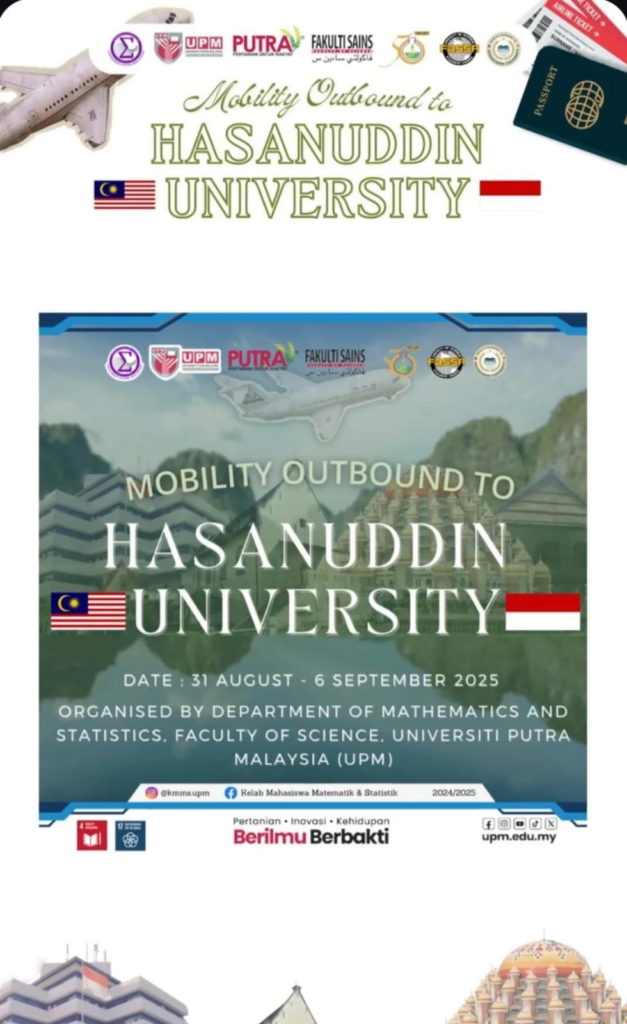
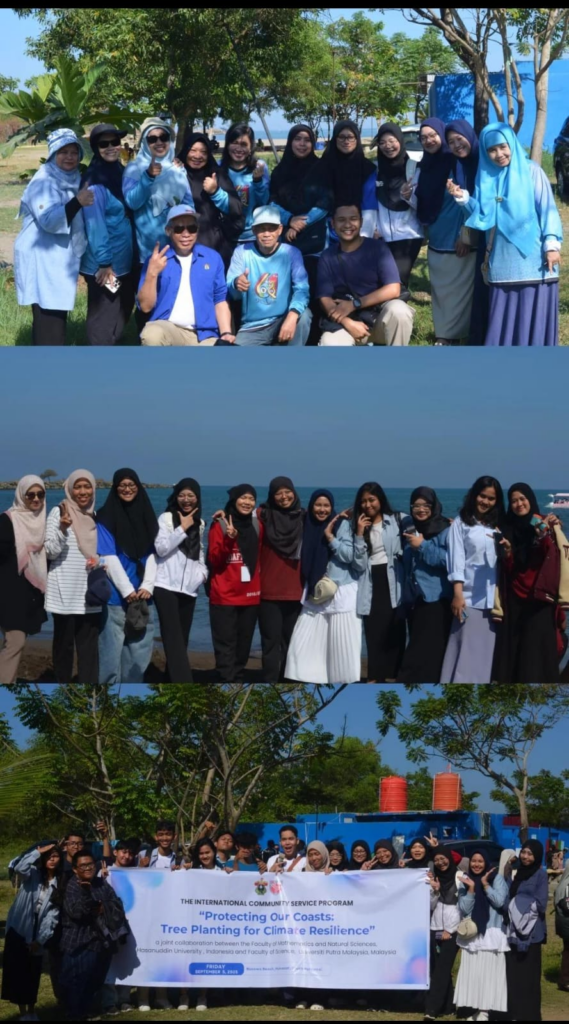
On 5 September 2025, the sweeping shores of Pantai Indah Bosowa in Makassar became a vibrant hub of ecological action. A dedicated alliance of scientists, educators, and students gathered for an International Community Service Program aimed at securing our environmental future. This impactful initiative successfully united the Mathematics Department of Universitas Hasanuddin — represented by several Research Groups (TRG), including the Functional Analysis TRG chaired by Dr. Muh Nur — with its esteemed international partner, Universiti Putra Malaysia, to actively combat the pressing realities of global climate change through hands-on intervention.
At its core, the program was carefully designed to elevate public and academic awareness regarding the critical importance of preserving fragile coastal ecosystems. Coastal zones serve as nature’s frontline defense against extreme weather and rising sea levels. By planting trees along the shoreline, the initiative deployed a direct, scientifically proven method for climate mitigation. These newly established coastal forests will act as vital carbon sinks, continuously capturing atmospheric greenhouse gases while simultaneously stabilizing the underlying sand and soil to prevent devastating coastal erosion.
This international academic endeavor is deeply anchored in the United Nations Sustainable Development Goals. Because transformative education is the foundation of systemic change, this field-based ecological project directly champions SDG 4: Quality Education by moving the traditional mathematics and science classroom into the natural world. It provided everyone involved with highly practical learning experiences about environmental stewardship. Furthermore, safeguarding these shorelines has a profound socioeconomic ripple effect, firmly supporting SDG 1: No Poverty. By actively preventing land erosion and preserving adjacent marine habitats, the project helps protect the essential livelihoods of local fishing communities whose economic survival depends entirely on a stable coastal environment.
Achieving such multifaceted global objectives requires profound synergy, bringing us to the heart of this collaborative initiative: SDG 17: Partnerships for the Goals. The seamless coordination between Universitas Hasanuddin and Universiti Putra Malaysia brilliantly exemplifies how cross-border academic alliances can generate tangible, localized ecological solutions. Additionally, restoring the interface between land and sea beautifully supports both SDG 14 (Life Below Water) and SDG 15 (Life on Land), nurturing broader environmental biodiversity.
This milestone event successfully mobilized a total of 95 participants, fostering a rich cultural and scientific exchange. The active, enthusiastic involvement of university scholars was instrumental to the day’s resounding success. Among the dedicated student delegates actively planting trees and driving this mission forward were: Cik Nor Aqilah Noordin, Muhammad Aqif Hakimi Bin Azlan, Alif Aiman Bin Azhar, Norhasyma Binti Zakir, Farisya Husna Binti Mansor, Nur Syasya Aqilah Binti Zaini, Fathihah Adeline Binti Mohd Fadzil, Nur Syathirah Binti Ahmad Saipul, Dina Mardhiah Binti Mazrul Nizam, Nurfaizah Hani Binti Zaidi, Nurin Faqihah Binti Rajak, Nurin Kamalin Binti Mohd Fadil, Fadhlul Afiqah Binti Harun, Siti Aisyah Binti Abd Rahman, Nurin Hazwani Binti Hamidi, Nur Qistina Qaisara Binti Syaharuddin, Muhammad Syahmie Zulkiflie bin Razak, Aina Mardhiah binti Ahmad Latapi, Nur Husniayah binti Kamis, Nur Farha Amira binti Mohd. Zainudin, Nur Aishah Syamimi binti Mohd Zulkefli, Nur Nasuha Iwani binti Mohd Idros, and Nur Alya Liyana binti Mazahari.
Ultimately, this collaborative tree-planting initiative at Pantai Indah Bosowa was not merely about placing roots in the sand. It stood as a powerful, international declaration that securing a sustainable, climate-resilient future is a profoundly shared global responsibility, demanding both rigorous scientific understanding and unified community action across borders.