


The inefficient electricity usage patterns among consumers, the need to enhance energy-saving program implementations, and the low penetration of rooftop solar photovoltaic (PV) systems are some of the issues encountered in Indonesia in efforts to promote the use of clean energy sources and improve electricity efficiency in the residential sector. Additionally, the growing number of consumers and the increasing volume of electricity consumption over time indicate significant potential for energy savings, including the optimization of clean energy usage from the consumer side.
This research aims to improve household electricity efficiency and increase the adoption of rooftop PV systems using structural equation modeling (SEM) for sustainable consumption. SEM models were developed, and a questionnaire instrument was designed for a survey to collect direct data from residential electricity consumers in Makassar city, South Sulawesi, as a case study. A number of variables were considered in the model, including economic and demographic factors, to examine the drivers of consumption, rank these variables, and analyze the complex relationships between them as a basis for managing and reducing electricity usage in the studied area. Furthermore, the key factors or determinants influencing household consumers’ adoption of rooftop PV technology were also investigated. In general, the ability of the SEM method to integrate outputs from standard multivariate analyses makes the applied method more powerful in exploring or investigating the complex causal relationships among the variables examined in the composed models.
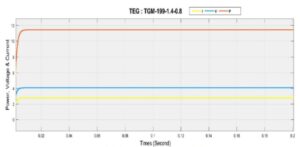
Thermoelectric generators (TEG) offer precisely that opportunity by converting excess heat from operational machinery into valuable electrical energy. This transformative process not only optimizes energy efficiency but also provides an additional power source for diverse applications.
In this study, we focused on the application of TEG using the Bilibili hydroelectric generator as a case study. Through simulations, we delved into scenarios to quantify the electricity production potential from heat losses during the generator\'s operation. These simulations not only highlight the viability of TEG technology but also underscore its role in enhancing overall energy utilization. Moreover, our study explored another intriguing aspect of TEG: its capability as a heat pump to regulate the ambient temperature of the generator during idle periods. This dual functionality underscores TEG\'s versatility beyond electricity generation, positioning it as a potential solution for maintaining operational efficiency. By integrating cutting-edge simulations and real-world applications, our research sets a precedent for sustainable energy solutions that leverage TEG technology. As we continue to innovate, the potential of TEG in optimizing energy usage and environmental stewardship remains promising, paving the way for a greener, more efficient future.