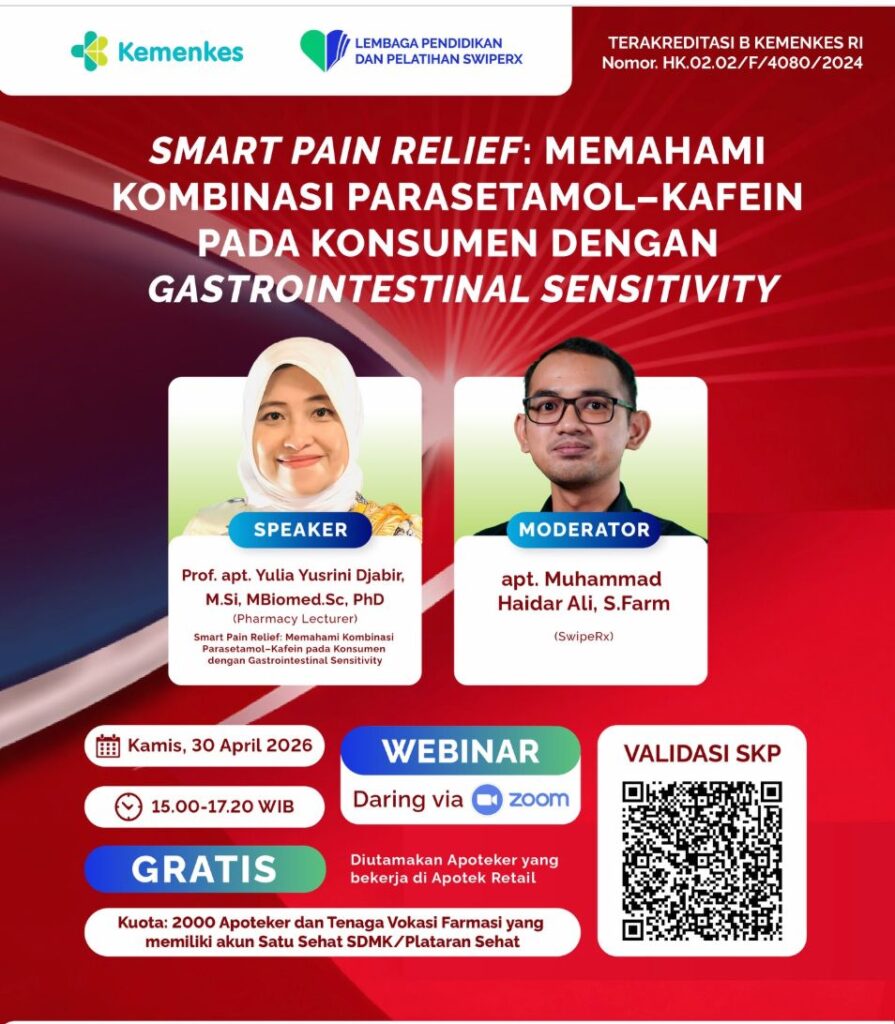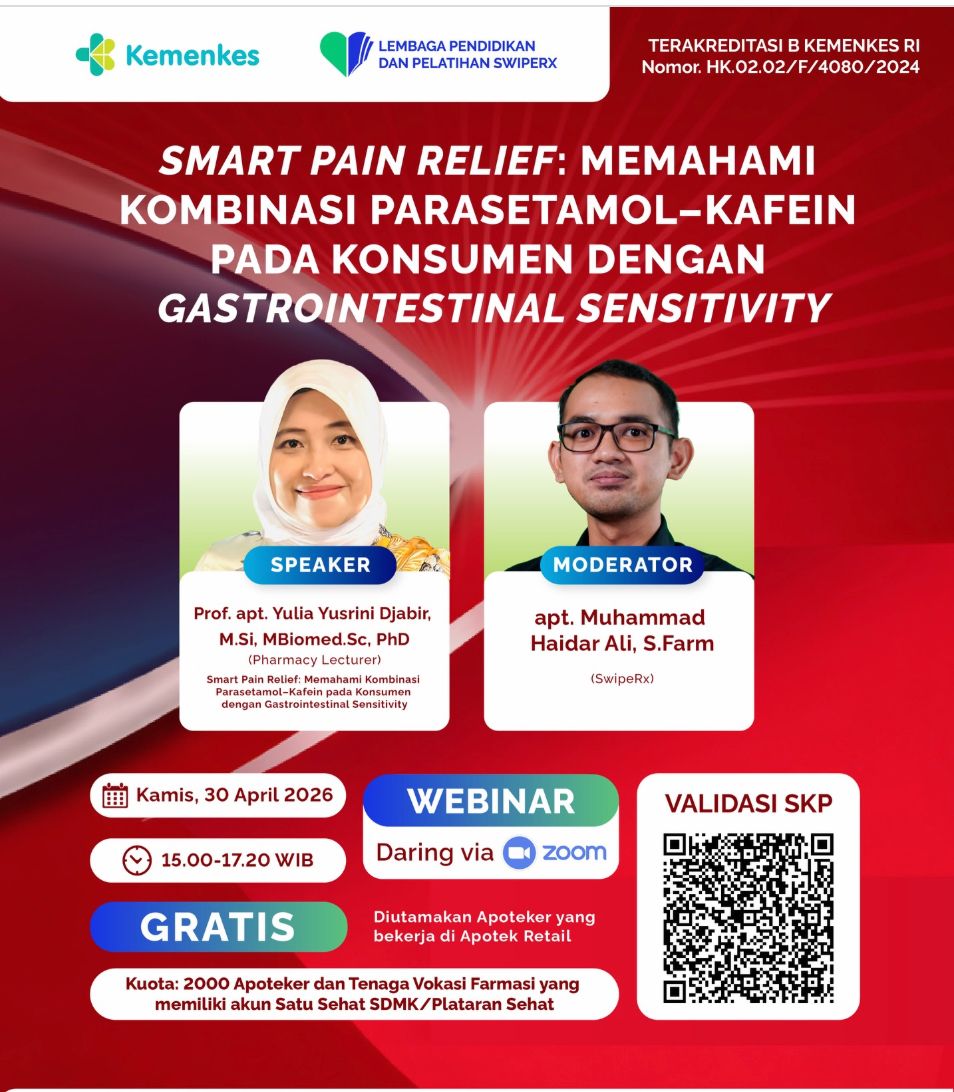

On Thursday, April 30, 2026, from 15:00 to 17:20 WIB, a major virtual gathering brought together healthcare professionals across Indonesia. Organized by the Swiperx Education and Training Center via Zoom, the webinar titled “Smart Pain Relief: Understanding the Paracetamol-Caffeine Combination in Patients with Gastrointestinal Sensitivity” served as a vital platform for advancing clinical knowledge. Prof. apt. Yulia Yusrini Djabir, M.Si., M. Biomed. Sc., Ph.D had the privilege of joining this prestigious event as the main speaker, engaging directly with a vibrant audience of 900 to 1,000 enthusiastic pharmacists and pharmacy vocational personnel.
Effective pain management remains a critical daily challenge in healthcare settings. While over-the-counter analgesics are widely used, selecting the right options for individuals with gastrointestinal sensitivity requires careful consideration. Caffeine is frequently added to paracetamol because it accelerates absorption and enhances the overall pain-relieving effect. However, patients with underlying gastric sensitivity may experience discomfort if therapy is not properly personalized. During the session, we explored the pharmacological mechanisms of this combination, analyzed clinical evidence, and discussed practical strategies to optimize therapeutic outcomes while minimizing digestive side effects.
This continuous learning initiative directly supports key Sustainable Development Goals. By delivering evidence-based clinical insights to frontline health professionals, the session contributes significantly to SDG 3: Good Health and Well-Being by improving patient safety and treatment quality. Furthermore, providing accessible, high-quality learning opportunities for healthcare practitioners aligns perfectly with SDG 4: Quality Education. Lastly, this initiative embodies SDG 17: Partnerships for the Goals, demonstrating how professional networks and educational institutions can collaborate effectively to elevate national healthcare standards through knowledge sharing.
The interactive Q&A session highlighted the unwavering dedication of Indonesian pharmacy professionals to modern clinical practice. Participants asked thoughtful questions about dosage optimization, patient counseling tips, and managing complex patient profiles. Equipping pharmacists with updated clinical knowledge ensures that patients receive clear, reliable advice at the point of care, ultimately promoting safer medication practices across the community. Continuous professional development like this strengthens the backbone of our primary healthcare system and bridges the gap between academic research and practical patient care.