

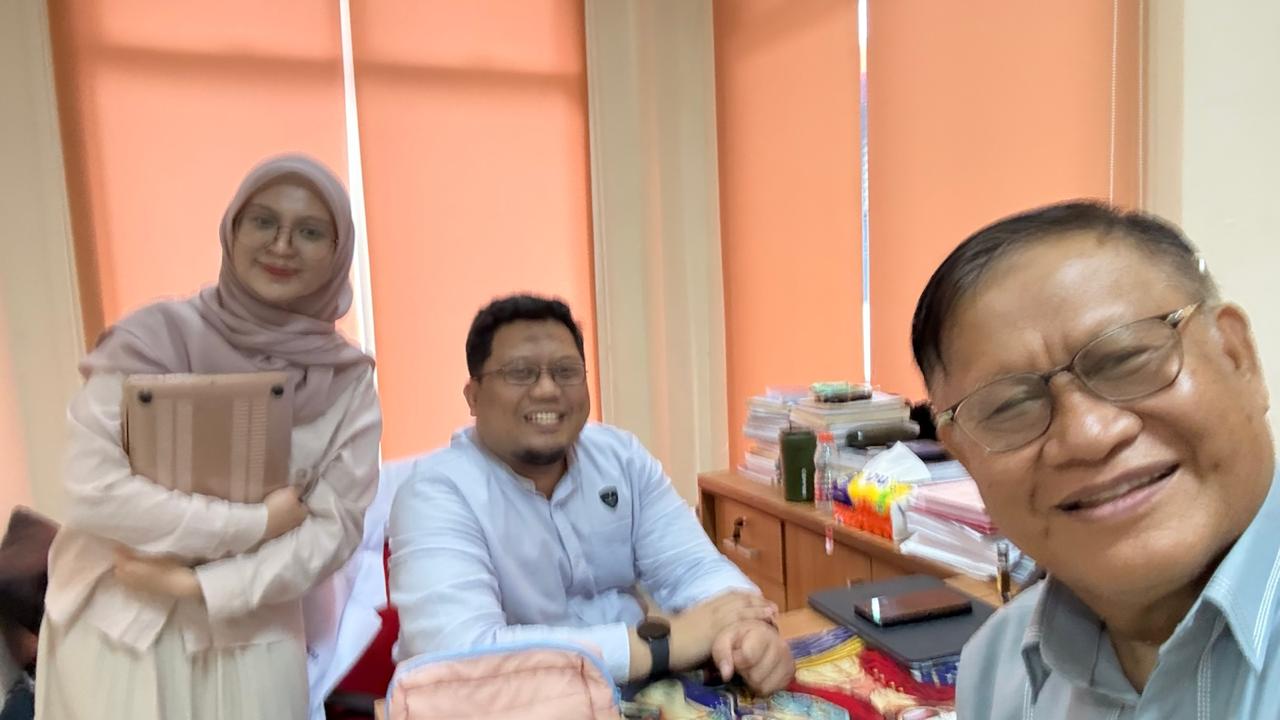

A Focus Group Discussion (FGD) on the preparation for the establishment of a Thematic Research Group (TRG) in forensic dentistry was successfully conducted at the Faculty of Dentistry, Hasanuddin University (FKG Unhas). This activity marked an important step in strengthening academic collaboration and initiating structured research development in the field of forensic odontology. The event took place on December 10, 2025, with the participation of 7 participants, consisting of lecturers and researchers with a shared interest in advancing forensic dental science.
The primary objective of this FGD was to form a Thematic Research Group focused on forensic dentistry and to prepare foundational research in this specialized field. Forensic dentistry plays a crucial role in human identification, particularly in disaster victim identification (DVI), criminal investigations, and legal proceedings. Given Indonesia’s vulnerability to natural disasters, the development of a dedicated research group in this field is highly relevant and strategic.
During the discussion, participants explored key aspects of TRG formation, including defining research themes, identifying institutional strengths, and designing a collaborative research roadmap. The FGD provided a platform for exchanging ideas on potential research topics such as dental identification methods, digital forensic odontograms, and the integration of technology in forensic analysis. Participants also discussed the importance of building a sustainable research ecosystem supported by interdisciplinary collaboration, adequate infrastructure, and continuous capacity building.
The discussion further emphasized the need to align research activities with national priorities and global challenges. By establishing a TRG in forensic dentistry, FKG Unhas aims to contribute not only to scientific advancement but also to humanitarian efforts, particularly in improving disaster response systems through accurate and efficient victim identification.
This initiative is closely linked to several global development goals. First, it supports Sustainable Development Goal (SDG) 4: Quality Education, as the establishment of a structured research group enhances academic capacity, promotes research-based learning, and fosters innovation among educators and students. Through TRG activities, knowledge transfer and skill development in forensic dentistry can be systematically improved.
Second, the program contributes to Sustainable Development Goal (SDG) 17: Partnerships for the Goals. The formation of a TRG encourages collaboration among researchers, institutions, and external stakeholders such as forensic experts, hospitals, and government agencies. These partnerships are essential for strengthening research quality and ensuring that scientific findings can be effectively applied in real-world contexts.
Additionally, this initiative aligns with Sustainable Development Goal (SDG) 1: No Poverty, as advancements in forensic science can support social justice and humanitarian efforts. Accurate victim identification helps provide legal certainty for families, facilitates administrative processes, and ensures that victims are treated with dignity. In the long term, research outputs in forensic dentistry may also contribute to policy development and public service improvement, which are important elements in reducing social vulnerability.
In conclusion, the FGD on the preparation for TRG formation in forensic dentistry represents a strategic effort to build a strong foundation for research excellence at FKG Unhas. By fostering collaboration, enhancing academic capacity, and aligning with global development goals, this initiative is expected to generate meaningful contributions to science, society, and humanitarian response systems.

