
MAKASSAR, August 18 2026 /DEPADIS – In a rapidly changing world, education is not only about classrooms and textbooks. It is also about understanding who we are, where we come from, and how different cultural traditions shape our society. The story of the Bissu community in Bone, South Sulawesi, offers an important lesson: when cultural voices are ignored, education can lose the knowledge that makes a community unique.
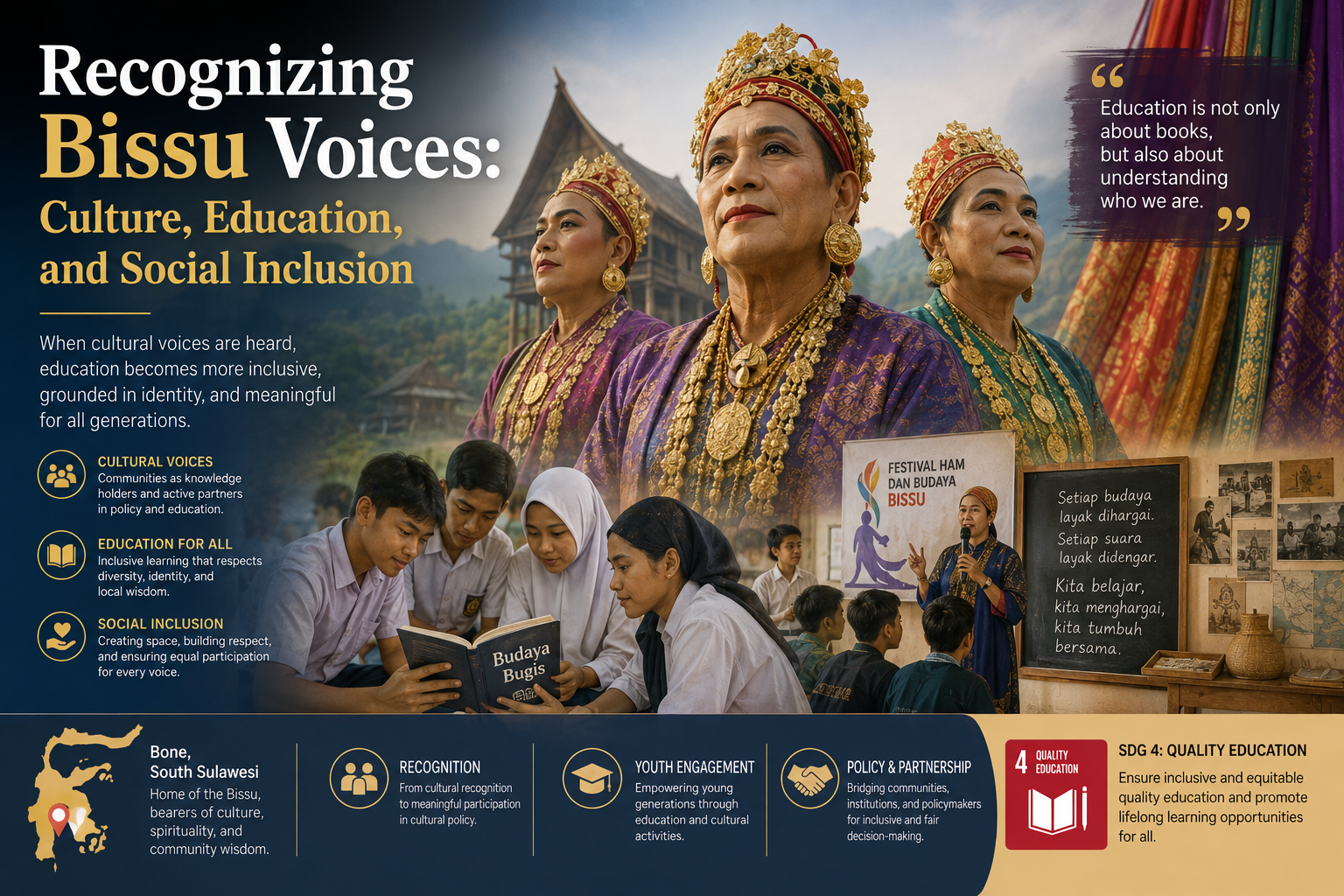
The Bissu are traditionally recognized within Bugis society as cultural and spiritual figures associated with important social and ceremonial functions. Gender diversity in South Sulawesi is not a completely new phenomenon. Historical and cultural traditions have long recognized forms of gender diversity and assigned particular roles within society.
However, cultural recognition does not always imply political or institutional recognition. This raises an important question: who gets to speak when cultural policies are designed? Research on gender minorities and Bissu-related communities in South Sulawesi shows that marginalized groups have limited opportunities to express their experiences and interests in policymaking. When their perspectives are absent, policies may be developed mainly from the viewpoints of dominant political, religious or social actors.
This is important for education because schools are not isolated from society. What students learn about culture can influence their understanding of difference, identity, history, and citizenship. This study also documents the efforts of the South Sulawesi Transgender and Bissu Harmony Community (KWRSS) to promote Bissu traditions among young people through human rights festivals, education programs, and cultural activities. Such initiatives demonstrate that cultural knowledge can bridge generations rather than being a source of division.
This is closely connected to Sustainable Development Goal 4 (SDG 4): Quality Education, particularly the broader goal of creating education that promotes respect for cultural diversity and inclusive learning. Quality education should not simply involve the transfer of knowledge from institutions to students. It should also create space for communities to share their history, experiences, and cultural knowledge.
The lesson from the Bissu community is therefore simple but powerful: education becomes stronger when more voices are allowed to participate in defining what is worth learning and preserving. Cultural communities should not be treated as mere objects of study. They should be recognized as knowledge holders and active partners in educational and cultural policies.
The source article for this popular scientific piece is The Position of Indigenous Actors in Cultural Policy: A Case Study of the Bissu Community in Bone, published in the Development Policy and Management Review. The journal is published by the Centre for Development and Policy Studies, Universitas Hasanuddin, and the article was published in June 2026.
Ultimately, protecting cultural diversity is not only about preserving the past. It involves preparing younger generations to live respectfully in a diverse society. When Bissu voices are heard, education can become more inclusive, culturally grounded, and meaningful, which is an important step toward achieving SDG 4: Quality Education.
Reference DOI: https://10.61731/dpmr.v6i1. 50309
Contact:
Prof. Dr.phil. Sukri, M.Si
+628291280594
sukritamma@unhas.ac.id