
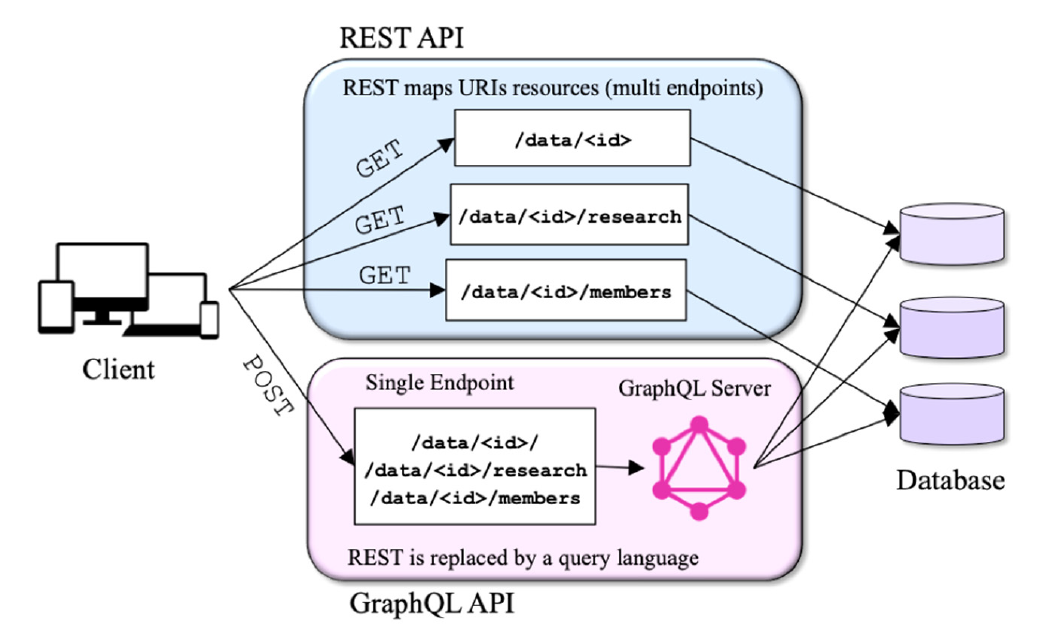

MAKASSAR, Indonesia – Apr 1 2026/DSAI/ — In today’s data-driven world, modern applications rely heavily on Application Programming Interfaces (APIs) to connect systems, deliver data, and power digital services. But developers often face a critical decision: should they stick with the traditional REST API, or adopt the newer, flexible GraphQL? A recent study provides real-world insights into this debate, revealing that the answer is not as simple as choosing one over the other.
The research, published in the journal Computers, evaluates the performance of REST and GraphQL APIs within a large-scale, real operational system—not simulations, but actual live transactions from a university information system. This makes the findings especially valuable for developers working with real-world applications .

Unlike many previous studies, this research introduces a novel evaluation method. It runs REST and GraphQL in parallel environments, ensuring fair comparison by distributing identical user requests to both systems simultaneously. The system measures four key performance indicators: response time, throughput, CPU load, and memory usage.

The results reveal a fascinating trade-off. REST clearly dominates in speed. According to the results table on page 9, REST achieves an average response time of 922.85 ms, nearly twice as fast as GraphQL’s 1864.50 ms . It also handles more requests per second, with higher throughput performance (page 10).
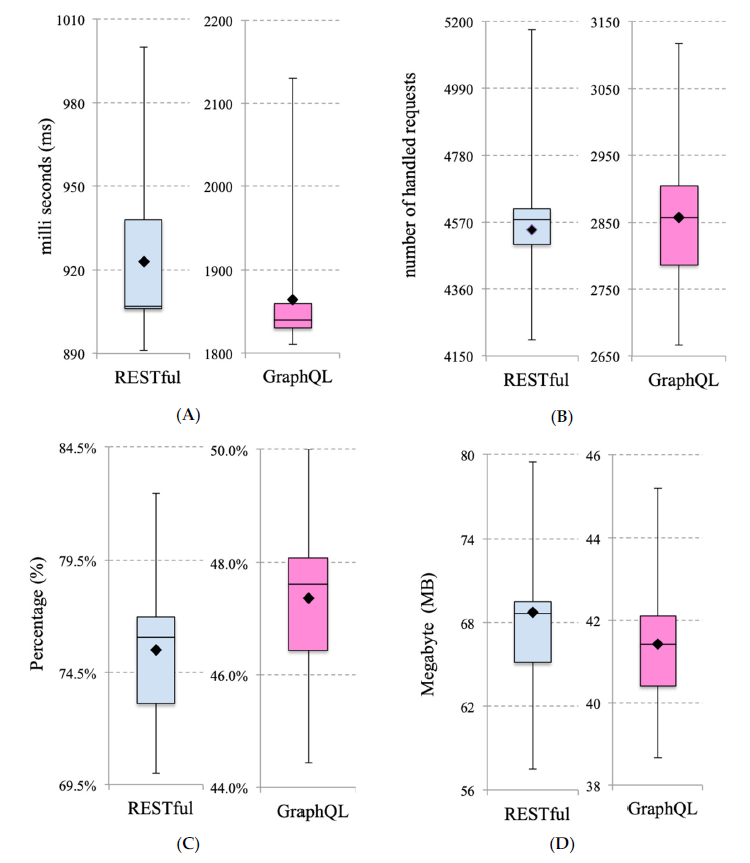
However, GraphQL shines in a different area—efficiency. The study shows that GraphQL uses significantly less system resources. On average, it consumes around 47% CPU, compared to REST’s 75%, and uses much less memory (~41 MB vs ~69 MB) . This means GraphQL is more suitable for systems where resource optimization is critical.
Why does this happen? The answer lies in their architecture. REST uses multiple endpoints, allowing faster access but requiring more system resources. GraphQL, on the other hand, uses a single endpoint with customizable queries, reducing unnecessary data transfer but increasing processing complexity .
This research strongly supports several Sustainable Development Goals (SDGs). It contributes to SDG 9: Industry, Innovation, and Infrastructure by advancing efficient digital system design. It also aligns with SDG 8: Decent Work and Economic Growth, as better-performing systems improve productivity and scalability in businesses. Additionally, it supports SDG 17: Partnerships for the Goals, reflecting international collaboration across institutions in Indonesia and Japan.
Ultimately, the study delivers a clear message: there is no “one-size-fits-all” solution. If your system prioritizes speed and high-frequency requests, REST remains the better choice. But if your focus is on flexibility and resource efficiency, GraphQL offers significant advantages.
Article Metadata (Source of This Popular Scientific Writing):
Title: Evaluating GraphQL and REST API Services Performance in a Massive and Intensive Accessible Information System
Journal: Computers
Publisher: MDPI
Publication Date: 27 October 2021 (Volume 10, Article 138)
DOI: https://doi.org/10.3390/computers10110138
Authors & Contact:
Armin Lawi*, Benny L. E. Panggabean, Takaichi Yoshida
Hasanuddin University (Indonesia), Pancasakti University (Indonesia), Kyushu Institute of Technology (Japan)
E-mail: armin@unhas.ac.id
In the end, the future of API design is not about replacing REST with GraphQL—but about knowing when to use each one intelligently.