

MAKASSAR, Indonesia – Apr 1 2026/DSAI/ — As education continues to evolve in the digital era, one major challenge remains: how can educators truly understand each student’s unique way of learning? A recent study offers a breakthrough solution—using artificial intelligence (AI) to automatically detect learning styles based on students’ online activities.
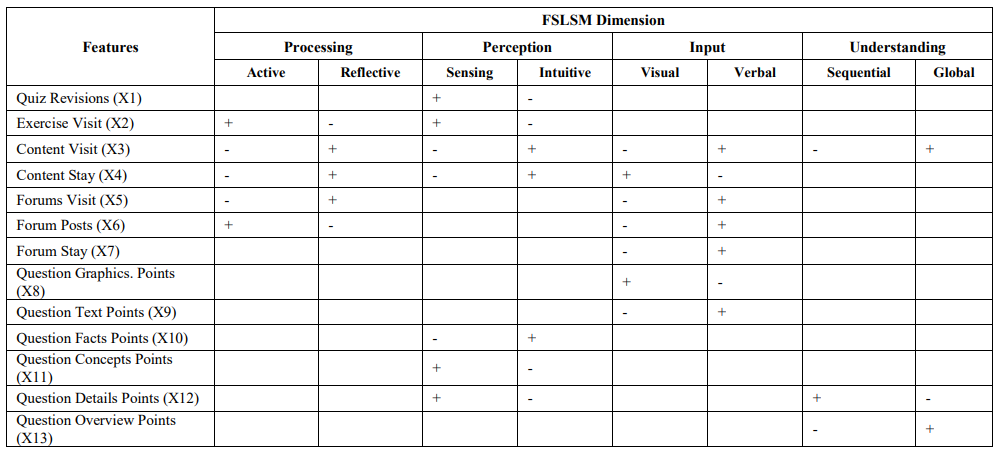
Traditionally, identifying learning styles required lengthy questionnaires and manual analysis. However, this new research proposes a faster, data-driven approach by analyzing how students interact with Learning Management Systems (LMS). Instead of asking students how they learn, the system observes their behavior—such as how often they access content, participate in forums, or complete quizzes
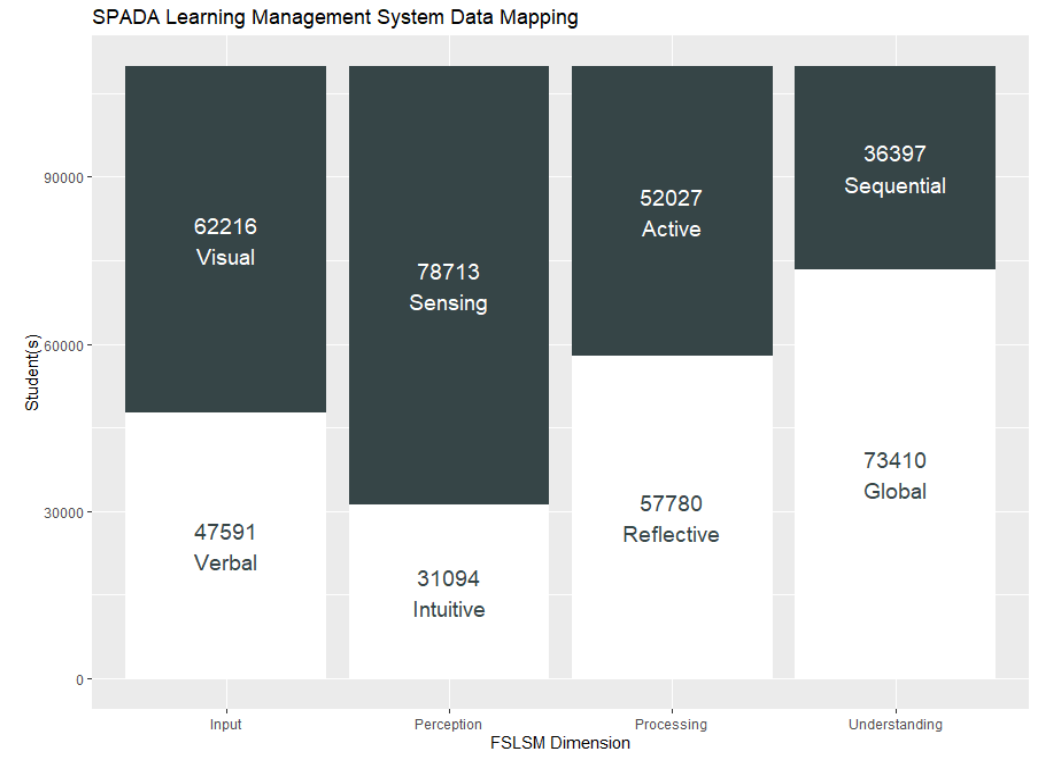
The study introduces a machine learning model that combines Support Vector Machine (SVM) with Recursive Feature Elimination (RFE). This approach allows the system to identify the most important behavioral indicators that reflect a student’s learning style. By mapping LMS activity data to the well-known Felder-Silverman Learning Style Model (FSLSM), the system can classify students into categories such as active vs. reflective, visual vs. verbal, and sequential vs. global learners .
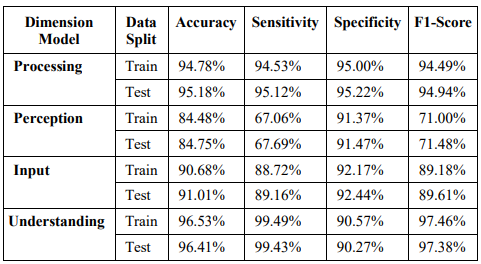
What makes this approach powerful is its efficiency and accuracy. According to the experimental results, the system achieved up to 96.42% accuracy in identifying learning styles in certain dimensions. Even the lowest-performing dimension still reached an impressive 85.88% accuracy, demonstrating the robustness of the model across different learning categories .
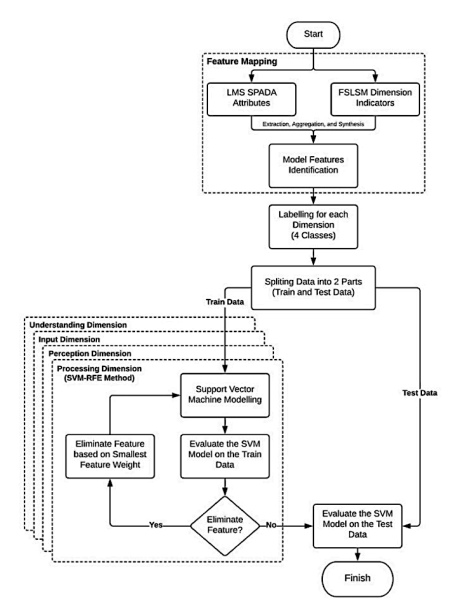
As illustrated in the workflow diagram on page 3, the process begins with extracting features from LMS data, followed by mapping them to learning style indicators, labeling the data, and training the model. The system then evaluates performance using metrics such as accuracy and F1-score, ensuring reliable predictions .
Interestingly, the study also found that certain behaviors—like how often students access learning content—play a major role in determining learning styles across multiple dimensions. This insight suggests that simple interaction data can reveal deep patterns about how students learn.
This innovation strongly supports several Sustainable Development Goals (SDGs). It contributes to SDG 4: Quality Education by enabling personalized learning experiences, ensuring that teaching methods align with individual needs. It also aligns with SDG 9: Industry, Innovation, and Infrastructure, as it demonstrates how AI can enhance educational systems. Furthermore, it supports SDG 10: Reduced Inequalities, as automated systems can provide equal learning opportunities without bias or manual limitations.
Beyond the technical achievement, the real impact lies in its application. Imagine an online classroom that automatically adapts content—videos for visual learners, discussions for active learners, and structured materials for sequential thinkers. This could significantly improve student engagement, retention, and academic success.
Article Metadata (Source of This Popular Scientific Writing):
Title: Automated Detection of Learning Styles using Online Activities and Model Indicators
Journal: International Journal of Advanced Computer Science and Applications (IJACSA)
Publisher: The Science and Information Organization (thesai.org)
Publication Date: 2024 (Vol. 15, No. 6)
DOI: https://dx.doi.org/10.14569/IJACSA.2024.0150661
Authors & Contact:
Alia Lestari, Armin Lawi, Sri Astuti Thamrin, Nurul Hidayat
Universitas Hasanuddin, Makassar, Indonesia
E-mail: armin@unhas.ac.id
In the future of education, understanding students won’t rely on what they say—but on what they do. And with AI, that understanding is becoming smarter than ever.