

MAKASSAR, Indonesia Apr 1 2026/DSAI/ — In an era where financial markets move at lightning speed, accurately predicting stock prices has become both a necessity and a challenge. Investors constantly seek better tools to navigate uncertainty, minimize risk, and maximize returns. A recent study introduces a powerful artificial intelligence (AI) approach that significantly improves stock price forecasting accuracy, offering a promising breakthrough for modern finance.
The research, published in IEEE Access, presents an innovative method that combines multiple types of Recurrent Neural Networks (RNNs)—including Long Short-Term Memory (LSTM), Gated Recurrent Unit (GRU), and Simple Recurrent Unit (SRU)—into a unified system. This method, known as compositional learning, allows each model to capture different patterns in financial data, resulting in more accurate predictions.
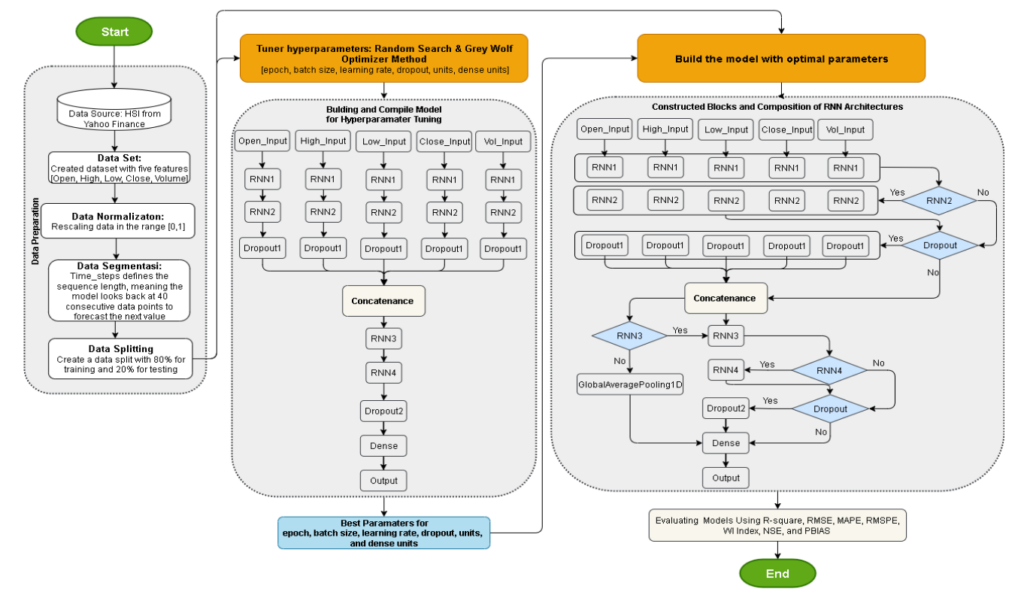
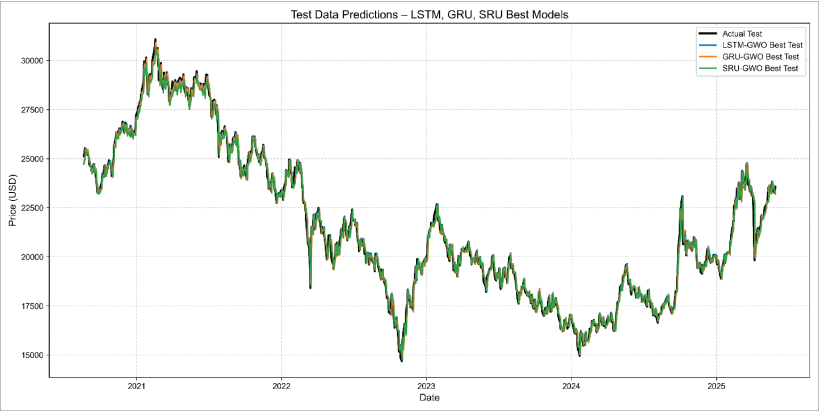
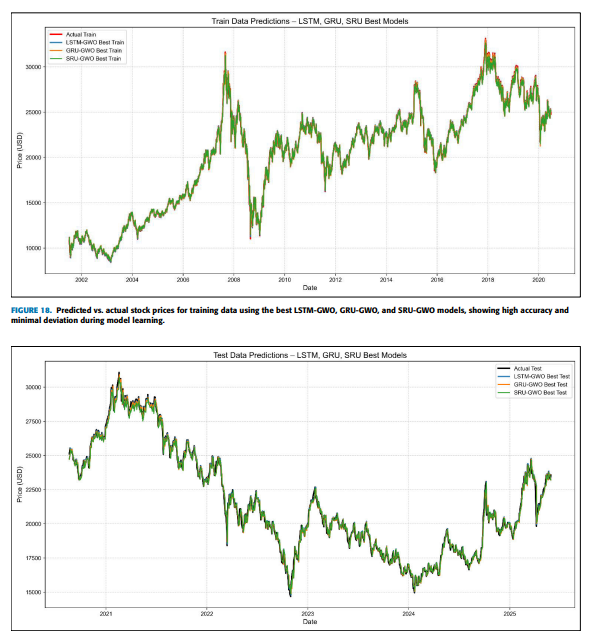
Unlike traditional models that rely on a single algorithm, this approach evaluates 54 different model configurations and optimizes them using advanced techniques such as the Grey Wolf Optimizer (GWO). The results are impressive: the best-performing model achieved an accuracy (R-squared) of 99.24%, with very low prediction errors . This indicates that the system can closely match real stock price movements, making it highly reliable for decision-making.
Why is this important? Stock markets are influenced by complex and dynamic factors, including economic indicators, investor sentiment, and global events. Traditional statistical models often fail to capture these nonlinear relationships. However, deep learning models—especially RNN variants—excel at analyzing time-series data, identifying patterns over time, and adapting to changes.
The study also introduces a unique feature-wise modeling strategy. Instead of treating stock data as a single block, it analyzes each component—such as opening price, closing price, and trading volume—individually before combining them. This allows the model to better understand the behavior of each feature and improve overall prediction accuracy.
This innovation strongly supports multiple Sustainable Development Goals (SDGs). First, it aligns with SDG 8: Decent Work and Economic Growth by enabling more informed financial decisions and strengthening economic resilience. Second, it contributes to SDG 9: Industry, Innovation, and Infrastructure, as it promotes advanced AI-driven innovation in financial technology. Additionally, it supports SDG 17: Partnerships for the Goals, as the research reflects collaboration between academic institutions in Indonesia to develop impactful technological solutions.
Moreover, the implications go beyond finance. The framework demonstrates how combining multiple AI models with optimization techniques can solve complex real-world problems. It highlights a broader trend in AI research: moving from single-model systems to collaborative, multi-model intelligence.
Article Metadata (Source of This Popular Scientific Writing):
The source article titled “Enhancing Stock Price Forecasting Accuracy Through Compositional Learning of Recurrent Architectures: A Multi-Variant RNN Approach” was published in IEEE Access, Volume 13, Pages 161073–161102 (2025) .
DOI link: https://doi.org/10.1109/ACCESS.2025.3602721
Authors:
Irwan Kasse, Jeffry Kusuma, Armin Lawi, Amran Rahim
Contact Information:
Armin Lawi
Hasanuddin University, Makassar, Indonesia
E-mail: armin@unhas.ac.id
In conclusion, this study demonstrates that the future of stock prediction lies not in a single “perfect” model, but in the intelligent combination of multiple approaches. By leveraging compositional learning and advanced optimization, AI is becoming an indispensable tool for navigating the complexities of global financial markets.