


MAKASSAR, Indonesia Apr 1 2026/DSAI/ — In today’s fast-moving digital world, communication should be inclusive for everyone. Yet, millions of people with hearing impairments still face daily challenges in expressing themselves and being understood. A recent scientific study offers a promising solution—using artificial intelligence (AI) to recognize hand-sign digits with remarkable accuracy, opening new doors for accessibility and inclusion.

The study, published in the Journal of Advanced Research in Applied Sciences and Engineering Technology, explores how advanced AI techniques can improve the recognition of sign language digits. By combining two powerful deep learning models—ResNet-50 and VGG-19—into what is called an “ensemble transfer learning” approach, researchers achieved an impressive accuracy of 99.03% in classifying hand-sign images . This means the system can almost perfectly interpret hand gestures representing numbers.

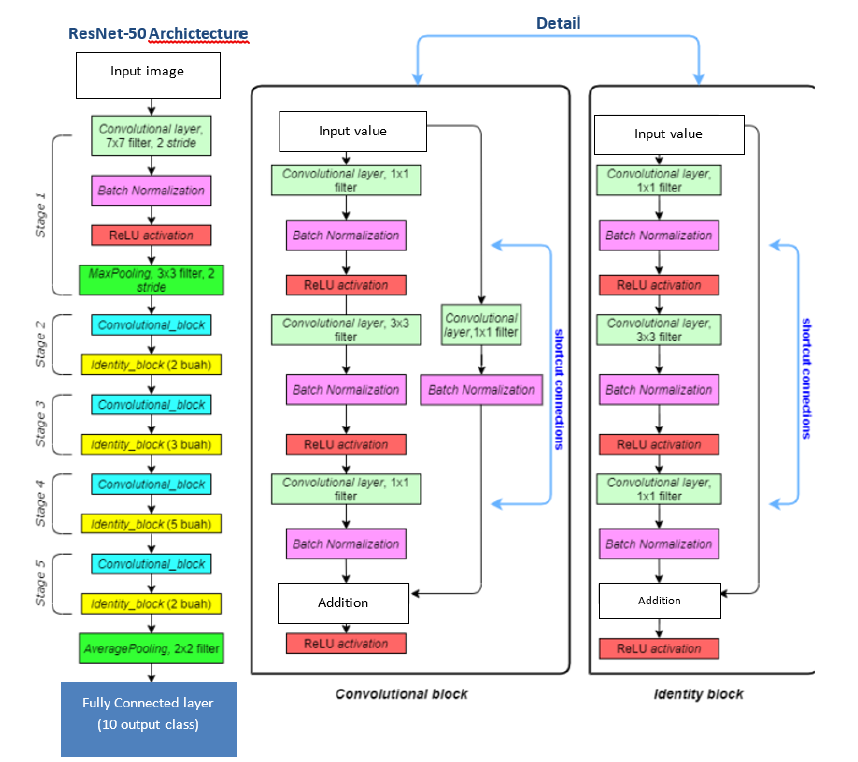
So, what makes this approach special? Traditional systems often struggle because hand gestures vary widely between individuals. Lighting, angles, and hand shapes can all affect recognition. However, this new method leverages the strengths of multiple AI models at once. Instead of relying on a single “opinion,” it combines insights from several models—much like consulting multiple experts before making a decision.
Even more interesting, the researchers used a relatively small dataset of just over 2,000 images. Normally, AI systems require massive amounts of data to perform well. But by applying transfer learning, the models reused knowledge from previously trained systems (trained on millions of images), making them efficient and adaptable even with limited data.
This innovation is not just a technical achievement—it has real-world impact. It directly supports multiple Sustainable Development Goals (SDGs). Most prominently, it aligns with SDG 4: Quality Education by enabling inclusive learning environments for students with hearing impairments. It also contributes to SDG 10: Reduced Inequalities, as it helps bridge communication gaps for marginalized communities. Furthermore, it supports SDG 9: Industry, Innovation, and Infrastructure through the advancement of AI-based assistive technologies, and SDG 17: Partnerships for the Goals, reflecting collaborative academic research efforts.
Imagine classrooms where students can interact seamlessly with digital systems that understand sign language in real time. This could significantly reduce communication barriers and empower more learners to succeed. Beyond education, this research also contributes to assistive technologies and inclusive digital systems, helping to build a more equitable society where technology serves everyone, regardless of physical limitations.
Article Metadata (Source of This Popular Scientific Writing):
The source article titled “Ensemble Transfer Learning for Hand-sign Digit Image Classification” was published in the Journal of Advanced Research in Applied Sciences and Engineering Technology, Volume 43, Issue 1 (January 2025), issued by Semarak Ilmu Publishing, and made available online on 8 April 2024 .
The article can be accessed via the following link: https://doi.org/10.37934/araset.43.1.95111
Contact and Author Information:
Andi Muhammad Amil Siddik*, Ainun Mawaddah Abdal, Armin Lawi, Edy Saputra Rusdi
1 Information Systems Study Program, Department of Mathematics, Faculty of Mathematics and Natural Sciences, Universitas Hasanuddin, Makassar, Indonesia
2 Actuarial Study Program, Department of Mathematics, Faculty of Mathematics and Natural Sciences, Universitas Hasanuddin, Makassar, Indonesia
E-mail: amilsiddik@unhas.ac.id