
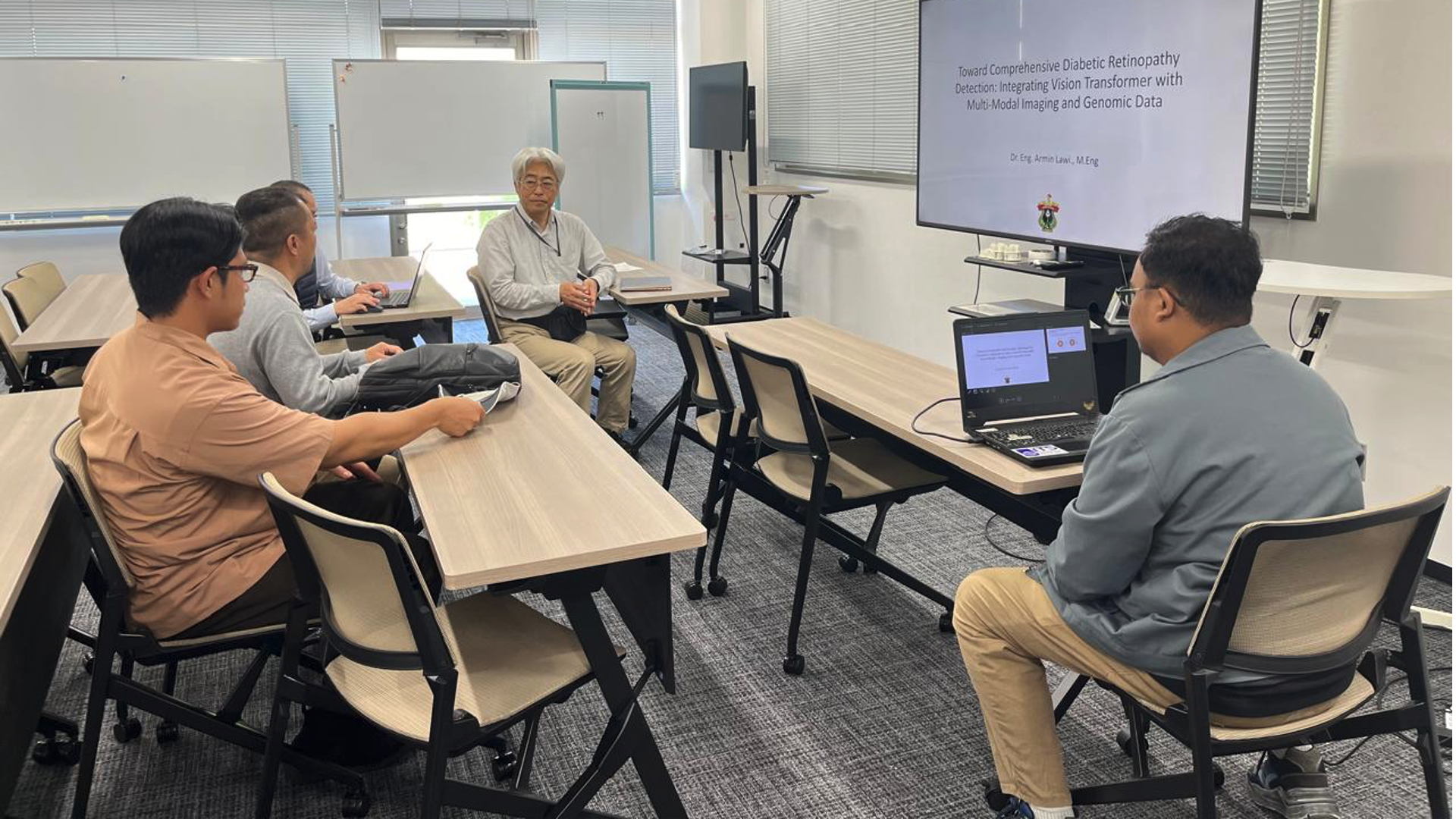

To strengthen interdisciplinary research capacity in artificial intelligence and environmental monitoring, a series of academic discussions and collaborative engagements were conducted focusing on the implementation of advanced deep learning models, particularly the Vision Transformer (ViT). This activity was held over a two-week period, from 11–25 August 2025, in collaboration with Kyushu Institute of Technology as an international partner, involving distinguished academics including Prof. Ohashi Takeshi, Assoc. Prof. Ogihara, and Prof. Mario Koeppen, whose expertise significantly enriched the discussion and research direction.
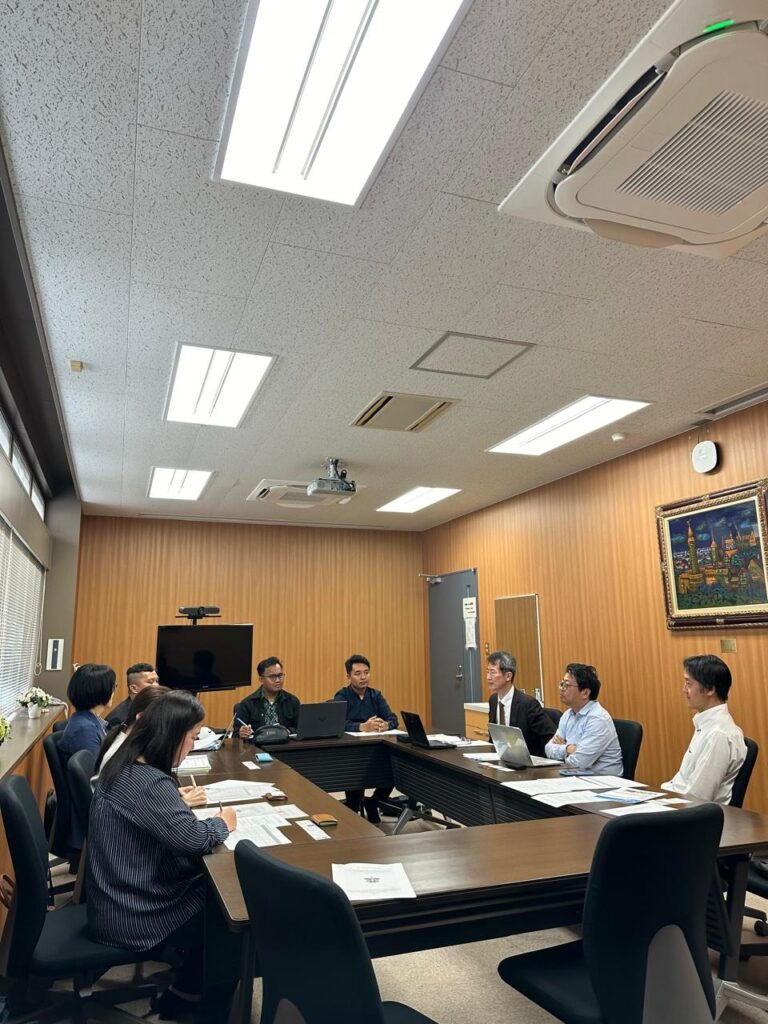
The primary objective of this activity was to enhance participants’ understanding of cutting-edge computer vision approaches and their practical application in environmental contexts. The discussion explored how the Vision Transformer model operates by segmenting images into smaller patches and processing them as sequential tokens using a self-attention mechanism. Compared to conventional Convolutional Neural Networks (CNNs), ViT offers improved capability in capturing global spatial dependencies, making it highly suitable for complex image analysis tasks, including biodiversity monitoring and species identification.
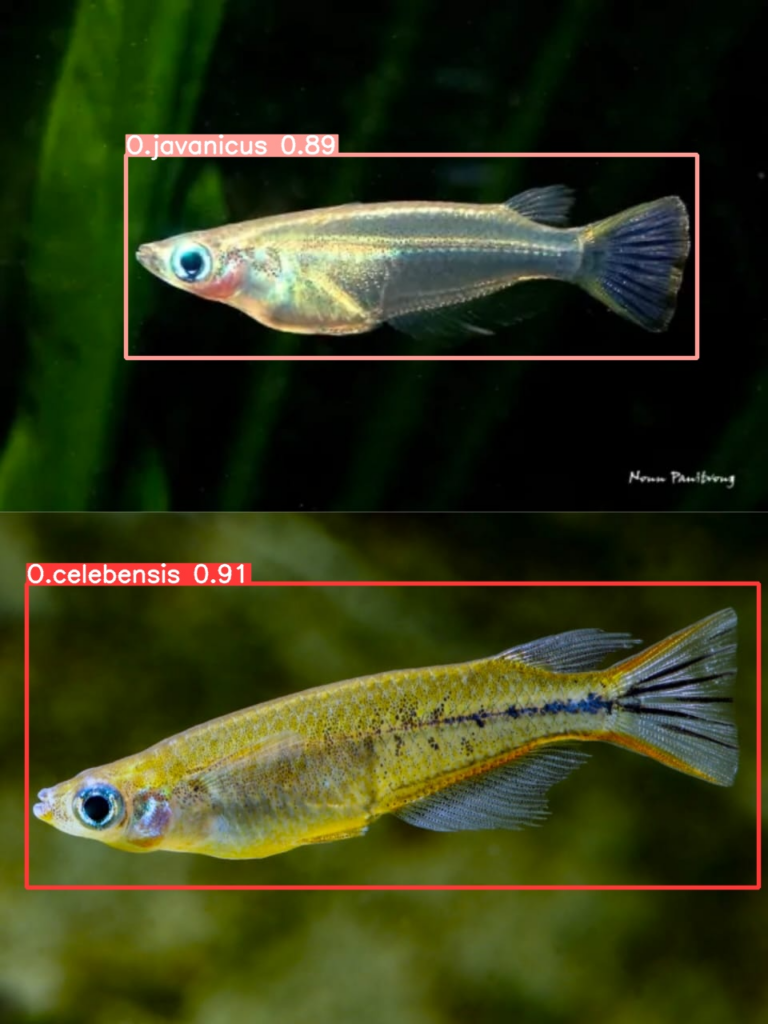
This initiative was closely connected to an ongoing research project on the detection and classification of medaka fish species (Oryzias celebensis and Oryzias javanicus) using artificial intelligence. According to the research progress report , the study has successfully completed key stages such as dataset collection, annotation, augmentation, and model training using YOLOv8. The trained model has further been implemented into a mobile application to facilitate real-time identification in field conditions. The integration of more advanced architectures such as ViT is expected to significantly improve model performance and adaptability in diverse environmental scenarios.
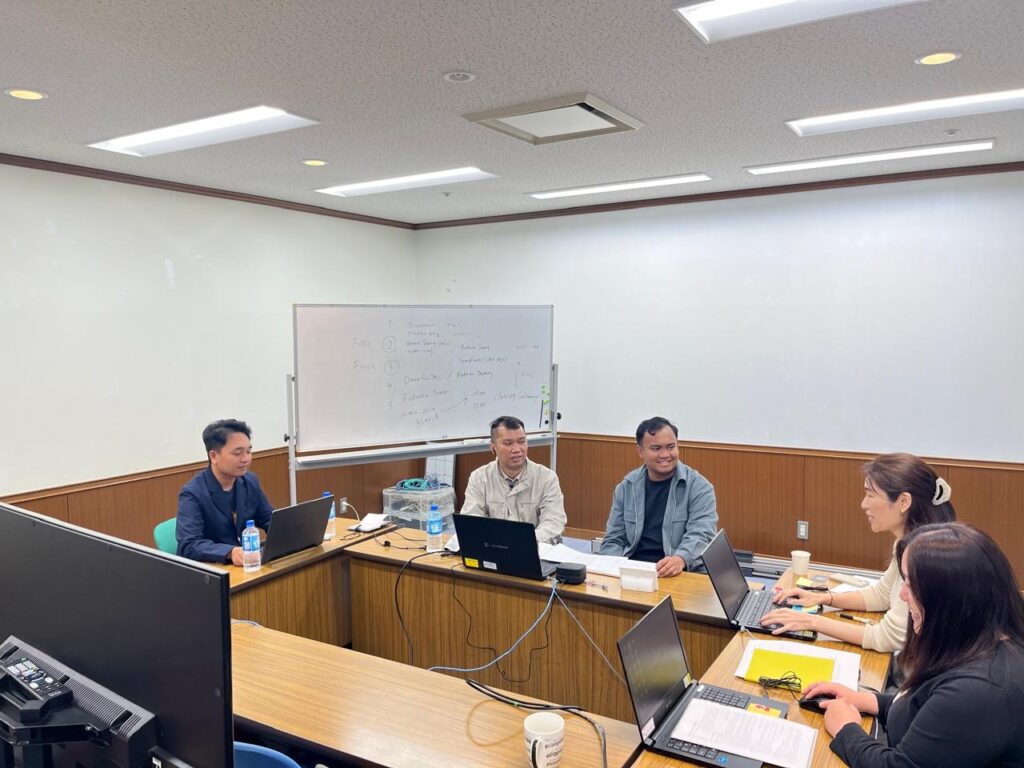
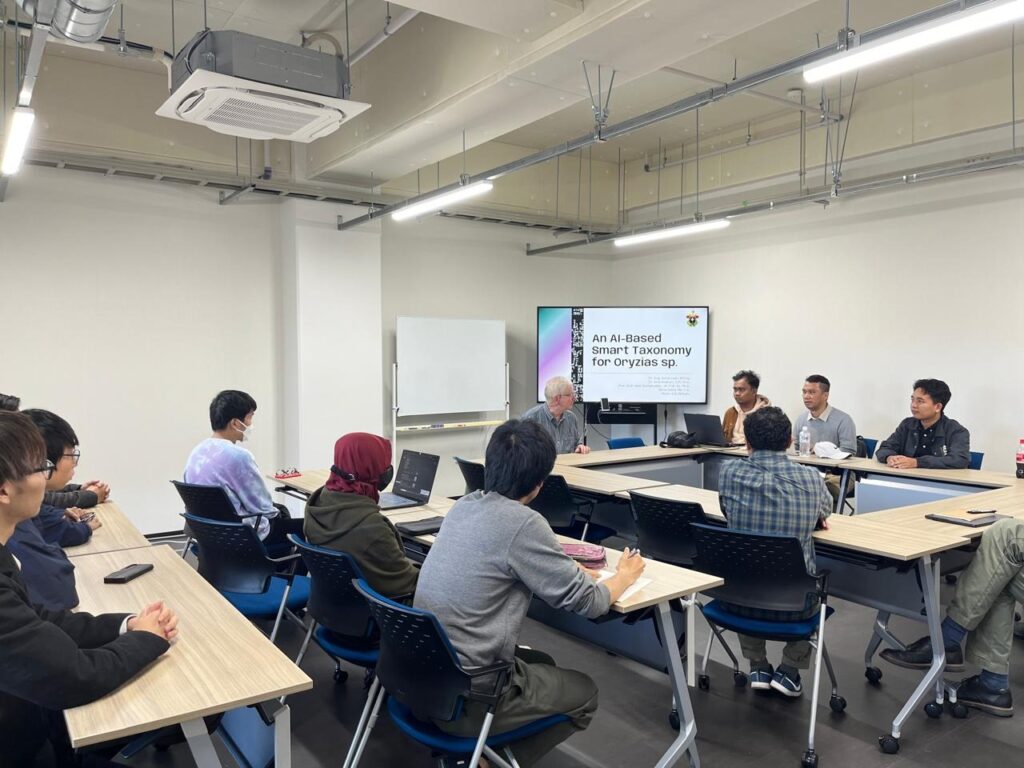
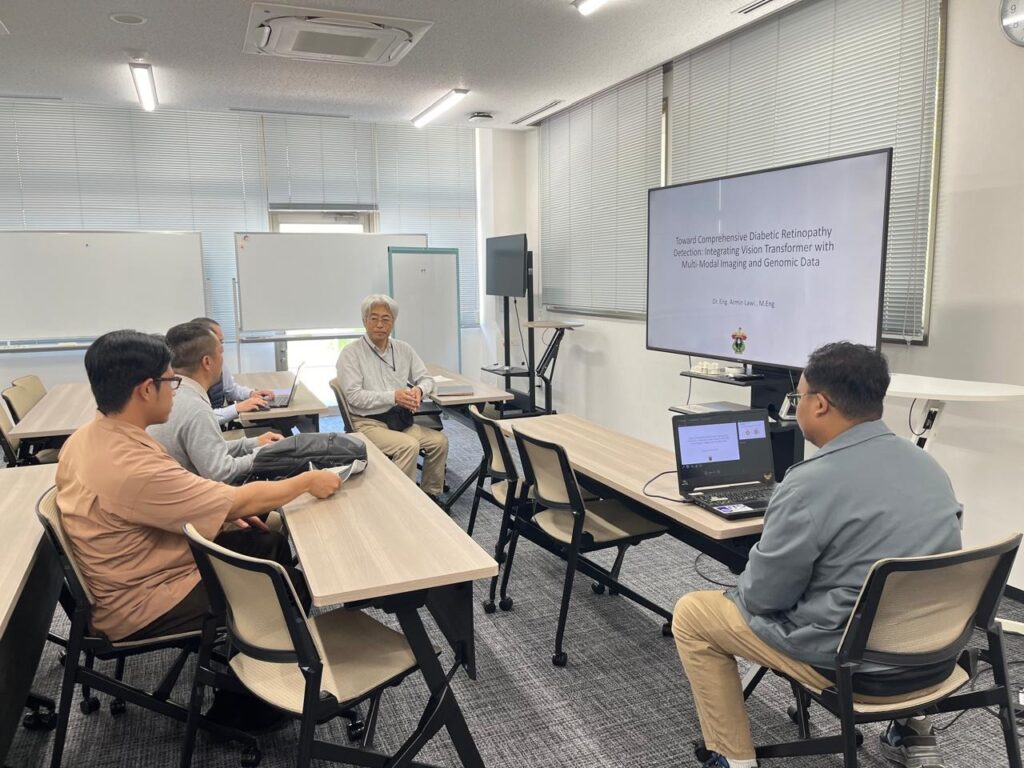
The collaboration included several structured activities, such as initial research evaluation meetings, technical preparation sessions, and two formal presentations of research findings held in academic settings within the partner institution. These sessions provided a platform for in-depth academic exchange, allowing participants to receive constructive feedback, refine methodologies, and explore opportunities for joint publications. The engagement also strengthened institutional ties and encouraged sustained collaboration in future research endeavors.
This activity explicitly contributes to the achievement of several Sustainable Development Goals (SDGs), particularly SDG 1 (No Poverty) through the development of accessible and scalable technological solutions, SDG 4 (Quality Education) by fostering advanced knowledge and skills in artificial intelligence among students, and SDG 17 (Partnerships for the Goals) through meaningful international collaboration. In addition, the research aligns with SDG 14 (Life Below Water) by supporting sustainable monitoring and conservation of aquatic ecosystems through intelligent systems.
The activity involved 20 participants and was conducted at the Laboratory of Prof. Ohashi Takeshi, the Laboratory of Prof. Mario Koeppen, and the Meeting Room of Kyushu Institute of Technology, with Kyushu Institute of Technology as the international partner. A total of 4 collaborative activities were implemented between the partner institution and students. The student team was led by Prof. Dr. Eng. Armin Lawi, S.Si., M.Eng., with participating students including Rahmatullah R, Iman Mustika Ismail, Muhammad Haerul, and Faizah Mappanyompa Rukka.
Overall, this initiative demonstrates the critical role of integrating advanced artificial intelligence techniques with international academic collaboration to address real-world environmental challenges. It also provides valuable learning experiences that equip students with the competencies needed to contribute to global innovation and sustainable development.