

MAKASSAR, Indonesia July 14 2026 /CTRG/ – Democracy is often celebrated as the people’s voice. Yet, when competition replaces cooperation, elections can divide communities instead of bringing them together. This reality is not limited to national politics. At the village level, elections can become emotionally charged events that threaten social harmony if conflicts are not managed wisely.
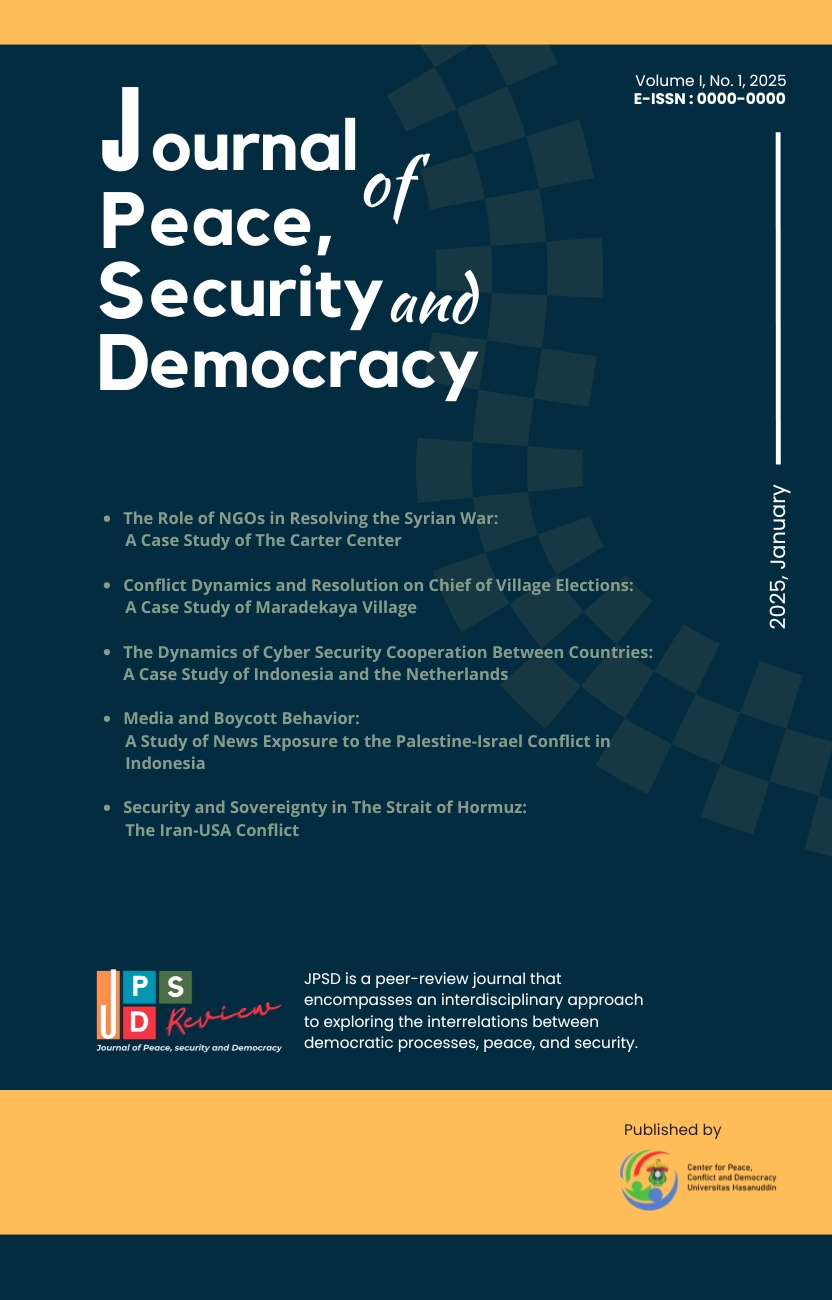
A valuable lesson comes from a recent academic study entitled “Conflict Dynamics and Resolution in Chief of Village Elections: A Case Study of Maradekaya Village.” The article was published on January 30, 2025, by the Center for Peace, Conflict, and Democracy (CPCD) and published by LPPI University of Muhammadiyah Malang. The research examines how conflict emerged during the 2016 village head election in Maradekaya Village, Gowa Regency, and how negotiation and mediation eventually helped restore peace.
The study reveals that election conflicts rarely begin with a single incident. In Maradekaya Village, tensions developed because of personal rivalries among candidates, weak election management, and difficult socio-economic conditions. Low levels of education and widespread poverty made some residents more vulnerable to political pressure and emotional mobilization. As disagreements intensified, the conflict escalated into acts of violence that threatened community stability.
However, the research also offers hope. Instead of allowing the conflict to continue, local leaders initiated dialogue through negotiation and mediation. Although the first mediation attempt failed due to weak institutional leadership, a second effort led by the sub-district head successfully brought all parties together. Through discussion, voting, and mutual agreement, the candidates accepted a re-election as the fairest solution. This outcome demonstrates that peaceful communication can overcome even the most difficult political disputes.
This experience strongly reflects the spirit of SDG 17: Partnerships for the Goals. While SDG 17 is often associated with international cooperation, its core message is equally important at the local level. Sustainable development depends on partnerships among governments, communities, civil society, and local leaders. In Maradekaya Village, peace was achieved not because one group defeated another, but because different stakeholders worked together to find a shared solution.
The study reminds us that democracy is more than casting ballots. It requires trustworthy institutions, responsible leadership, and citizens who are willing to listen as much as they speak. Elections should strengthen communities instead of creating lasting divisions. Building this culture begins with transparent governance, civic education, and collaborative problem-solving.
The Maradekaya case demonstrates that conflict is not always the end of democracy. When dialogue replaces hostility and cooperation replaces confrontation, conflict can become an opportunity to build stronger institutions and healthier communities. By embracing the values of SDG 17: Partnerships for the Goals, villages can transform political competition into collective progress, proving that sustainable development starts not only with policies but also with the willingness to work together for the common good.
Reference:
DOI https://doi.org/10.63280/jpsd.v1i1.42521
Contact:
Prof. Seniwati, S.Sos., M.Hum., Ph.D
+62 823-4526-9476
Seniwati@unhas.ac.id


