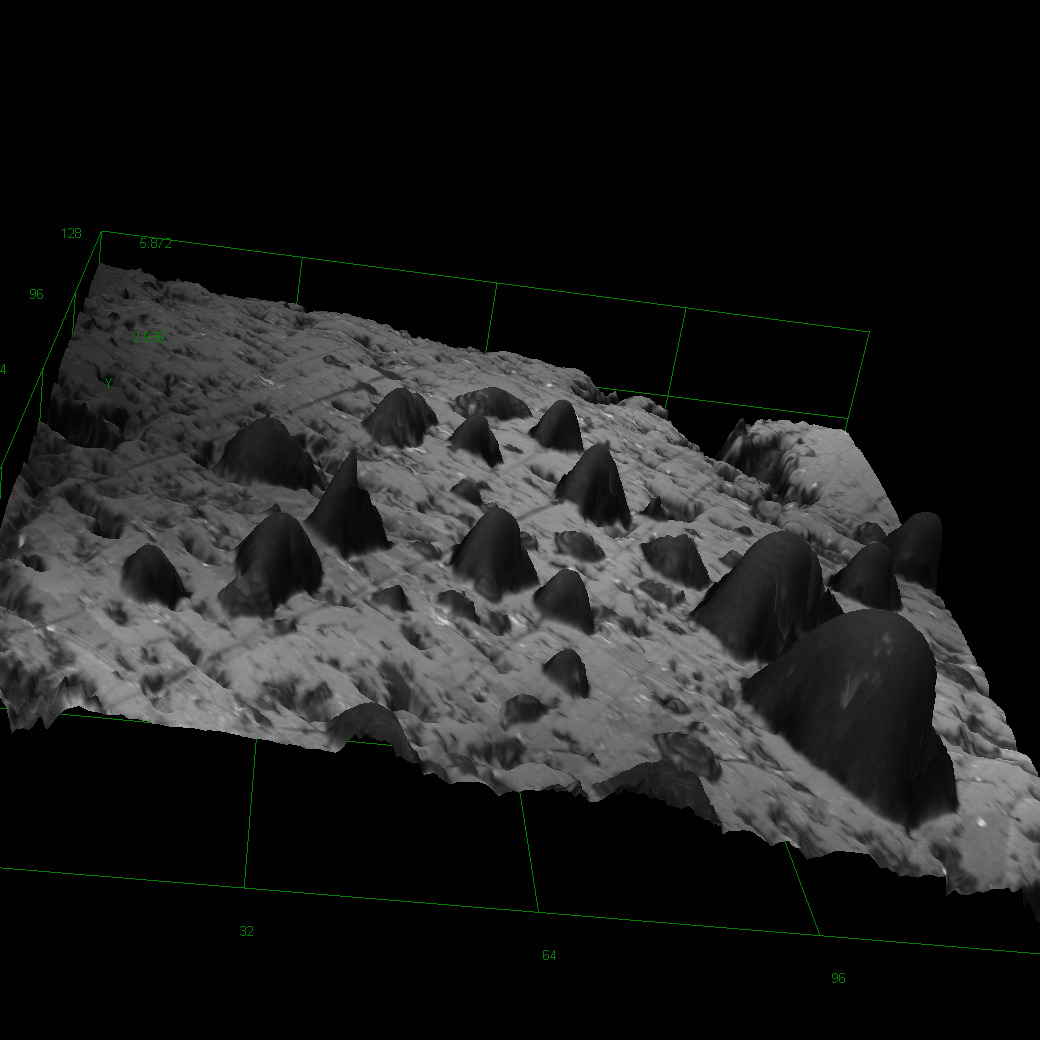
This study explores the recovery of lanthanum, a valuable rare earth element (REE), from spent catalysts as a potential secondary resource. Conducted as an M.Eng. thesis research at Universitas Gadjah Mada in 2017–2018, the study compares organic acids such as citric and acetic acid with inorganic acids, including sulfuric and hydrochloric acid, for leaching lanthanum. X-Ray Fluorescence (XRF) characterization and kinetic modeling were used to evaluate the effectiveness and reaction behavior of different leaching agents. The research highlights the potential of hydrometallurgical approaches to recover valuable resources from industrial waste while supporting more sustainable and efficient mineral utilization.
This ongoing research explores the use of alkaline roasting as a pretreatment method to improve the extraction of rare earth elements (REEs) from granitoid deposits in Mamasa and Polewali, West Sulawesi. By studying the characteristics of the mineral samples and optimizing roasting conditions, the research aims to make REE extraction more efficient and support future hydrometallurgical processing. The study contributes to Indonesia’s exploration of critical mineral resources and the development of more effective pathways for recovering valuable REEs from primary deposits.
This preliminary study investigates the potential occurrence of rare earth element (REE)-bearing minerals in placer tin mine tailings in Bangka Belitung, Indonesia, at PT TIMAH Tbk. Instead of viewing mining tailings solely as waste, the study explores their potential as a secondary source of valuable critical minerals. The research provides an initial understanding of REE-bearing minerals in tin mine residues and highlights opportunities for resource recovery, sustainable mineral utilization, and the development of Indonesia’s critical mineral resources.
This study explores the potential of granitoid rocks in Bangka Belitung, South Kalimantan, and West Sulawesi as sources of rare earth elements (REEs) and lithium (Li), two critical minerals increasingly important for modern battery technologies. Through geological, mineralogical, and geochemical exploration, the research investigates the distribution and potential of these elements as future battery raw materials. The study provides valuable insights into Indonesia’s mineral resources and supports efforts toward sustainable exploration and the development of domestic critical mineral resources.
This study explores the potential of weathered granitoids in Polewali and Mamasa, West Sulawesi, as a source of ion-adsorption rare earth elements (REEs). Through mineralogical and geochemical exploration, the research examines how REEs are distributed within weathered rocks and identifies areas with promising mineral potential. The findings provide valuable geological information that can support future exploration of critical minerals and contribute to sustainable management of Indonesia’s mineral resources.
This study investigates volcanic-sedimentary rocks within the Adang Volcanic Rock Complex in West Sulawesi to identify and characterize critical minerals associated with uranium and thorium. By understanding the mineral composition and distribution of these elements, the research provides valuable information about the region’s geological resources and their potential significance for future mineral exploration and sustainable resource management.
This article presents an innovative method for producing stainless steel from laterite nickel ore and chromite ore using hydrogen plasma technology. The approach combines locally available mineral resources with advanced plasma processing to produce valuable stainless steel. This technology offers promising potential for improving resource efficiency, reducing processing waste, and supporting more sustainable metal production.
This article explores an innovative approach to recovering valuable iron from the residue generated during laterite nickel ore leaching. By using hydrogen plasma technology, the residue can be transformed into a potential source of iron metal instead of being treated simply as waste. This technology offers a promising pathway toward more efficient mineral utilization, waste reduction, and environmentally responsible resource management.

Surface Engineering on the R350HT Material by Long Heating-Annealing Cycle Treatment

The thermal behavior of Red Mud on phase transformation with the addition of Phosphate and its ceramic characteristics

Sintering and Post-Sintering Treatment of Mg-Zn-Ca Alloy as Implant Material in Powder Metallurgy Method