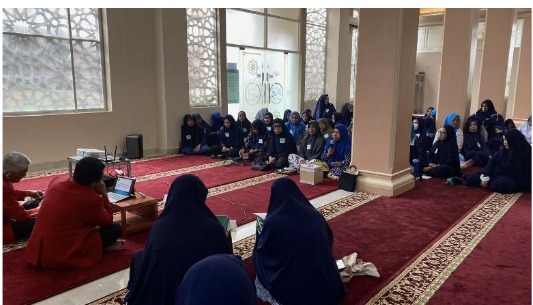
Makassar- On 20 February 2026, a community empowerment initiative titled “PMFEB-KIPKU: PMB-KIP: Simple Bookkeeping Training for MSMEs of the Al-Muhajirat Mosque Study Group, Biring Romang Village, Manggala District, Makassar City” was successfully conducted at the Majelis Taklim Masjid Al-Muhajirat located in the village of Biring Romang, Makassar City. This training program was designed with the primary objective of enhancing the financial management capacity of micro, small, and medium enterprises (UMKM) operated by members of the Majelis Taklim community through practical training in basic accounting principles.
The training was attended by 42 participants, all active UMKM actors affiliated with the Majelis Taklim Masjid Al-Muhajirat. The program addressed a critical challenge faced by many community-based UMKM, particularly the lack of financial literacy and poor financial management practices that hinder business sustainability and growth. Many participants had previously struggled with unorganized financial recording systems and the inability to separate business finances from personal finances, which are essential for sound decision-making and accessing formal financing.
The training employed a participatory approach combining lectures, tutorials, and discussions tailored to the real needs of the participants. It introduced fundamental accounting concepts such as transaction recording, the accounting cycle, and the preparation of basic financial reports like profit and loss statements. This hands-on methodology facilitated active engagement, enabling participants to apply what they learned directly to their businesses.
Significantly, the program aligns with the United Nations Sustainable Development Goals (SDGs), particularly SDG 1 (No Poverty), SDG 4 (Quality Education), and SDG 17 (Partnerships for the Goals). By improving financial literacy and management skills (SDG 4), the training empowers UMKM to enhance their economic resilience, contributing to poverty reduction (SDG 1). Furthermore, the collaboration between academic institutions and the local community exemplifies effective partnerships supporting sustainable development (SDG 17).
Post-training evaluations showed remarkable improvements: approximately 78% of participants began systematic transaction recording, 72% understood debit and credit mechanisms in their businesses, and 65% could prepare simple financial reports. Notably, 80% of participants started separating business and personal finances, a crucial step toward transparent and accountable financial management. These outcomes demonstrate the program’s effectiveness in fostering sustainable business practices and enhancing UMKM readiness to access formal financing channels.
This initiative not only transferred knowledge but also fostered a social learning process that strengthened the human capital of UMKM within the religious community context. The trust and social bonds within the Majelis Taklim facilitated collective learning and experience sharing, making the training more impactful. Continued support and follow-up are recommended to ensure the sustainability of these improved financial practices.
In conclusion, the PMFEB-KIPKU training at Majelis Taklim Masjid Al-Muhajirat represents a successful model of community-based capacity building that advances financial literacy and management among UMKM. It contributes directly to achieving key SDGs by empowering local entrepreneurs with essential skills for economic development and sustainable livelihoods.