


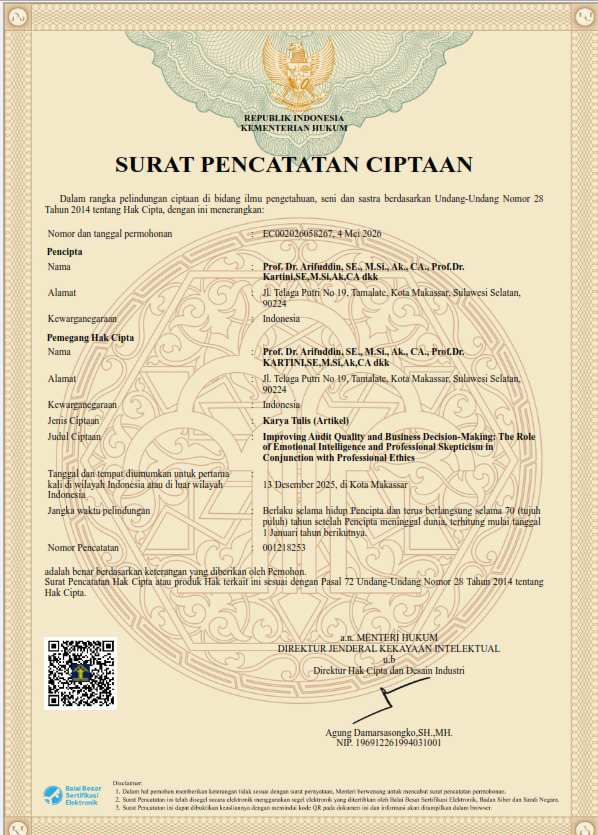
Improving Audit Quality and Business Decision-Making: The Role of Emotional Intelligence and Professional Skepticism in Conjunction with Professional Ethics
Learn More
This study examines the influence of emotional intelligence and professional skepticism on audit quality and business decision-making, while also assessing the moderating role of professional ethics. Using Structural Equation Modeling–Partial Least Squares (SEM-PLS), data were collected from auditors working in Public Accounting Firms (KAP) across South Sulawesi. From an estimated 100 active auditors, respondents were chosen through probability sampling, specifically simple random sampling, to ensure representative findings. The results show that emotional intelligence has a significant and positive impact on both audit quality and business decisionmaking. Auditors with higher levels of emotional intelligence are better equipped to regulate emotions, address ethical dilemmas, and deliver superior audit outcomes and managerial judgments. In contrast, professional skepticism does not significantly influence either audit quality or decision-making, suggesting that its role may depend on contextual or organizational conditions. Importantly, professional ethics strengthen the relationship between emotional intelligence, professional skepticism, audit quality, and decision-making, highlighting the critical importance of ethics in professional practice. Future research is encouraged to expand the sample size and incorporate diverse methods such as interviews and observations to reduce bias and enrich insights. Further exploration of professional skepticism is also recommended, particularly regarding behavioral consistency and the influence of work environments.
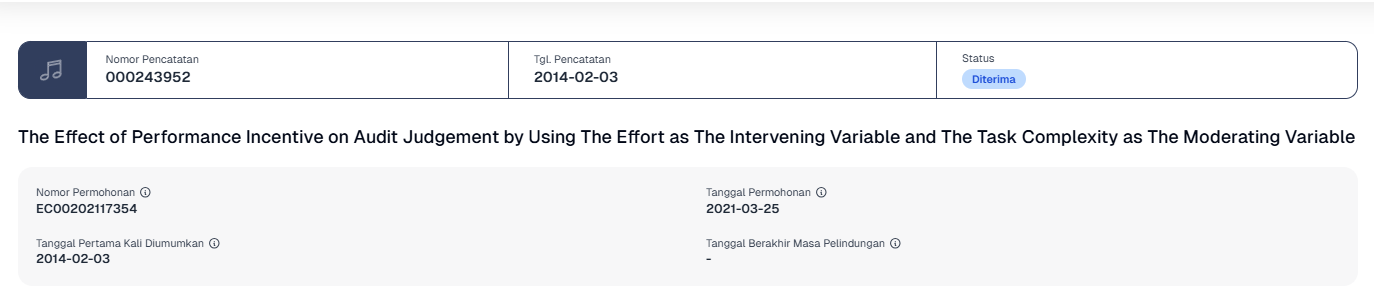
The Effect of Performance Incentive on Audit Judgement by Using The Effort as The Intervening Variable and The Task Complexity as The Moderating Variable
Learn More
This article examines the impact of performance incentives on audit decisions.
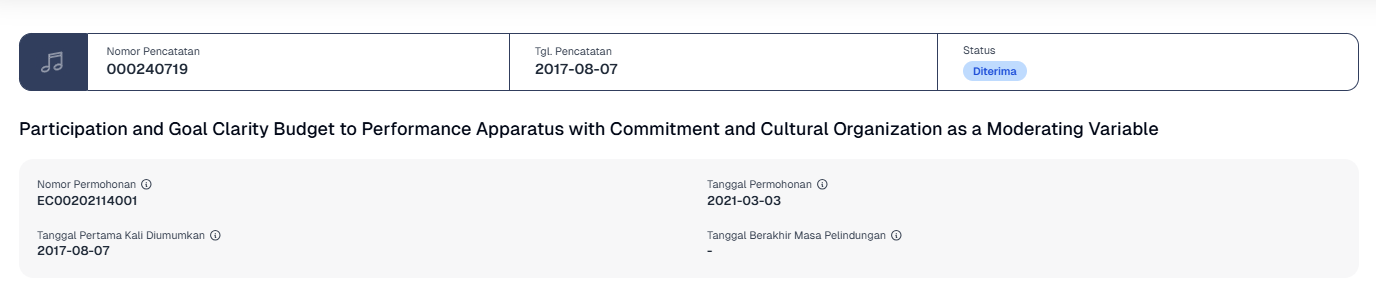
Participation and Goal Clarity Budget to Performance Apparatus with Commitment and Cultural Organization as a Moderating Variable
Learn More
This article discusses participation and budget goal clarity in relation to bureaucratic performance.
Local Government Accounting Policy

Learn More
This book discusses local government accounting policies.
Dimensions of State-Owned Enterprise (SOE) Value Enhancement (Dimensi Peningkatan Nilai BUMN)

Learn More
This book contains the dimensions of State-Owned Enterprise (SOE) value enhancement.
K-Means Algorithm Planning for Data Segmentation in Demand Prediction and Stock Management Optimization Based on Clustering

Learn More
This algorithm employs a K-Means clustering-based approach to group sales data based on demand patterns, regional factors, product types, promotions, and weather conditions. The algorithm works by identifying similarities in sales data and dividing them into multiple clusters with similar characteristics. Each cluster represents a specific market segment, such as high-demand regions, the most popular products, or areas less responsive to promotions. The process begins by transforming raw data into numerical representations through preprocessing techniques such as one-hot encoding and standardization. Next, K-Means iteratively determines cluster centroids until the optimal grouping pattern is found. The results of this algorithm are used to understand consumer purchasing behavior and predict demand more specifically based on clusters. With clustering results, the system can provide more efficient stock management recommendations, reduce material waste risks, and support data-driven distribution strategies to meet demand in different regions in a timely manner.